
Blog Posts from Curlew Action
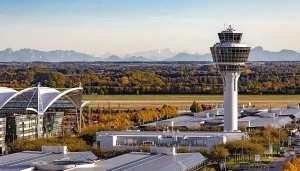
Curlews Between the Runways Munich Airport has to be one of the strangest places I have ever visited to look for Curlews. Situated northeast of Munich between the cities of Freising and Erding, the airport occupies what was once a vast lowland peatland landscape, now heavily altered by drainage, intensive agriculture, urbanisation and modern infrastructure. […]
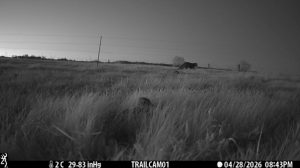
Initial Reflections Robert Frost’s poem Mending Wall kept coming into my mind as we visited four more reserves for wading birds strung along the banks of the Danube and Isar. We had just left the affecting Wiesmet, described in the previous blog, and now stood on a rise overlooking the Stöcklwörth meadows and woodland, with […]
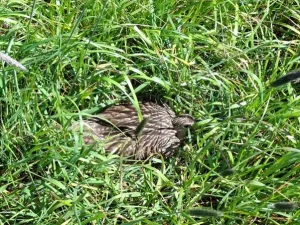
A group of us walked slowly through a field towards a dot marked on a map. We were so close but could see nothing. Was she still there? Then suddenly Jan pointed to a brown shape just a couple of metres away. Hidden, crouched low with her head and neck flattened to the ground, a […]
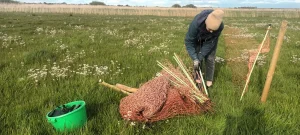
Having spent a few days in North Rhine-Westphalia and then a day in Lower Saxony, it was now time to head to the very north of Germany to see some Curlew (Numenius arquata) breeding sites there. We took a five-and-a-half-hour journey by train to northern Schleswig-Holstein to the village of Bergenhusen, the base of one […]
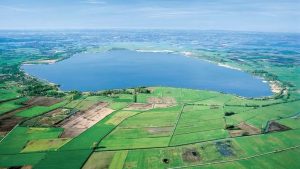
The Dümmer Special Protection Area (SPA) in Lower Saxony spans 12,000 acres and is one of the most important wetland landscapes for breeding waders in Germany and is heralded as the jewel in the crown for wader conservation. Here, we met Andrèas Barkow, project manager for the Life Godwit Flyway Project and Marcel Holly, head […]
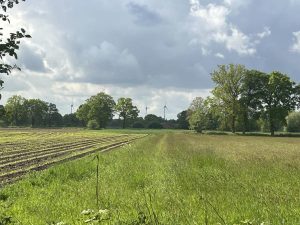
The area we visited in this large and heavily populated state in the west of German was once part of a vast peatland landscape stretching across the border between Germany and The Netherlands, (see the previous blog). Our base was the village of Zwillbrok on the Dutch border, guests of the Zwillbrock Biological Station. Thank you to everyone for being so kind and welcoming. It is difficult to imagine […]
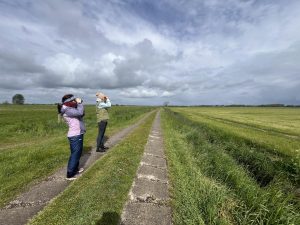
In May 2026, Mary and Flo travelled to Germany and Austria to visit some of the country’s most important Curlew breeding landscapes and to meet the people working tirelessly to protect them. This trip is a continuation of Curlew Action’s outreach to our European colleagues, strengthening networks and information exchange across the continent and the […]
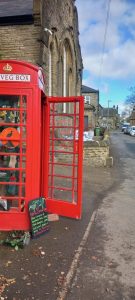
The Fundraising Phone Box By Curlew Action Ambassador Steve Woodard In the little Yorkshire village of Wooldale the locals are marking World Curlew Day and Curlew Action in a rather unusual way. The village still has a red telephone box which over the years has been turned into a little community hub for all sorts […]
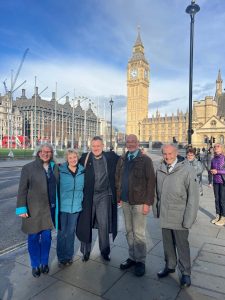
Parliamentary Briefing on the UK Curlew Action Plan On 25 March 2026, we took part in a parliamentary briefing on the UK Curlew Action Plan, hosted and chaired by Chris Hinchliff, MP (North East Hertfordshire). Chris is emerging as a strong and thoughtful voice for nature restoration and has consistently supported calls for stronger protective legislation and shown a clear commitment to addressing the biodiversity crisis. He […]
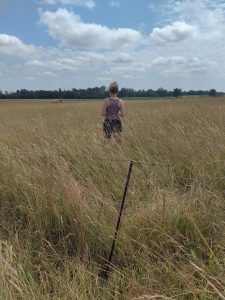
The joke that isn’t a joke: gender bias in fieldwork and the moments that give it away by Mary Colwell, Prof Jenny Gill Goethe famously said (I’m paraphrasing), “Show me what you laugh at, and I’ll tell you who you are”. A ‘joke’ is usually where the truth slips out, because many a true word is spoken in jest. Recently, a moment in elite sport did exactly […]
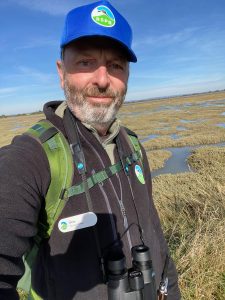
The value of volunteering to both the recipient organisation and the individual really can’t be underestimated and this is particularly true in conservation. I can say this with confidence having been volunteering for over three years now for the RSPB, BTO and now Curlew Action. The benefits can be enormous. For example the RSPB enjoys […]
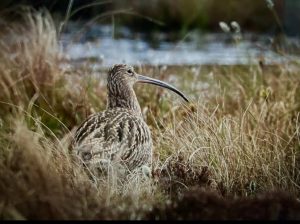
Memories of the filming phase with the RSPB Life Curlew Project officers, during the making of the Curlew campaign film, Stunned by Silence – by Malka Holmes, Greengage Films & Curlew Action Ambassador The Uplands of North Wales 2023-24 Curlew breeding Season 1 I remember I was quite excited when I got the first pin-drop […]