
Blog Posts from Curlew Action
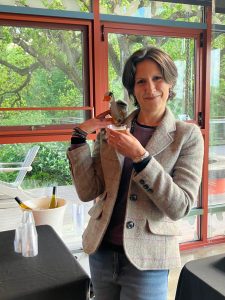
Recently, I had the privilege of attending Flo Blackbourn’s presentation “When conservation strategies collide: rewilding and the future of waders” at the 2026 conference of the International Wader Study Group. Flo offered a persuasive call for dialogue to find common ground between wader conservationists and rewilders, which resonated with my own background in rewilding and […]
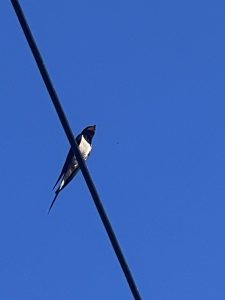
I want to begin with a swallow, a butterfly and a frog. So often now, we see these creatures through the lens of a problem: climate change, pollution, declining populations, changing land use. Before we have even looked closely, the animals have become evidence of something going wrong. That is true, but it isn’t […]
This is a summary of the talks from the different countries at the 2026 AEWA conference in Finland. It comes as no surprise to know that there is still much work to do across Europe to protect the birds but it is only through collaboration that we will succeed. The talks from different European countries […]
With The Odyssey prompting so much public discussion, perhaps we can learn something from a story that has endured for almost 3,000 years. It survived because generations of people carried it, retold it and found fresh meaning within it. It became part of their cultural inheritance. What would happen if we thought about our conservation […]
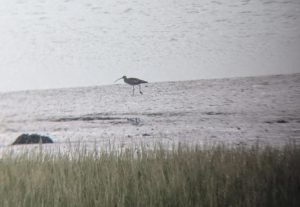
Blog post by Kitty Bushell Love is a verb. It’s a widely-quoted lyric, and an excellent philosophy to follow when it comes to standout species like the Curlew. In recent years, watching and appreciating birds has skyrocketed. Since 2018, birdwatching as a hobby has increased by a notable 47%, led by 16-29 year-olds (welcome to […]
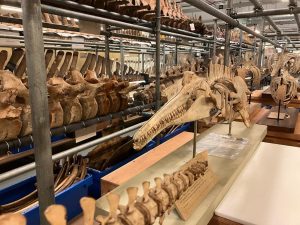
Photo: © The Trustees of NHM, London Visit to the Natural History Museum’s cetacean collection – London, 18th August 2026 A whale skeleton is both an object of science and the remains of a life, a truth that became powerfully clear as David Gray and I followed Richard Sabin, Principal Curator of Mammals at the […]
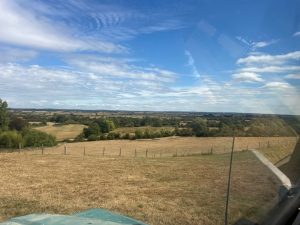
(Header photograph: Mary Colwell / All other photographs courtesy of Martin Hole) On a hot, dry, brown-brittle day in August, I visited Martin Hole of Montague Farm on the western edge of the Pevensey Levels in East Sussex. Over a coffee before a farm tour, we discussed farming for wildlife, and one phrase stayed with […]
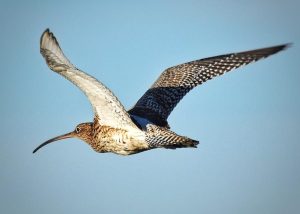
Blog written by the Biological Recording Company Curlews are among the UK’s most recognisable and well-loved birds, but sadly their numbers are falling fast. The main problem is that too few chicks are making it to adulthood – but the reasons behind that are complex. As ground-nesting birds, Curlews are especially vulnerable to the changing […]
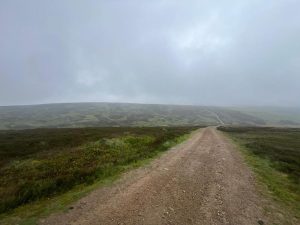
Heading south from Insh Marshes, our Scottish tour next takes us to two grouse moors: the Rottal and Glenogil Estates. We visit them on consecutive days to learn more about how Curlews are faring on grouse moors in Scotland, a managed habitat which, in England, is known as one of their last strongholds. Our main takeaway from these two visits is that, […]
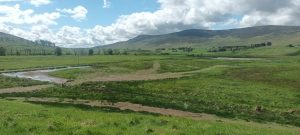
By Flo Blackbourn Heading south from Insh Marshes, our Scottish tour next takes us to two grouse moors: the Rottal and Glenogil Estates. We visit them on consecutive days to learn more about how Curlews are faring on grouse moors in Scotland, a managed habitat which, in England, is known as one of their last strongholds. Our main takeaway from these two […]

For much of my life, I have been circling the story of the Curlew, trying, and often failing, to find words large enough for it. Science has always mattered to me. Of course it has. We need evidence, data, hard-won observation; we need to know where Curlews still breed, why chicks fail, how water moves through fields, how insects vanish, how policies land on real […]
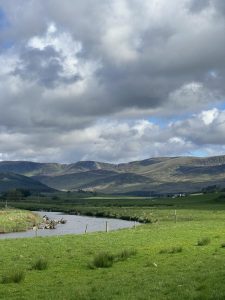
Based on a article in British Wildlife, July 2026 Curlews sit at the heart of one of the most important conservation debates of our time – how do we restore nature while also protecting the species that depend on the landscapes we have created? Rewilding has brought huge energy, imagination and ambition to conservation. It asks us to think beyond small fragments of protected […]