

A Turning Point for Curlew Recovery:
The UK Curlew Action Plan Launched in the House of Lords
On Monday 19th January, the House of Lords became the setting for a pivotal moment in the unfolding story of one of Britain’s most iconic birds: the launch of the UK Curlew Action Plan.
Hosted by Lord Randall of Uxbridge the event was presented by the steering group, Professor Des Thompson, Suzannah Rockett, David Stroud, Professor Ian Newton and Mary Colwell, who were tasked with producing the plan in collaboration with a range of stakeholders. Together, the steering group outlined both the urgency of the curlew’s decline and the opportunity to reverse it through coordinated action across the UK.
This plan represents a shared UK-wide commitment from multiple organisations and comes with the direct challenge to work together to turn words into action.
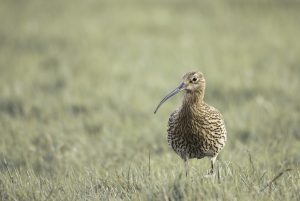
Figure 1 Eurasian Curlew. Photo by Tom Streeter
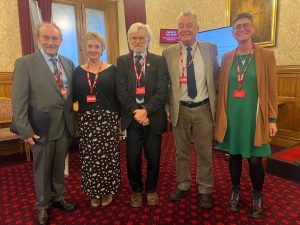
Figure 2 The UK Curlew Action Plan Steering Group: Ian Newton, Mary Colwell, David Stroud, Des Thompson, Suzannah Rocket. Photo by David Gray
Following a warm welcome from Lord Randall, Mary Colwell, who chaired the afternoon, opened with a welcome to everyone, thanking them for their time and commitment in attending the event. As there are always many words to read and speak, it is good to stop and listen to the sound of the bird that has drawn everyone into the room, the haunting call of the Curlew. After playing the call and asking people to reflect on its meaning, Mary then invited Chris Hinchliff, MP for North East Hertfordshire, for some words from the House of Commons. Chris spoke passionately about the plight of the Curlew, reflecting on the extinction of the Slender-billed Curlew, and noted that ‘History will not be kind if we fail to prevent a similar extinction here. Given the importance of these islands to Curlew populations, if we fail the future for the species across Europe, matters will be bleak indeed… So, this action plan is both welcome and essential.’
The main series of presentations began with Professor Des Thompson, lead author of the UK Curlew Action Plan and a Leverhulme Emeritus Fellow.
Why the Curlew Matters
The Eurasian Curlew is part of the UK’s cultural and ecological identity. Its evocative call is woven into the story of uplands, wetlands, coastal marshes and farmland, places that have shaped not only wildlife, but cultural memory. Yet Curlews are now among the UK’s fastest-declining breeding birds.
The UK carries an international responsibility. We hold around 25% of the European breeding population, meaning their recovery is not only a national priority, but essential for the range and numbers of the whole population.
Curlews are also a ‘flagship’ species. When we protect breeding and wintering Curlews, we improve habitat and resilience for many other species too. Curlew recovery therefore acts as a wider symbol of nature returning to farmed and managed landscapes, and of people choosing to protect a species that carries no economic benefit, but simply because it is treasured.
Why Curlews Are Declining
Although Curlews face multiple pressures, the plan is clear about what is driving the decline: low breeding success. Across many parts of the UK, too few chicks are fledging each year to replace adult losses. The causes are well known and increasingly well evidenced:
- Unsustainably high predation of eggs and chicks;
- Large-scale habitat loss and fragmentation;
- Changes to land use including agricultural intensification and inappropriate afforestation;
- Climate change, compounding pressures through altered and extreme weather patterns and changing habitat conditions.
Curlews are long-lived birds, and population declines can appear deceptively slow. In many areas, over more than a decade, a pair will breed, failing each year, and only when both birds perish is the silence and the absence of successors noticed. There comes a point beyond which it is impossible to recover populations. Any conservation interventions are very expensive, costing far more than what it would have taken to avoid the losses in the first place.
What the UK Curlew Action Plan Calls For
At the heart of the UK Curlew Action Plan is a simple truth that Curlew recovery will only be achieved through coordinated action across sectors.
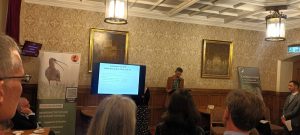
Figure 3 Suzannah Rockett. Photo Flo Blackbourn
Suzannah Rockett who is leading this work within the RSPB set out how the plan calls for a step-change in UK-wide organisation and delivery, including:
1) Establishing a UK Curlew Recovery Taskforce
A dedicated body to coordinate action across nations, agencies and sectors.
2) Creating a Network of Protected and Wader Recovery Areas
The plan proposes a strategic network embracing more than 50% of the current curlew population, ensuring efforts are focused where they can make the greatest difference.
3) Supporting targeted Land Management Schemes
Support for farmers and land managers will be central. Curlew-friendly land management needs to be practical, funded, and locally tailored.
4) Promoting Evidence-Based Predator Management
Curlew recovery cannot ignore predation. The plan calls for approaches that are evidence-led, targeted, and effective.
5) Encouraging Monitoring, Innovation and Research
Curlew recovery demands both action and learning: monitoring outcomes, improving tools, testing new approaches, and sharing what works.
This is not about a single “silver bullet”. Rather, it is about building an alliance-led and effective recovery system which is delivered consistently over decades, not seasons.
A Timeline for Recovery: Measurable Milestones
One of the strengths of the UK Curlew Action Plan is that it doesn’t only identify the problem, it lays out a timeline for recovery actions with clear milestones.
Key targets include:
- 2025: A UK-wide Taskforce formed, with priority areas identified
- 2028: Improved land management schemes in place across the UK
- 2030: Regional target met of ≥0.6 fledged chicks per pair
- 2045: Sustained population recovery across the UK
These milestones matter because they give focus, direction and accountability. Too often conservation plans lack clear markers for success. This plan demands measurable outcomes delivered through a clear timeline.
Conservation Obligations and the Need for Effective Action Plans
David Stroud, Emeritus Senior Advisor to JNCC, and founder Chair of the Task Force, emphasised a major theme running through the plan – the need to deliver conservation not as an aspiration, but as an legal obligation. The biodiversity crisis is pervasive and is unfolding internationally and here in the UK, with causes and consequences well documented. A growing framework of strategies and targets have been agreed to to halt the losses. In the UK, this includes national legislative biodiversity targets within each of the four countries, alongside the UK’s binding obligations under major international agreements.
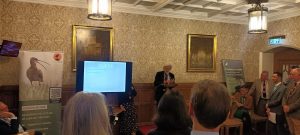
Figure 4 David Stroud. Photo Flo Blackbourn
For waterbirds such as the Curlew, these duties are particularly shaped by international frameworks like the African-Eurasian Waterbird Agreement (AEWA) and the Birds Directive, while the Biodiversity Convention’s Global Biodiversity Framework also sets critical targets for extent and management of protected areas, as well as the recovery of threatened species. In this context, Curlew conservation is not simply desirable, it is part of delivering what governments have already committed to legally and politically.
There is now almost forty years of international experience showing what makes species Action Plans succeed. Effective plans depend on broad understanding and support from all relevant actors, with government engagement being vital, especially where regulation or legislation may be needed. Successful plans also require visibility and shared understanding, strong coordination (typically through a secretariat or dedicated coordinating function), and an approach that works collaboratively with existing initiatives rather than duplicating them. Above all, action plans must be properly resourced, many have failed simply because coordination and funding were not in place. The UK Curlew Action Plan already has important success factors, including strong stakeholder endorsement, but its early focus must be on securing the coordination and resources needed to translate commitment into delivery. With that support, Curlew recovery can move from obligation and aspiration to real results on the ground.
Why This Plan is Vital and Why It Must Be Delivered Now
The UK Curlew Action Plan is vital for several reasons.
It supports:
- UK and international biodiversity commitments;
- Farmers and land managers already working hard in the most challenging conditions;
- Ecosystem recovery and nature restoration beyond curlew alone; and
- A final and narrowing window of opportunity to prevent further losses.
But perhaps most importantly, it offers something the public desperately needs, a symbol of hope. Curlew recovery is not just about numbers, it is about whether we are still capable of reversing ecological loss, in other words, whether we can move from decline to renewal.
Professor Ian Newton’s contribution at the launch underlined one central message – this plan is firmly grounded in evidence, not ideology. The conclusions it draws are based on decades of robust scientific research, much of it derived from large-scale, long-term data collected through nationwide monitoring programmes. These datasets show, with remarkable consistency across regions and years, that Curlew populations are declining primarily because they are not producing enough young to replace adult losses. Importantly, ringing studies demonstrate that adult survival has not declined significantly over time, allowing researchers to rule out increased adult mortality as a cause. Instead, repeated studies comparing sites with and without habitat management, and with and without predator control, converge on the same conclusion: inadequate breeding success is the decisive limiting factor, and this pattern is seen across many landscapes, not just isolated locations.
Drawing on long-established ecological principles, Ian revisited the framework articulated by the late Dick Potts, who argued that successful management of any species requires attention to three interdependent needs: habitat; food supply; and protection from natural enemies (chiefly predators). Addressing only one or two of these elements while neglecting the third is ineffective and wastes both time and resources. He highlighted how this lesson applies directly to Curlews and other ground-nesting birds. In many nature reserves, habitat management has been exemplary, and food availability has followed naturally, yet breeding populations have still collapsed because predation was not adequately addressed. Success depends on getting all the components right, not just some of them. In the case of Curlews, even where grassland management has been adapted to delay cutting or reduce disturbance, eggs and chicks are still frequently lost to predators unless predation pressure is tackled directly.
Ian emphasised that predation is now the dominant cause of breeding failure for curlews across most of Britain. In lowland areas, early silage cutting can destroy nests, but almost everywhere else it is predation, particularly by Crows, Foxes and in some regions, Badgers, that prevents successful fledging. The significance of predation is most clearly illustrated in landscapes where it is actively managed, such as grouse moors and other game-rearing areas. These areas, often controversial, have nevertheless proved crucial refuges for Curlews and other ground-nesting birds because they combine suitable habitat management with sustained predator control. He noted that some individual grouse moors in northern England now support more Curlews than entire countries elsewhere in Europe, including Ireland, despite Curlews having been widespread across Britain as recently as the 1980s. He also pointed to evidence that certain predators now occur at exceptionally high densities in Britain compared with other European countries, making recovery impossible without addressing this imbalance.
The overarching conclusion of Ian Newton’s remarks was both stark and pragmatic. We already know what needs to be done to restore Curlews, and the science is not in dispute. What is required now is coordinated, large-scale action, bringing together government, agencies, land managers, conservation organisations and local groups, and applying evidence-based solutions consistently across priority landscapes. Without such coordination, and without confronting predation alongside habitat and land-use change, Curlews and many other ground-nesting birds face disappearance from much of Britain. The UK Curlew Action Plan exists to translate this evidence into action. The challenge ahead is not scientific uncertainty, but collective will and delivery.
Putting Words into Action
The House of Lords event felt like a line in the sand, a shared acknowledgement that the Curlew cannot be left to slip away. But Curlews do not live in policy rooms, they live in fields, wetlands, moors, bogs and pastures. The challenge now is to ensure their habits are protected and the bird allowed the peace and space to breed successfully. The UK Curlew Action Plan must not become another document that sits on a shelf, it must be alive, encouraging, nurturing and boisterous across the landscapes of the UK.
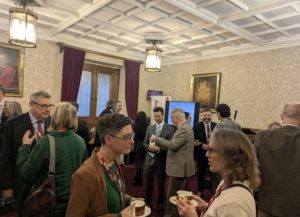
Figure 5 Attendees at the launch. Photo Sam Lee
Thank You and a Call to Join the Recovery
The launch closed with comments from the floor from Dee Ward from the Rottal Estate in the Angus Glens, Patrick Lindley from Natural Resources Wales, Simon Mackown from Defra, and Paul Noyes from the BTO.
The Action Plan represents contributions from scores of people and more than 15 organisations, including government agencies, conservation bodies, land management organisations and interest groups. That scale of collaboration is itself a message that Curlew recovery is not the responsibility of one group, it is a shared endeavour and one that will take sustained commitment. It was heartening to see the passion and determination in the room, but the next few years will see if we succeed.
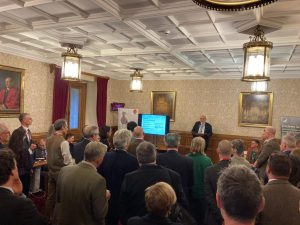
Figure 6 Lord Randall addresses the room. Photo by Jon Avon