
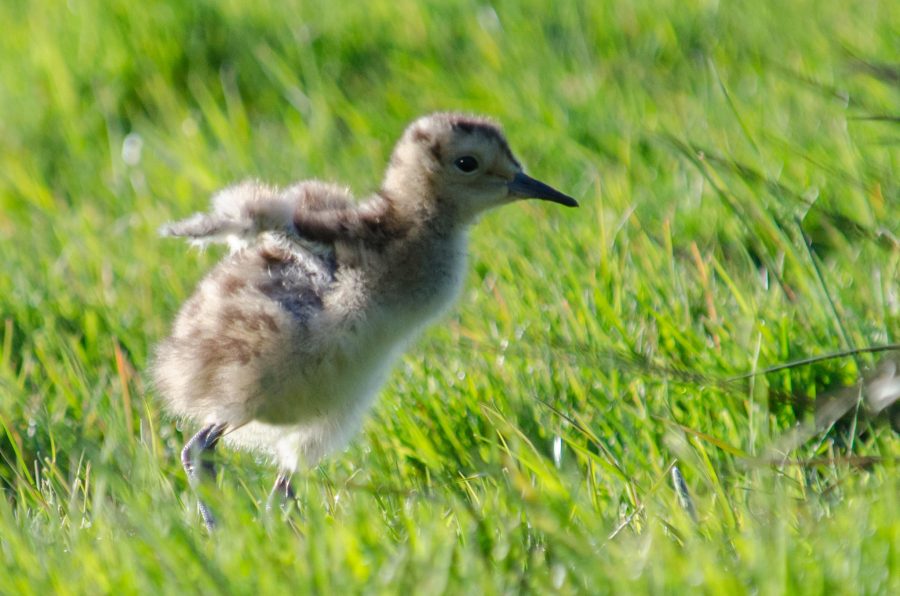
This year’s national Curlew round-up took us from the Angus Glens to Dartmoor, from the New Forest to Northern Ireland. The message was clear: where people, land managers and volunteers work together, Curlews can thrive, but overall, the threats remain stark and urgent.

Here is a project-by-project summary of the results.
Scotland – Angus & Deeside (Working for Waders)
Speaker: Bruce Cooper
A year of dramatic contrasts.
After a disastrous 2024—cold, insect-free and near-total breeding failure, 2025 brought warm, dry conditions, allowing many upland breeding attempts to succeed. Lapwing and Oystercatcher did well, and several Curlew nests produced chicks.
But behind the success lies gravely worrying news:
- Some long-monitored Curlew sites have lost their adults entirely.
- Land acquisitions for woodland planting are removing predator control and habitat management overnight, with rapid declines in waders following.
Summary: Better breeding on some estates, but severe underlying population loss and accelerating habitat change.
Scotland – Insh Marshes (RSPB Scotland)
Speaker: Thijs Claes
One of Scotland’s wader hotspots continues to deliver:
- ~98 Curlew pairs recorded (though surveys likely overestimate slightly due to high densities).
- A stable or slightly increasing population over 20 years.
- Very high territory success (82%) and 38 well-feathered/fledged chicks recorded using the new “Bolton-style” chick counts.
- Minimal predator control and a full predator guild—yet still strong outcomes.
Summary: Insh Marshes remains a Curlew stronghold with exceptional productivity.
Northern England
Wensleydale, North Yorkshire – Bolton Castle Estate
Speaker: Tom Orde-Powlett
A large, mixed estate with c.250–300 Curlew pairs:
- Good season overall; curlew chicks increasingly found on silage land, though predation remains an issue after mowing.
- Drone use and proactive farmers saved 24 eggs/chicks in a single night.
- Community engagement transformed dog-walking behaviour and farmer cooperation.
Summary: Strong collaboration is helping Curlew coexist with dairy and silage systems.
Nidderdale National Landscape
Speaker: Matt Trevelyan
A landscape of beef, sheep and dairy farming with enthusiastic volunteers:
Darly Beck Project
- 29 territories, 7 fledged chicks
- 26 volunteers contributed thousands of observations through the CURLOo app, improving monitoring.
- Heavy predation (especially Buzzard) and limited habitat cover hinder chick survival.
- Innovative livestock-management techniques helping draw Curlew to safer fields.
Hartwith Project
- 6 fledged chicks from 13 nests—near the threshold for stability.
Denton Reserve & Moorland Project
- Mixed, regenerative farming showing promise.
- Moorland broods smaller than usual (2–3 chicks).
Summary: Huge volunteer effort and innovation, but predation and land-use pressure continue to suppress fledging.
Derwent Valley, Yorkshire
Speaker: Craig Ralston (NNR Manager)
The MG4 hay meadows delivered an excellent year:
- 67 pairs—stable overall with recent uptick.
- High hatching success: 34 broods seen, ≥29 fledged young.
- Late grass growth delayed mowing, unintentionally helping chicks.
Summary: Traditional hay meadow systems, delayed mowing and coordinated agri-environment schemes create ideal conditions.
Breckland, East England
Speaker: Harry Ewing (BTO)
An extremely dry region with persistent predation pressure:
- 58 nests found; only 16 hatched; 10 chicks fledged.
- Hatching success: ~25%
- Fledging success: ~17%
- Mammals (especially foxes, badgers, stoats) are primary nest predators.
- Nest fences highly effective: fenced nests reached >85% hatching.
Summary: Fencing transforms nest success in a landscape otherwise dominated by mammalian predation.
Southern England
Upper Thames (Natural England & partners)
Speaker: Anne Cotton (NE)
A partnership project spanning Oxfordshire’s Thames catchments:
- Dry conditions delayed nesting but overall best season yet.
- 15 fledged juveniles—highest since project began.
- Increase in pairs driven entirely by the strong Oxfam More population; satellite sites remain fragile.
- Fencing numbers rising each year, but post-hatch survival remains the bottleneck.
- A loose dog found inside a nest fence—highlighting ongoing disturbance pressures.
Summary: Growing success, but chick survival and public access pressures need urgent attention.
Herefordshire
Chris Wells:
Herefordshire has very few remaining pairs of Curlew and no chicks fledged.
New Forest (GWCT)
Speaker: Ellie Rivers (PhD student)
A surprisingly difficult year:
- Only 14 nests monitored due to reduced access and a major shift in deer/predator management.
- An unprecedented increase in nest predation early in the season.
- 26 chicks tagged but very low survival:
- 3 fledged,
- many malnourished or predated,
- several tags disappeared down fox holes or were carried off by aerial predators.
- Alarming differences in chick growth rates between northern and southern Forest areas.
Summary: A sudden rise in predation and food shortages severely impacted productivity.
South West England – Dartmoor
Speaker: Jon Avon (Duchy of Cornwall)
Perhaps the most extraordinary story of the night:
- Dartmoor was on the brink of extinction, with only 1–2 pairs left.
- A five-year project combining head-starting (WWT), habitat restoration, rewetting, and large-scale vegetation management is showing remarkable signs of recolonisation.
- In 2025:
- 43 tetrads with Curlew activity (up from 11–13 in recent decades)
- 11 territories, including the first central and northern pairs in 16 years
- Head-started birds detected across Dartmoor, Bodmin and the Severn Estuary.
Summary: Early but dramatic recovery: Dartmoor is coming back to life.
Severn & Avon Vales (WWT)
Speaker: Dan Gornall (WWT)
A challenging season in the lowland floodplain:
- 34 pairs monitored, 30 nesting attempts.
- Only 6 fledged chicks, productivity 0.2.
- 2025 was extremely dry; no nests lost to flood for once.
- Fencing improved hatching rates, but chick predation remained high.
- One Dartmoor head-starter returned and fledged a chick.
Summary: High predation at chick stage continues to limit recovery.
Worcestershire (overview)
From Phil Hitchen
- Areas outside the Severn Vales performed very poorly.
- Without continued funding and potential head-starting, local extinction is a real risk.
Wales – National Overview
Speaker: Bethan Beech (NRW / Curlew Wales)
Wales holds 4–500 pairs; monitoring is now structured around 12 Important Curlew Areas (ICAs).
- 2025 provisional results:
- 244 probable breeding pairs
- 176 chicks hatched
- 32–50 fledged
- Numbers likely under-recorded due to survey capacity.
- Wales has lost Curlew from Anglesey, Llyn and Pembrokeshire; remaining populations concentrated in the east.
- Major national wader survey planned for 2026.
Summary: Mixed year, modest fledging, and urgent need for more data and targeted management.
Shropshire & Borderlands
South Shropshire (Curlew Country)
Speaker: Caleb Stradling (Curlew Country)
A year of both wild breeding and head-starting:
- 54 territories—highest yet, supported by several returning head-started birds.
- 100% hatching success for fenced nests.
- Five chicks fledged from the monitored wild nests.
- 37 head-started chicks released.
- A satellite-tagged female successfully fledged two chicks before migrating to western Ireland.
Summary: Head-starting keeps the population afloat; wild productivity alone remains far too low.
North Shropshire
Speaker: Leo Smith (slides only)
A bleak picture:
- No fledged young
- Heavy predation, including from pheasants.
- Volunteers struggling with morale as the population edges toward local extinction.
Summary: Without intervention, North Shropshire may lose its Curlews entirely.
Cumbria – South Lakes
Speaker: Barney Sykes
A community-driven success story:
- 32 pairs located (improved surveying).
- Around 78 chicks hatched, with 27 fledged—a 50% increase on last year.
- Every nest fenced.
- Intensive crow control, drone support, and huge volunteer mobilisation.
- Strong farmer engagement and local school outreach.
Summary: A model of community-led conservation delivering sustained improvement.
Northern Ireland
Speaker: Jonathan Pinnick (RSPB NI)
Lower Lough Erne Islands (RSPB reserve)
- 55 pairs—up from 42.
- ≥17 fledged chicks, probably more.
- Highest density of breeding waders in Ireland.
Wider Lough Erne landscape
- 9 pairs, two nests found; one hatched but chicks lost early.
- Ongoing fencing and landowner engagement.
Glenwherrey
- A major success:
- 45 pairs,
- 21 nests located,
- 41 fledged chicks,
- Productivity 0.91 chicks per pair (well above recovery threshold).
Summary: Glenwherry is one of the very few UK landscapes producing enough chicks to grow the population.
Overall Themes & Takeaways
Across all regions, several patterns emerged:
- Where partnership thrives, Curlew thrive.
From Nidderdale to South Lakes to Glenwherry, long-term trust with farmers, gamekeepers and communities is the foundation of success.
- Fencing works.
Projects using nest fences consistently report dramatically higher hatching success.
- Chick survival remains the critical bottleneck.
Across much of England and Wales, predation—avian and mammalian—continues to keep fledging far below replacement levels.
- Rapid habitat change is a growing threat.
In Scotland especially, carbon-driven afforestation is converting wader landscapes at unprecedented speed.
- Recovery is possible.
Dartmoor’s resurgence and Glenwherry’s extraordinary productivity show that Curlew respond quickly when given space, safety and food.
A Final Word
The 2025 season delivered hope, innovation, warnings and proof of what works. The UK and Ireland still need around 10,000 more fledged Curlew chicks each year, but we now have dozens of teams showing how to get there.
The message from the evening was simple:
Keep experimenting, keep sharing, and keep working together. Curlew Action in its truest sense.