
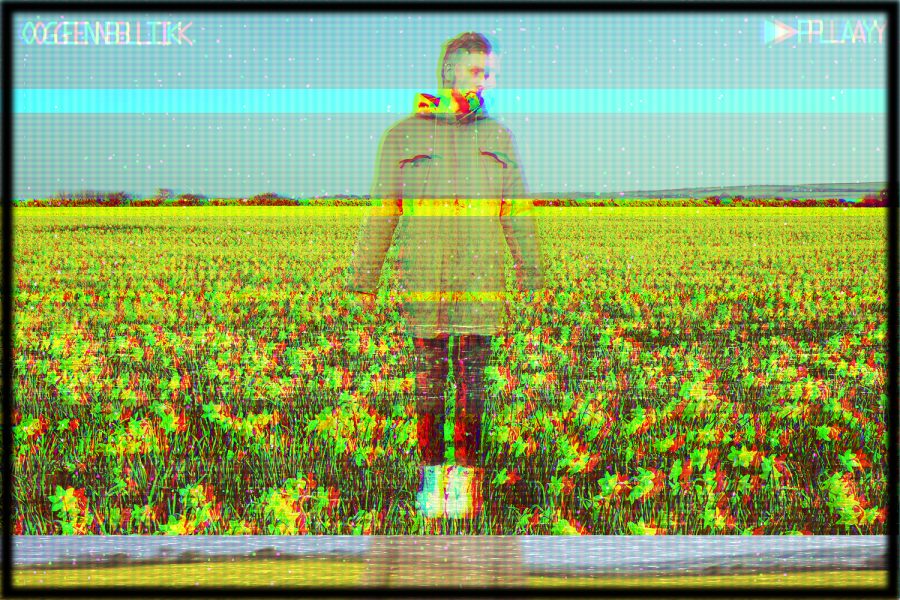
Listening for What’s Disappearing: Ogenblik on Sound, Nature, and the Call of the Curlew
At Curlew Action, we spend a lot of time thinking about absence, and about the quieting of landscapes that once rang with birdsong, and what it means when a sound slips from everyday life into memory. Few artists explore that space as thoughtfully as Ogenblik.
The project of Dublin-based musician Gregor Ruigrok blends ambient folk, electronica, and field recordings into music that asks you to slow down and listen closely. His latest EP, Dúlra, named for the Irish word for “nature”, is steeped in the voices of the natural world, with the unmistakable call of the curlew running like a fragile thread through it.
We spoke to Gregor about his musical journey, the influence of birdsong on his work, and why some sounds matter so much precisely because they are fading.
For those who might be discovering your work for the first time, could you tell us a little about who you are and how you came to making music?
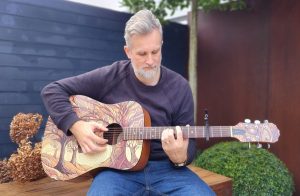
Sure! I grew up in Rush in North County Dublin. I’ve been making music in some capacity since I was a teenager. I used to do bits of music as Trophy Boyfriend years ago until I realised playing live and making remixes made me wildly anxious. So now I make music in ‘the studio’ only. It doesn’t pay the mortgage but it keeps me sane.
What’s the story behind the name Ogenblik?
My surname, Ruigrok, is Dutch. The Ruigroks moved to Rush in North Dublin in the 1930s to grow flowers. The word ‘Ogenblik’ literally means ‘the blink of an eye’ or an instant. Similar to Irish, I like the poetic idea that one word can say so much. And I wanted to nod to my heritage.
How would you describe your sound to someone who hasn’t heard it yet?
Ambient Folk or Folktronica maybe. I tend to write everything on acoustic guitar and then build up from there. The Ogenblik stuff is mood music that hopefully stands up to repeated listening. Field recordings would also play a large part in setting that mood. Electronic music from the 1990s would be a large touchstone for me too. Bands like The Orb, Boards Of Canada and Brian Eno.
Who or what were some of your earliest musical influences, and how have they shaped your journey so far?
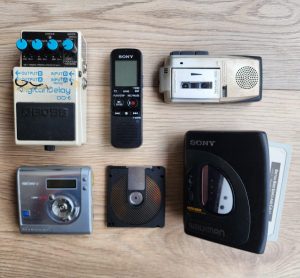
Oof… That’s a big question. My Ma had a good record collection, mainly folky stuff. Bert Jansch, Pentangle, Simon & Garfunkel. So that is all in the mix. My Granny used to send me bird watching magazines and now and again there’d be a cassette of birdsong with them. I had a walkman like a lot of 80s kids, and I used to play those birdsong tapes over and over.
This has been a huge influence on what I’m doing now. They had a very particular… dry?… sound…. A little bit serious. A voice would solemnly name the bird in question, and then the field recording would follow. They were weirdly meditative. I definitely try to tap into that.
How has your relationship with the natural world influenced your path as a musician?
Years ago, if you asked me that I probably wouldn’t have said it did much. But invariably I ended up writing about the sea or the beach or related ephemera. I just didn’t think about it. So now I’m leaning into that. It’s what comes easiest to me. Where I grew up in Rush was right beside the sea so the sound of waves and wading birds was the sonic backdrop to my childhood.
Dúlra, the name of your new EP, takes its name from the Irish word for “nature.” What does that word mean to you personally, beyond its dictionary definition?
It’s the feeling you get when in nature. Being in a woods at dusk that has a huge rookery. Watching the silhouettes of a thousand birds approach against an orange sky and hearing the raucous caws above you. Then they explode in a clatter of chattering before settling again. You can try to describe it. But to experience it is everything.
You’ve woven together electronica and field recordings. How did you find the right balance between human-made sound and the voice of the natural world?
On my album, This Used To Be The Sound Of The Future, last year, I used field recordings in a fairly obvious way. It was very on the nose, in that it set the mood but didn’t interplay with the music.
For Dúlra, I really wanted to try get a call and response feel. To try reflect that feeling of being present in nature. That the field recordings complimented the music and vice versa.
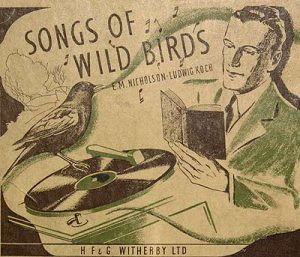
Ludwig Koch’s archival recordings play a big role in this project. Who is Ludwig Koch? What drew you to his work, and how did it shape the direction of the EP?
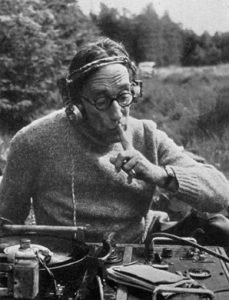
Ludwig Koch was a sound recordist from Germany. He was one of the first ever people to record animal sounds, particularly birds. He moved to the UK in the 30s and worked with the BBC. His work ended up being the foundation of modern field recording.
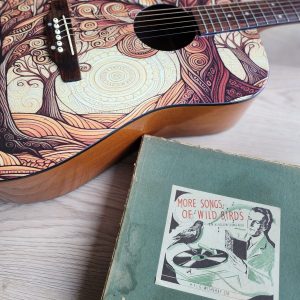
I found a copy of his 1936 release of recordings of wild birds. It comes on two 78s. It came with a book, describing the recording techniques, where he’d have to set the microphones up to a mile away and then keep recording, hoping to capture the bird while singing. An expensive process in the 1930s when the recording was done directly to wax.
I admired the patience and dedication it took to capture these sounds. Everything in the digital age feels so immediate. Everything is ‘content’ and captured in seconds. Koch’s work feels deliberate and mindful.
The calls of the curlew feature prominently in Dúlra. Why were they important to include?
Growing up in Rush in North County Dublin, the Curlew was a familiar sound. When I heard Ludwig Koch talking about recording birds and why his recording of the curlew was used as the theme tune for Desmond Hawkins’ radio show, The Naturalist, it resonated with me. The old recordings reminded me of listening to those tapes as a kid and the call of the curlew… it was a double dose of nostalgia.

The curlew is an increasingly rare sound in many parts of Ireland and Britain. How do you think music can help people feel the urgency of its conservation?
I don’t know that it can. Do people hear the call of the curlew in a piece of music and long for its return? I think people need to be directly connecting to our wild places and hearing the sounds themselves. Maybe that’s music’s role in this. Reminding people of what’s there and encouraging them to reconnect.
What role do you think sound plays in our collective memory of species and landscapes that are vanishing?
Heavy! I think, much like smell, a sound can instantly transport you back to a time and a place. So from an archival standpoint it’s huge. Like Erik Satie’s ‘furniture music’, the sound of wild places colours the air. Even if you’re not actively listening it gives the atmosphere a soul.
An estuary without the call of a curlew or the peeping of oyster catchers is just… wrong. As much as I love field recordings, the thought that they could be all that’s left of some species is deeply depressing.
What do you hope listeners take away when they sit with Dúlra?
‘Holy sh*t, this Ogenblik guy is an amazing musician.’
No seriously, I just hope it channels a bit of that feeling of meditation or immersion in nature that my granny’s tapes gave me.
Finally, what’s one sound that, if lost, would leave the biggest silence in your world?
My son laughing. It’s instant joy. You want to bottle it and keep them that way but you can’t… they have to grow up, so it’s bittersweet. Actually… I should record it.
Holding Space for Sound
Listening to Dúlra is a reminder that conservation isn’t only about numbers and maps, it’s about atmosphere, memory, and the subtle sounds that tell us we’re still connected to the living world. The curlew’s call is not just a bird sound; it’s part of a shared cultural and emotional landscape.
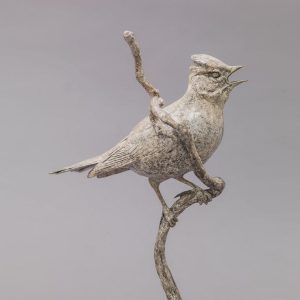
At Curlew Action, we believe that protecting species also means protecting these moments of quiet awe, the ones that cement themselves in your mind and return years later in an instant. Music like Ogenblik’s helps keep those sounds present, not as nostalgia alone, but as an invitation to step outside, listen closely, and care deeply.
Watch this YouTube video to hear Gregor explaining the project.