
Dümmer reserve landscape, Lower Saxony, photo by Mary Colwell
International visits
Curlew Action is working to improve connections and communication between Curlew projects across Europe. Curlews are birds without borders and migrate across the European continent between wintering and breeding grounds; a large percentage of the birds we see wintering in the UK breed elsewhere and many of our own breeding birds winter in Ireland, Spain and Portugal.
By improving communications, we are strengthening the collective skillset of fieldworkers and environmental policy makers and helping develop wide-ranging support networks. It is essential we protect Curlew in both their breeding and wintering areas.
By donating to Curlew Action, you are helping to protect the Curlew across the European range.
Below, you can read reports of the field visits we have carried out, which have helped us understand Curlew better than before and which have helped strengthen the bonds of field workers and conservationists throughout Europe.
Germany and Austria, 2026
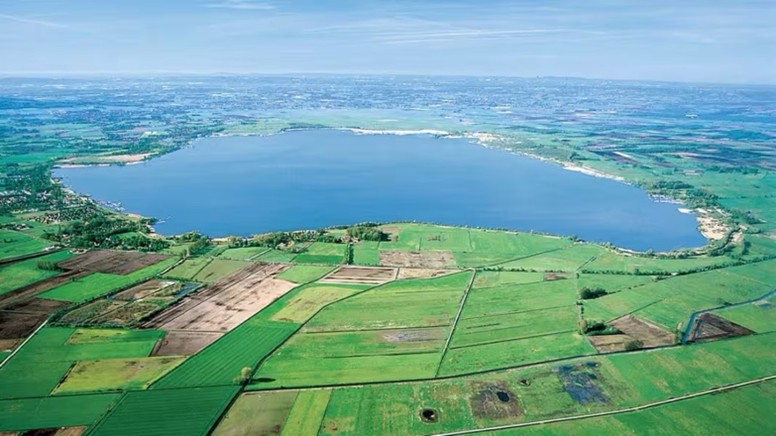
In May 2026 Mary Colwell and Flo Blackbourn visited partners and projects in various parts of Germany and Austria. This trip was a continuation of Curlew Action’s outreach to our European colleagues, strengthening networks and information exchange across the continent and the UK.
We have posted a number of reports and photographs from this visit, with more to follow, which you can read on our reports page.
France, 2025
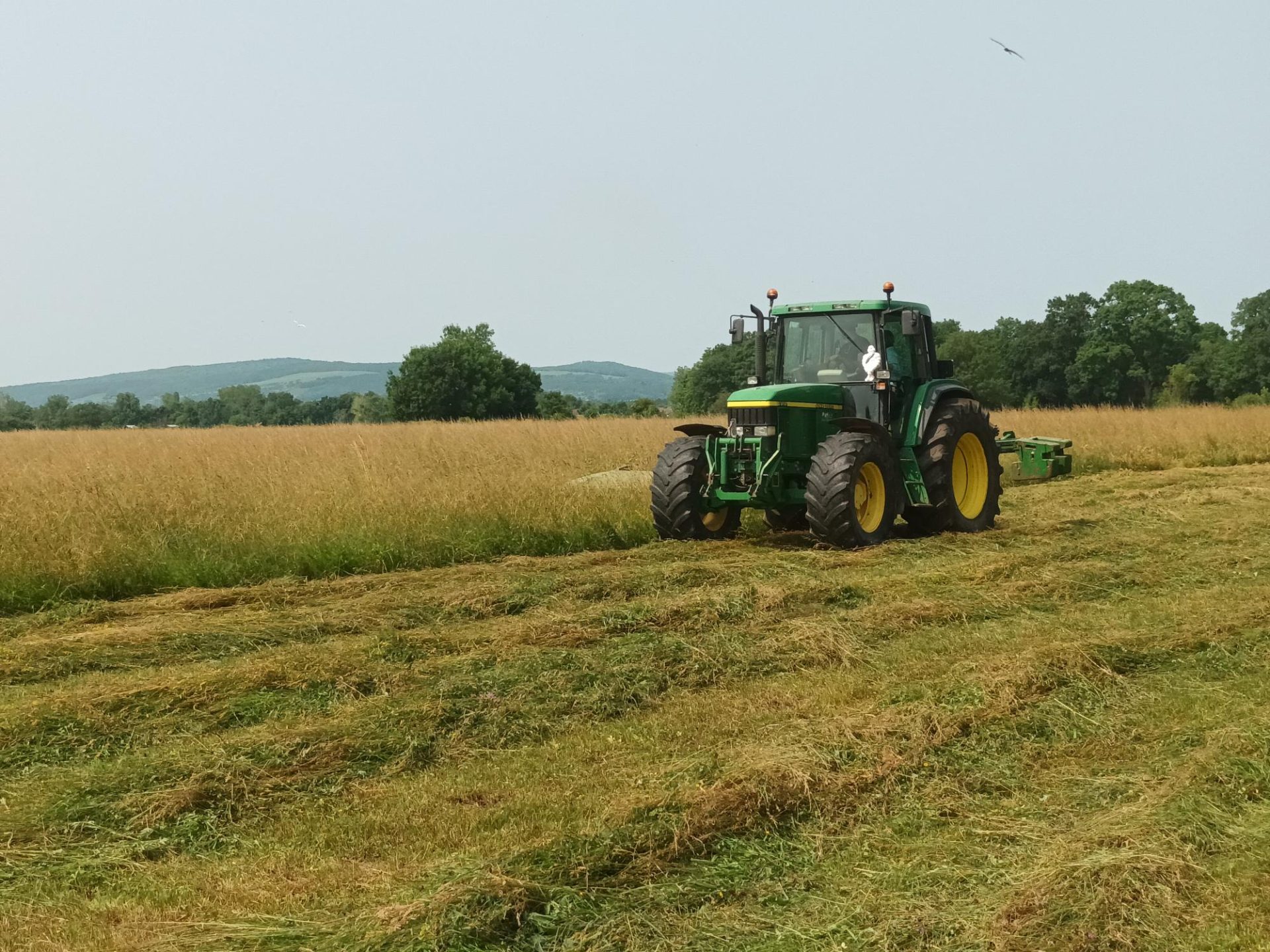
The plight of Curlews in Europe was laid out before us on our visit to three regions in France in early June 2025. Across the European continent Curlews nest almost exclusively on farmland, with very few exceptions. This leaves the birds vulnerable to farming activities, which in turn are dictated by agricultural policy and local cultures.
Ireland, 2025

In 2025 we made a visit to Ireland to see the new 25 million euro EIP (European Innovation Partnership) project for ten species of breeding waders, which runs for five years from 2024 to 2028. This project builds on the previous excellent Curlew work which laid the groundwork for Curlew conservation in Ireland. This is turn came out of the All-Ireland Curlew Workshop held in November 2016, a result of the 500-mile Curlew Walk.
The EIP is co-funded by the NPWS (National Parks and Wildlife Service) and the Department of Agriculture.
Mary Colwell and Flo Blackbourn from Curlew Action were guided by Owen Murphy, manager of the EIP.
Poland, 2025
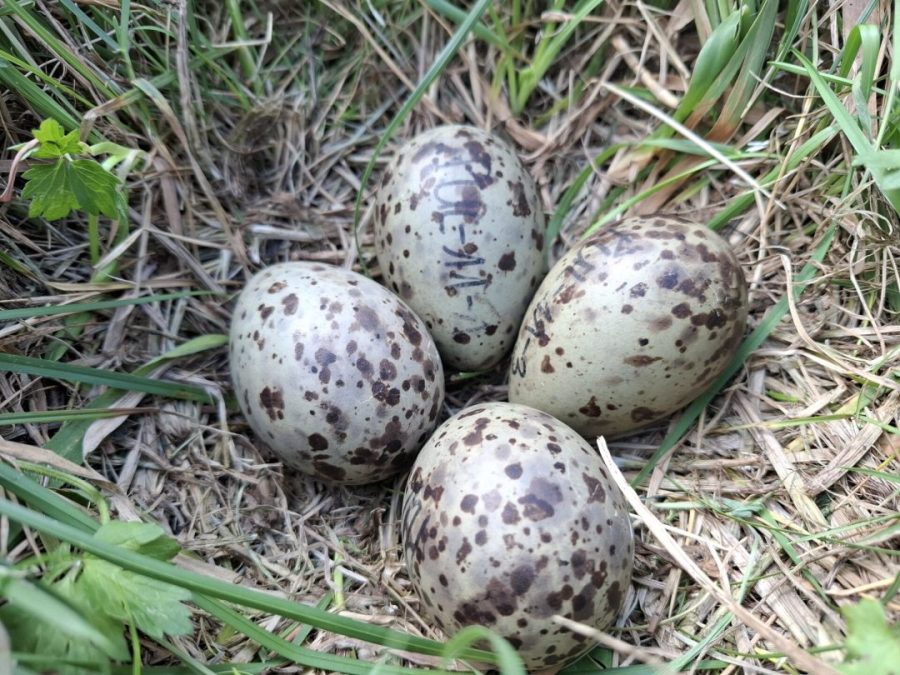
In 2025 Mary Colwell made a follow-up visit to Poland, after the successful trip there in 2024 (read about that here). Since the 2024 visit an EU Life Project bid was successful which guaranteed money for five years for electric fencing, headstarting, land purchase, habitat management, predator control, and hardware like temperature loggers and GPS tags. Mary therefore returned in May 2025 to see this major plan start to unfold.
Belgium 2024

In May 2024 we joined Griet Nijs, a Curlew hero working for the conservation organisation Natuurpunt, the largest environmental charity in Belgium. Curlews are Griet’s passion, and she works tirelessly to lead a small group of volunteers to save what remains of them, about 200 pairs throughout the country. We joined her in the field to find out more about why Curlews are faring so badly – a decline of between 50-60% in 20 years. We visited breeding areas and a wildlife rescue centre where rescued Curlew eggs are being headstarted in mixed pens with lapwing and Oystercater. High predation pressure and unprecedented rainfall causing flooding of nests meant that most of the nests Griet was monitoring had already failed by May.
Poland, 2024
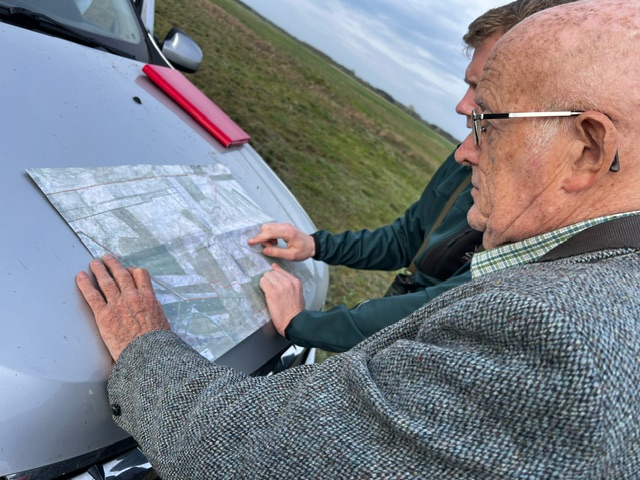
In April 2024 we visited Polish breeding areas in the east of the country, which are concentrated in wide river valleys. Polish Curlews experience many of the same issues as Curlew in southern England, namely farming practices on river floodplains and high levels of predation by foxes and corvids. In addition, they were the first country in Europe to headstart Curlew, using a different method to that adopted in the UK, and many of their headstarted birds are now breeding and supporting their endangered population of only 200 pairs. As Ireland’s Curlew population is also under extreme threat, and Ireland wish to develop their own headstarting programme, we will facilitate information exchange and field visits.
The Netherlands 2023
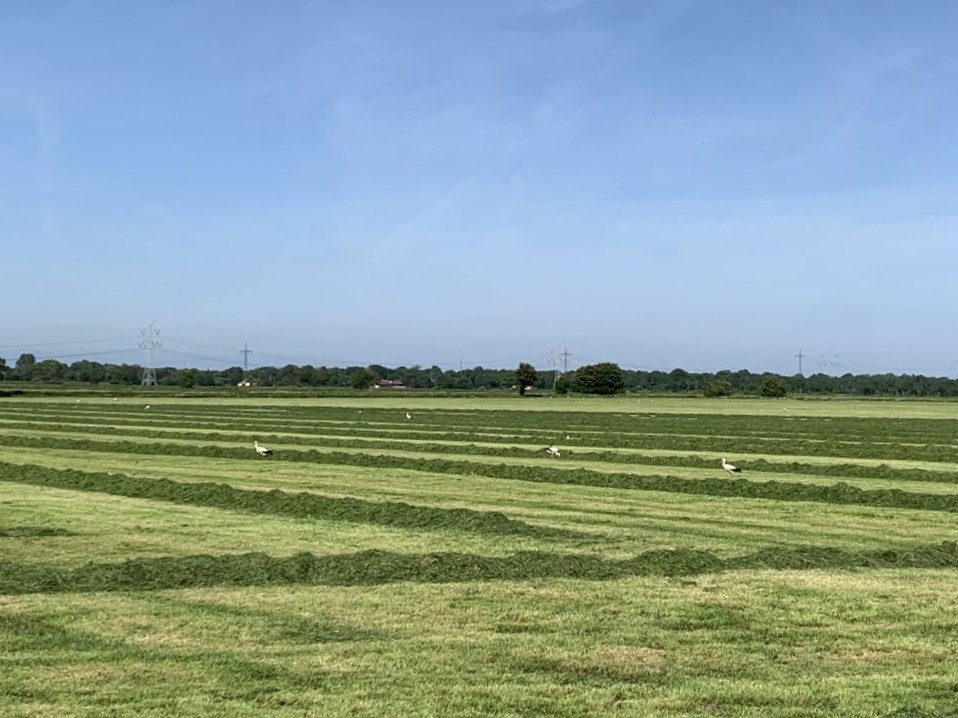
In June 2023 Curlew Action took a member of Natural England on this trip to visit Curlew nesting habitat in the NE of the country. It was a vital visit at a time when the new ELM schemes were being formulated and it allowed NE to learn from the Dutch approach to Curlew nesting on intensively managed farmland, both in terms of habitat management and farmer payment systems. A summary blog of this trip can be found here. In Feb 2024, fieldworkers from The Netherlands attended our European Fieldworker Workshop to share their knowledge with the wider Curlew community.
Finland, 2023
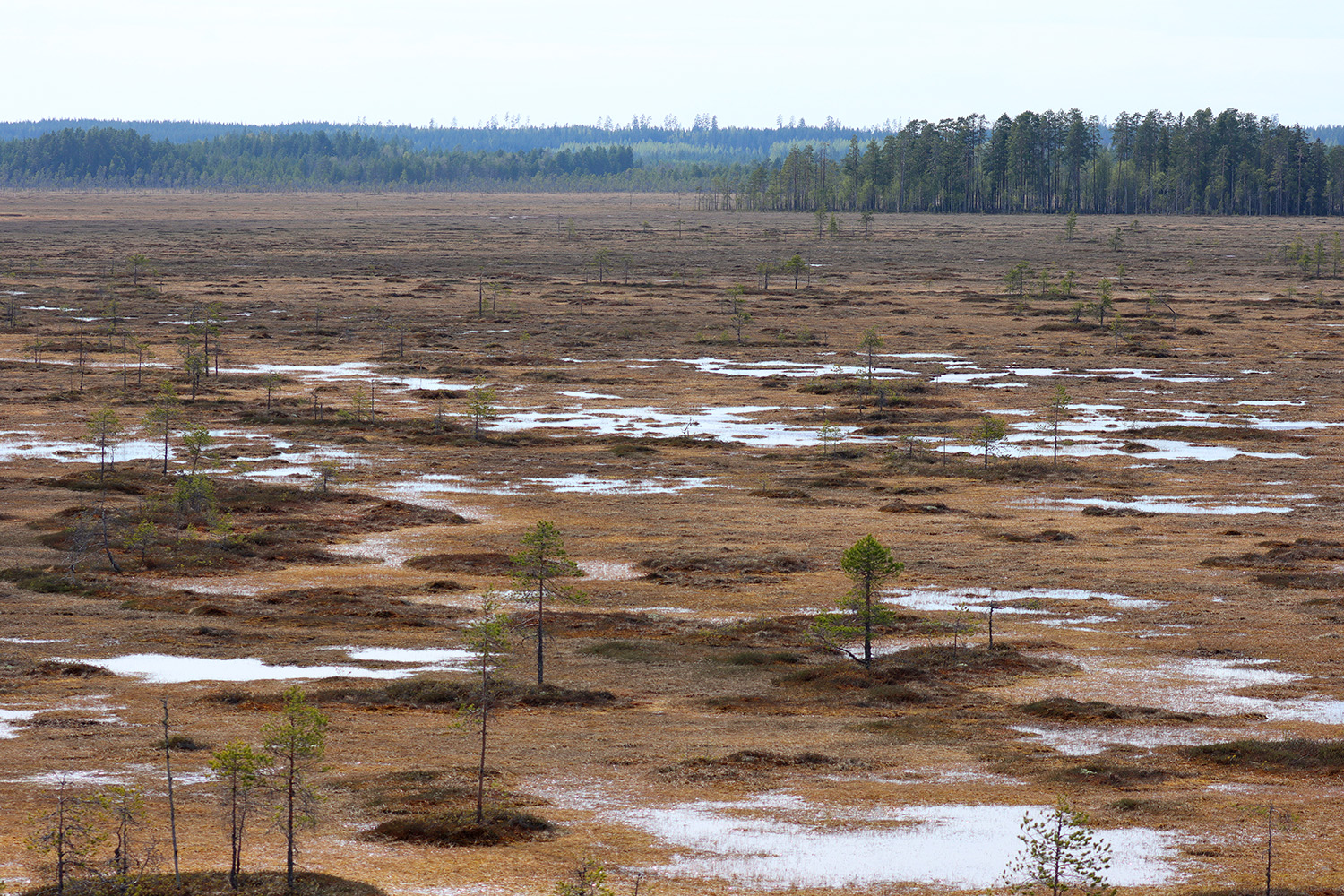
As the UK and Finland hold the highest densities of Eurasian Curlew, communication between Curlew conservationists is important and instructive. Our visit in May 2023 helped Curlew Action to gather a clearer picture of the similarities and differences between the UK and Finland, particularly the impact of forestry and predation. We found that the difference in predator make-up and distribution, the widespread practice of hunting in forests and much lower density of people, make it difficult for us to draw useful comparisons between the threats facing breeding Curlew in the UK and Finland. We will return to Finland to visit southern Curlew populations which nest in increasingly intensive farmland. Read a summary blog here.