
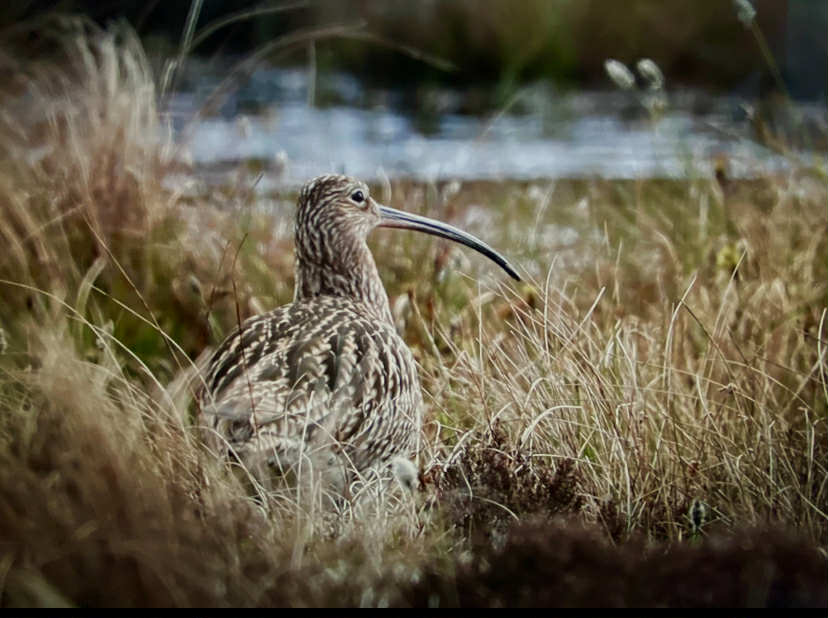
Memories of the filming phase with the RSPB Life Curlew Project officers, during the making of the Curlew campaign film, Stunned by Silence – by Malka Holmes, Greengage Films & Curlew Action Ambassador
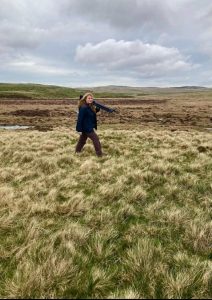
Curlew breeding Season 1
Intermittently Sam would raise his radio tracking antenna to the sky to see if he could pick up any signals of the tagged Curlew chicks. Once he had detected some chicks he would catch them and put them in bags.
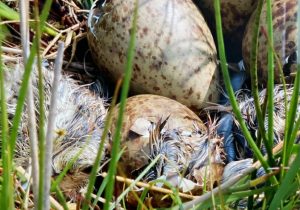
He would then sit in amongst the damp rushes or heather to check the chicks for ticks, he would also measure and weigh them. It was fascinating, the chicks were beautiful, small, fluffy replicas of their parents with their extremely long legs and beaks.
One day, after we had covered a large expanse of heather moorland, Sam and his colleague had their hands full so they, very briefly, handed me the bag with the curlew chick in it.
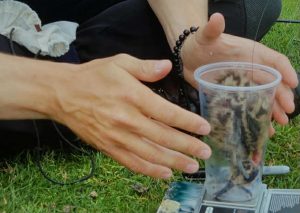
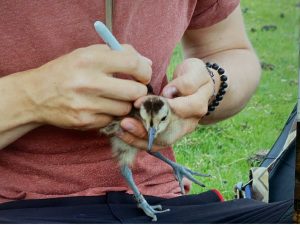
The air was filled with the Curlew’s call and Skylark song, this was the soundtrack to our upland exploration.
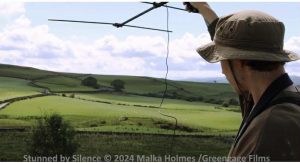
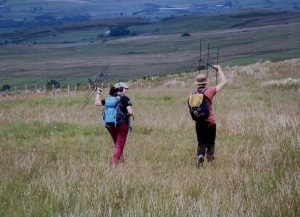
I was completely alone up there with the Curlew’s call on the wind, sometimes a Wheatear, with their beautiful bold colour, would land on the old drystone wall behind me or a Stonechat would perch on a gorse bush.
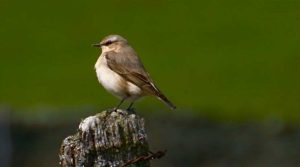
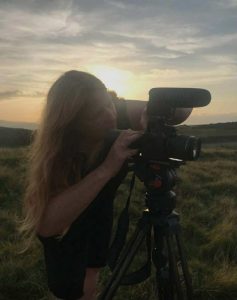
The Curlew calls would rise and fall sometimes close by, other times in the far distance.
Up here in this wild place my Father’s Curlew poem came into my head.
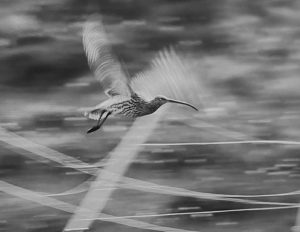
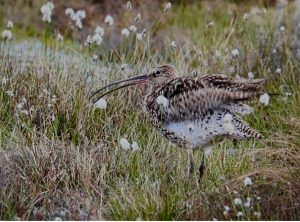
CurlewWith boomerang-shaped wingscuts sky.skater set in motionby a sheet of ice.Alone with his ownweird bubbling whistle,steers, bow-beaked,past grazing cloud,isolates day and land.Combines sound and silence,brushes air with soft vigour,slides across sloe-blue hills –vehicle of wind’s roaring breath.– Clyde Holmes
One of the main reasons for the Curlew declines is the change of land management.
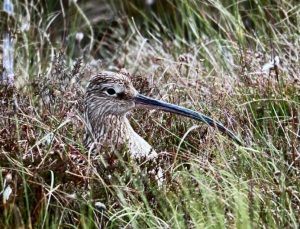
Agriculture has intensified over recent decades, this has impacted the Curlew’s success as a breeding bird. Predation is also a factor in the Curlew declines. There are only a few pockets of habitat left that are suitable for the breeding Curlew. This population of Curlew here in North Wales is one of the last key populations of Curlew left in the world. As I packed up my cameras and walked through the heather I had a sense of the fragility of this upland habitat and the life that depends upon it. Although it felt so timeless on these moorlands, there are so many changes taking place that are negatively impacting our wildlife. The rapid Curlew decline is symbolic of the delicate ecological balance that is needed for the survival of all living things. As human beings we cannot continue to separate ourselves from the natural world as we are all intrinsically part of it.
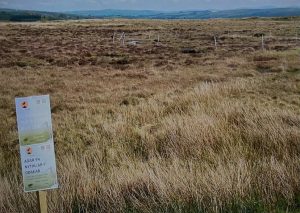
I walk all day.
Mountains still before me,same colours near and far.
Chestnut-tinged blobs of peat,setting sun rises as I climb,rays of amber and grub grey.– Clyde Holmes
About the author: The founder of Greengage Films, Malka Holmes, completed a BA (Hons) degree in fine art and design at Leeds Metropolitan University. After graduating she went on to work for RTL television in Germany, as a photographer. On her return to the UK she worked as a photographic assistant for the wildlife photographer, David Woodfall. She then specialised in moving imaging and worked as a camera assistant for Time Team C4, the BBC science department at White City in London, and the BBC specialist factual department in Cardiff. Malka then felt she wanted to pursue her career focusing entirely on the natural world. She started volunteering for the Wildlife Trusts and the RSPB, this included getting her hands dirty planting trees, hedge laying and outdoor education, this lead to Malka making films for NGO’s and charities, so the seed for Greengage Films was sown.