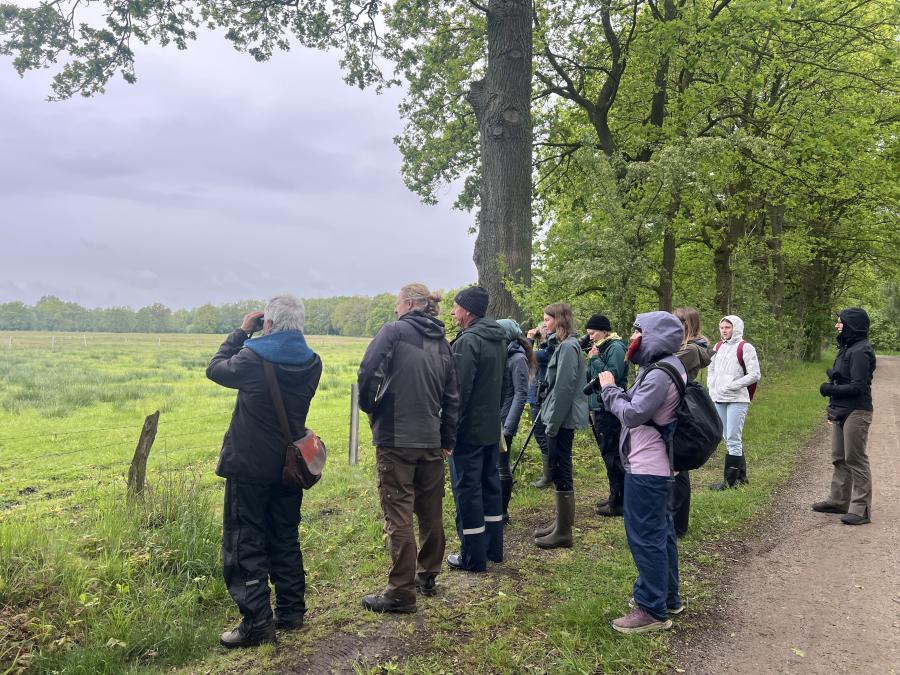
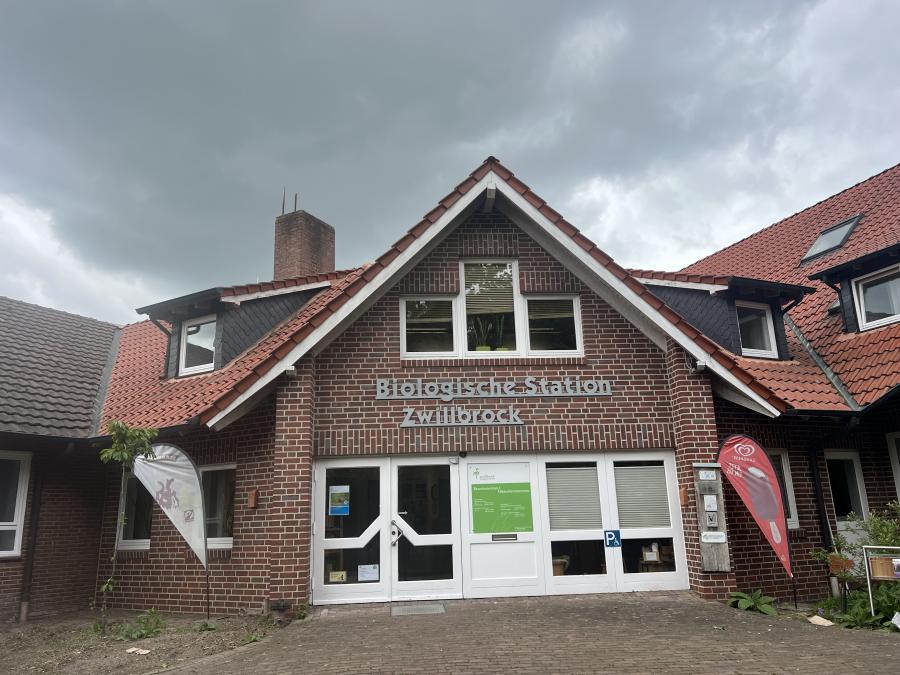
The area we visited in this large and heavily populated state in the west of German was once part of a vast peatland landscape stretching across the border between Germany and The Netherlands, (see the previous blog). Our base was the village of Zwillbrok on the Dutch border, guests of the Zwillbrock Biological Station. Thank you to everyone for being so kind and welcoming.
It is difficult to imagine what these wetlands must once have looked and sounded like when Curlews, godwits, ducks and countless other waterbirds thrived amongst pools, marshes and open fens. Today, only fragments remain, scattered between intensive farmland, but you still catch glimpses of that older world in patches of surviving wetlands and in the rich, black, peaty soil beneath your feet.
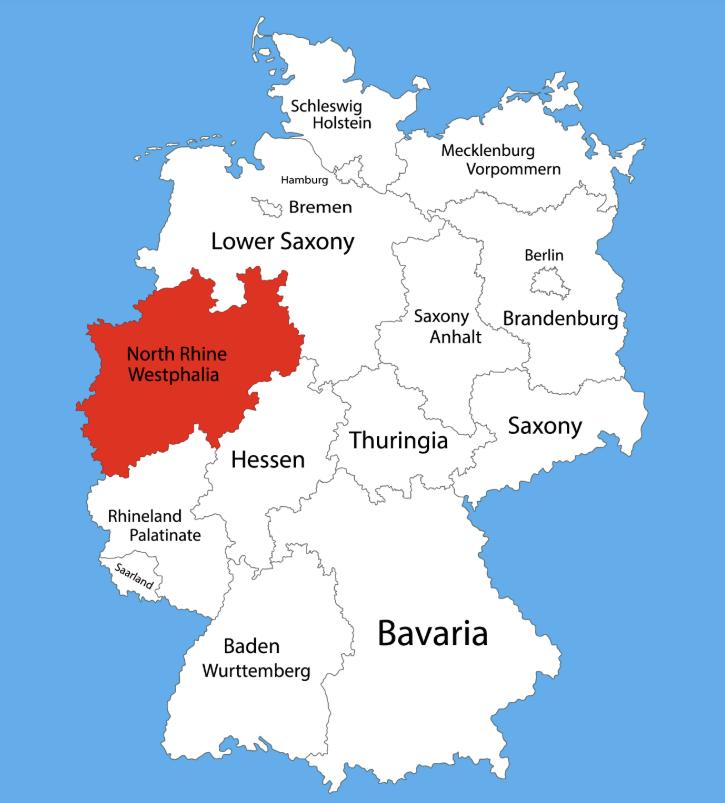
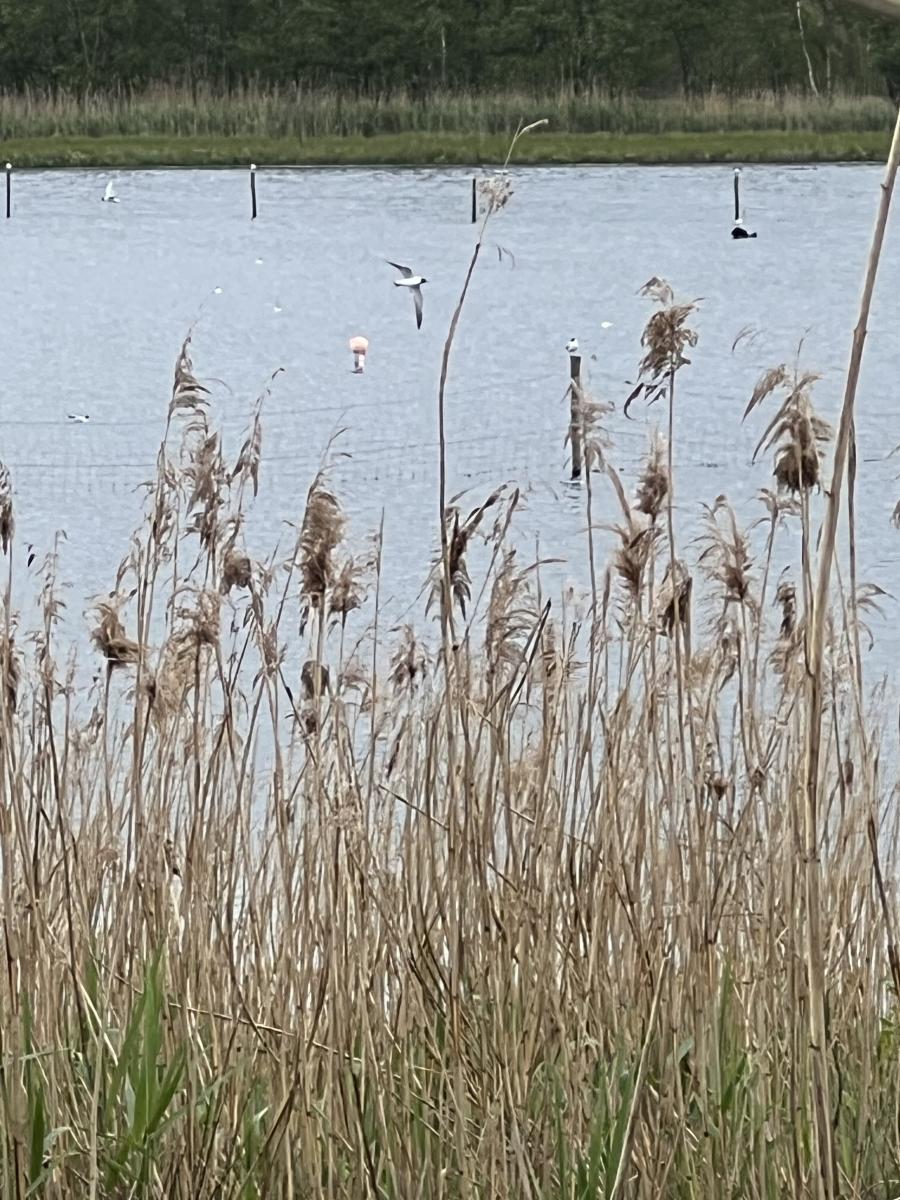
There is also an unexpected touch of the exotic here as Zwillbrock is home to the northernmost breeding population of (escapee) flamingos in the world. Their startling pink plumage provides a surreal splash of colour against an otherwise muted landscape of green, brown and grey. They are a reminder that nature can still surprise you in the most unlikely places.
Land prices are extremely high in this agricultural region, driven by pressure from intensive farming, renewable energy, industry and development. As a result, restoring and protecting grasslands for Curlews is both difficult and expensive, while farmers remain under strong pressure to maintain highly productive dairy and silage systems. Across this patchwork of private and public land, conservation is constantly shaped by competing priorities, making Curlew recovery in this part of NRW especially challenging.
Everywhere we visited, the intensification of agriculture and high levels of predation were cited as the major issues. A diverse range of predators, such as Foxes, Crows, Polecats, Stone Martens, Stoats, Badgers, Raccoon Dogs, Raccoons and a suite of raptors, are reducing breeding success in most areas, with Fox highlighted as the most significant predator. Curlews are being pushed into an increasingly precarious position, leaving them among Europe’s most threatened farmland birds.
EU LIFE PROJECTS
The European Union provides major support for nature restoration here, much of it through LIFE projects. One of these is the LIFE Wiesenvögel NRW project (2020–2027), which covers around 15,000 hectares of wet grassland and focuses on species including Eurasian Curlew, Black-tailed Godwit, Lapwing, Redshank and Snipe.
Led by LANUK NRW alongside local biological stations and Dutch partners, the project brings together conservationists, farmers and land managers to restore landscapes at scale. Practical measures include rewetting grasslands, creating shallow pools, removing trees from important breeding areas, delaying mowing to protect nests and chicks, and reducing predation pressure. Backed by almost €19 million from the EU and co-funded by the state of NRW, the project is helping breeding waders locally while also strengthening the wider Natura 2000 network used by migratory birds across Europe.
The Borken District
Our temporary home was the Biological Station in Zwillbrock in the Borken district. We were shown around the Curlew areas by Daniela Reich, the local coordinator of the Life project there, Max Roth, a field ornithologist, Elmar Eickhoff, who is coordinating the predator control, and Petra Löttker, who is the project coordinator for the EU Life project. Thank you to them all for such a kind welcome.
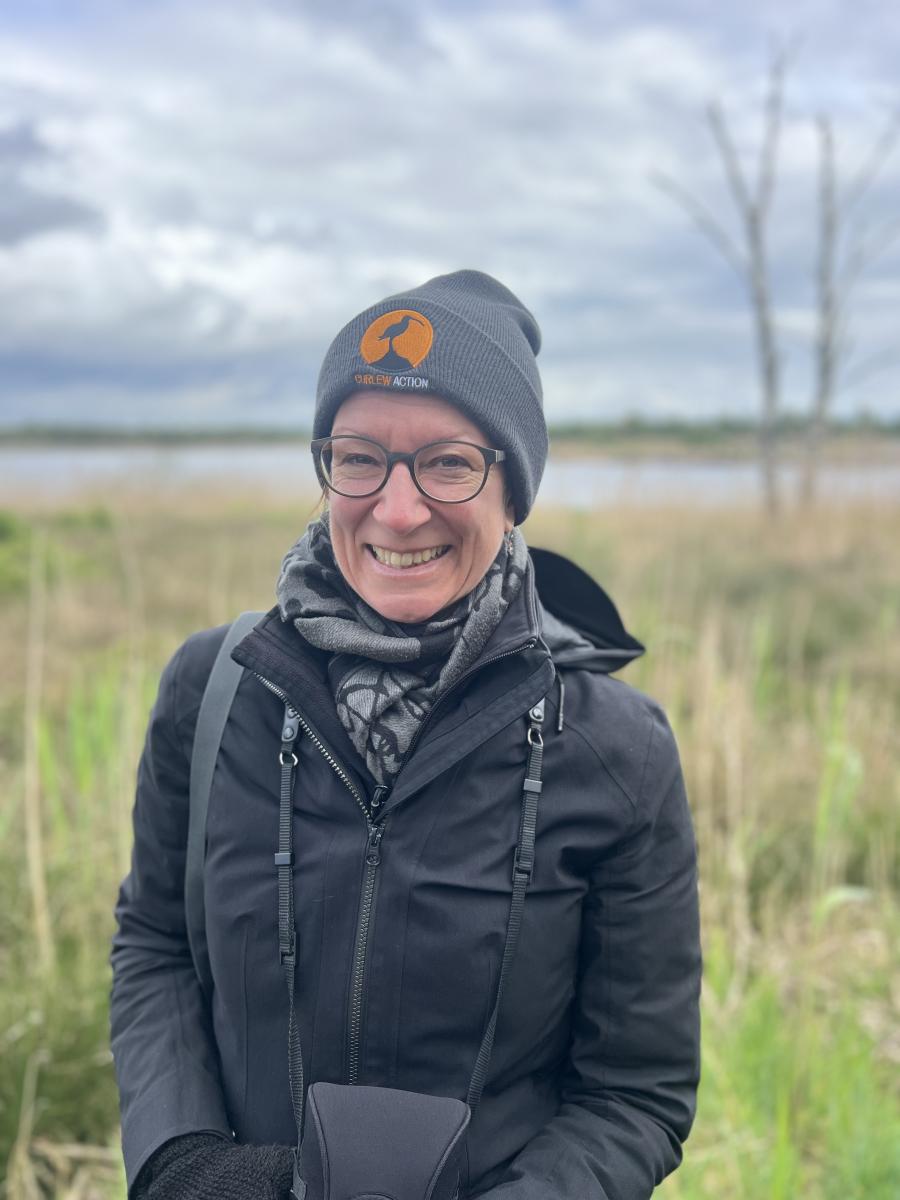
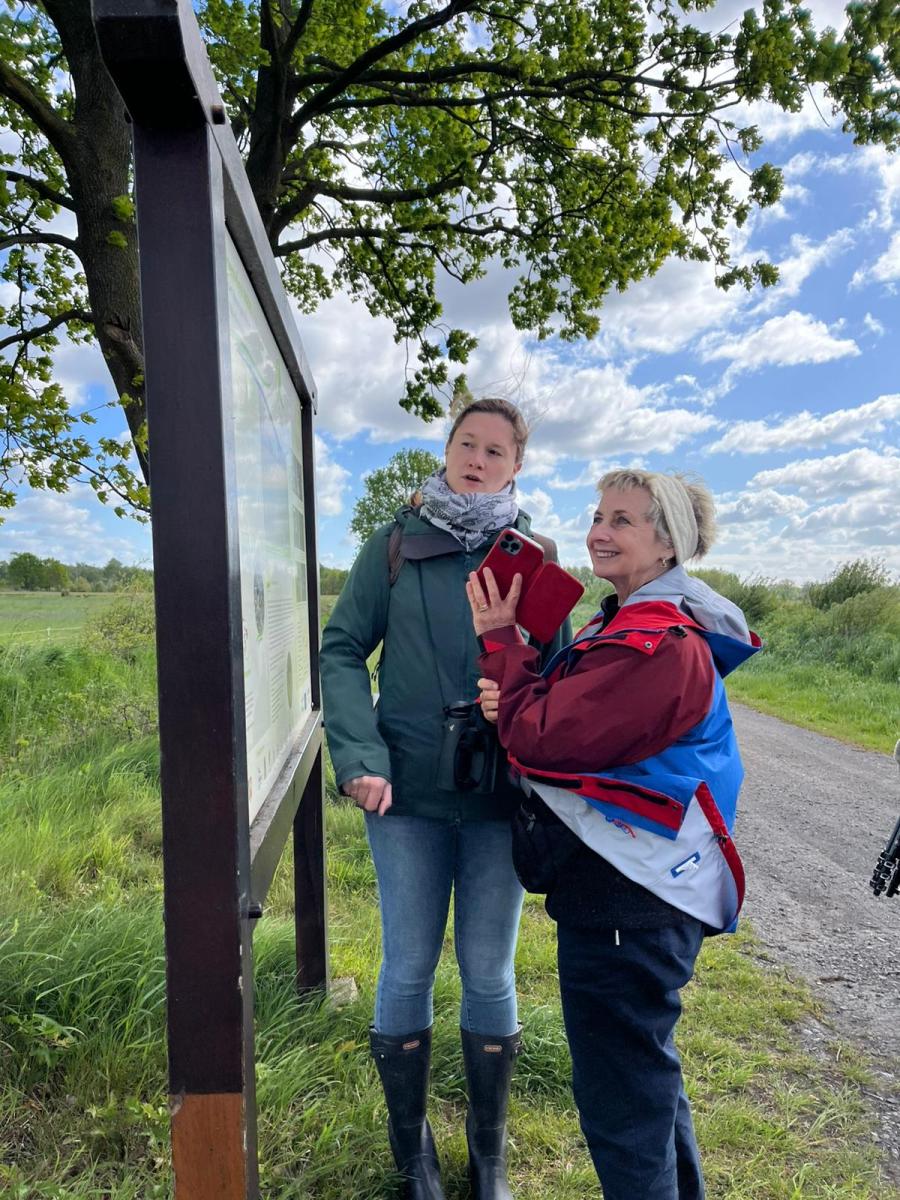
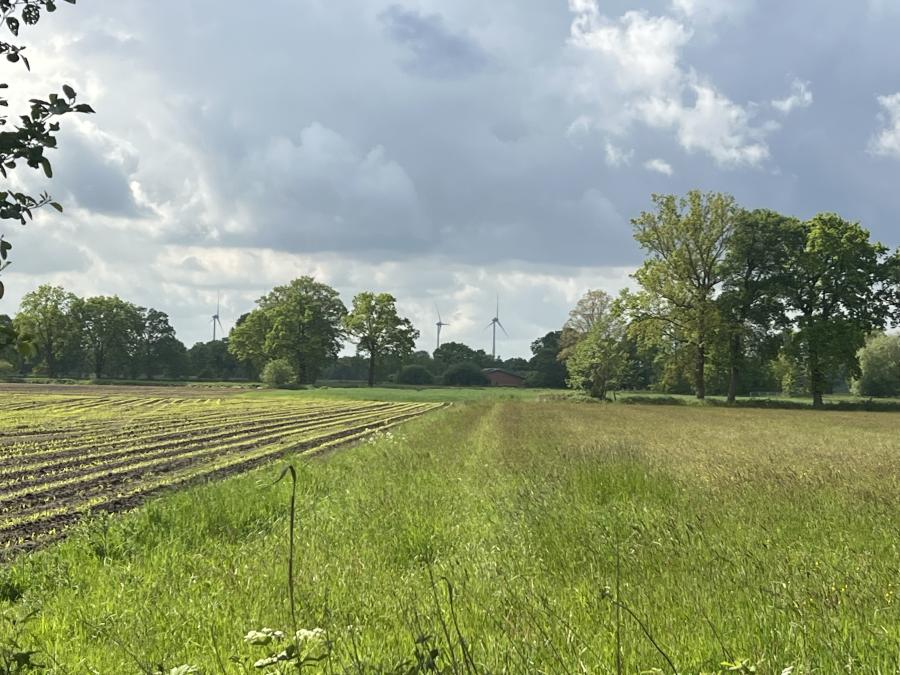
This landscape is dominated by intensive dairy farming and grassland management. Curlew breeding sites are scattered amongst silage fields, maize and improved pasture, divided by drainage ditches, hedgerows, small woodlands and villages.
Daniela described the enormous effort going into supporting the breeding waders, and in some places, it is paying off. One particularly successful site now holds nineteen breeding pairs, “the biggest godwit population in North Rhine-Westphalia”. There has also been major investment in practical conservation, including funding from MUNV (Ministry of Environment North Rhine Westphalia) for an additional nine kilometres of predator fencing.
An especially important development has been the appointment of a professional predator control coordinator, Elmar Eickhoff, who works closely with volunteers and farmers, and a company who specialise in hunting and fence management. Reducing Fox and Carrion Crow numbers has improved breeding success. “We already had nine godwit pairs with chicks,” Daniela explained, and there is real hope the funding can continue because Elmar “gets along with everybody, and everybody likes him.”
Our conversations repeatedly returned to the challenge of balancing scientific conservation with public engagement. While the project relies heavily on monitoring and habitat management, Daniela feels conservation organisations can become trapped in technical language and statistics.
“We cannot only use facts, facts, facts,” she said. “It is about saving a species.” “They don’t care because they cannot care about things they don’t know about,” she added.
It is something we at Curlew Action recognise only too well. People care once they form an emotional connection with the birds themselves.
A bitterly cold wind and squalls of rain accompanied our walks along cycle trackways and footpaths. The discussions highlighted a growing awareness that conservation must involve communication, education and social science alongside ecology and fieldwork as equal partners, not afterthoughts.
A new socioeconomic study is now underway within the LIFE project to explore public attitudes and the wider benefits of nature protection. Daniela and Petra both warmly welcome this approach and hope it will “touch the hearts of people.” They reflected that when people hear about Curlews returning faithfully each year, repeatedly trying to breed despite many failures, “that is a real story they can connect with.”
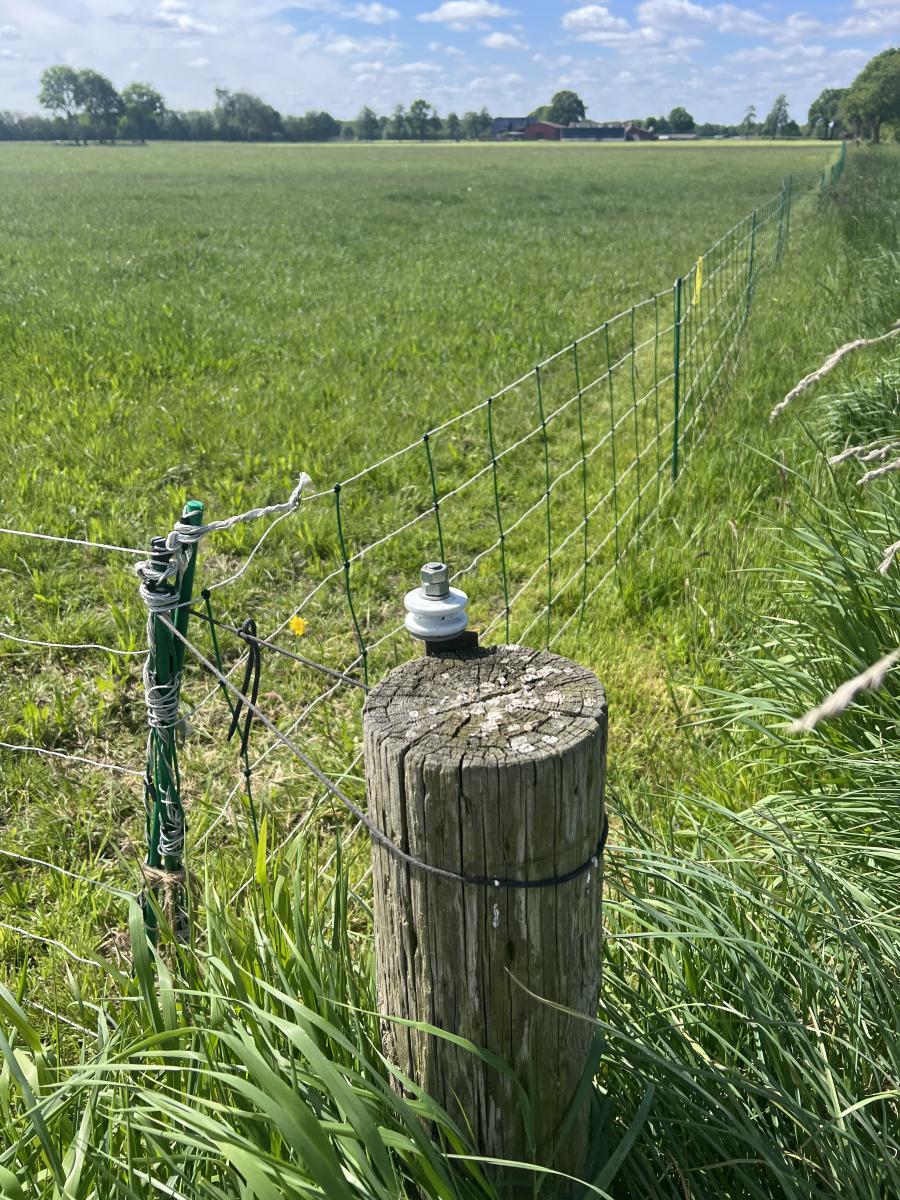
We saw the large-scale electric fences designed to keep out mammalian predators, though with varying success, wrapped around the meadows. They are ineffective against predatory birds, of course. Within these enclosed areas the landscape felt alive. Curlews and Black-tailed Godwits called constantly overhead, some swooping towards us in alarm, defending nearby chicks.
Outside the fenced areas, however, it felt different. A pair of Curlews stood silently together on a small rise, carrying an unmistakable air of failure. They had almost certainly recently lost their clutch. Above them a Black Kite drifted slowly across the sky. Twenty minutes later we encountered another subdued pair. In these intensely managed landscapes there is drama everywhere - breeding and loss, alarm calls and silence, success and failure, all of them unfolding side by side against a backdrop of human life and its accompanying pressures.
As we talked about the fate of birds, a Curlew aggressively chased a Marsh Harrier across the fields. In the distance, and two Cranes passed low across the horizon like slow-moving fighter planes. Daniela watched them for a moment, visibly emotional. “I don’t have the money or the people to help me protect every nest,” she said. “And we are in such a bad situation now, every nest counts.”
Daniela’s personal pain was something we came across again and again throughout this trip, and on previous Curlew Action visits throughout Europe. As a team leader recently put it to us, “conserving wading birds in farmland is about as tough as it gets in conservation.” The emotional strain on the people on the ground is real, a topic we addressed at the recent European Curlew Fieldworker Workshop in February 2026
Farmers are central to the survival of breeding waders across this landscape and, thankfully, relationships with the farming community, and with the local hunters helping with predator management, have improved greatly through the patient outreach work of Daniela, Elmar and the wider team. But, as so often in conservation, much depends on continued funding. Good things can happen when resources are available. The difficult question is what is the fate of the birds when funding comes to an end?
Compensation Land
Another discussion centred on a network of “compensation areas” created alongside a major road-building project. These fragments of offset land are intended to make good the habitat loss caused by development but turning them into functioning breeding habitat for waders isn’t as simple as moving pieces around on a chess board.
One site we looked at was long, narrow and bordered by trees and roads, which is far from ideal. Here trees were deliberately retained to encourage Curlews to fly higher and reduce collisions with traffic. Elsewhere, shrubs and scrub are taken out to recreate the open landscapes Curlews prefer.
The project also revealed how conservation depends as much on persistence and negotiation as it does on science. Land acquisition from private owners has involved years of paperwork, discussions and compromise. Unusually for Germany, the scheme includes a formal long-term monitoring agreement with the road-building authority, allowing conservationists to assess whether mitigation measures are genuinely working.
That monitoring has uncovered continuing problems more than a decade after work began. Old drainage systems still affect wetland conditions, and some areas are not yet functioning as intended. It was a powerful reminder that habitat restoration is rarely quick or tidy. Conservation often becomes a long process of continual adjustment and learning, extending many years beyond the completion of the infrastructure itself.
We ended with a shared feeling that conservation depends not only on science and habitat management, vital though they are, but also on storytelling and helping people feel personally invested in the future of species like Curlews.
Kreis Steinfurt District
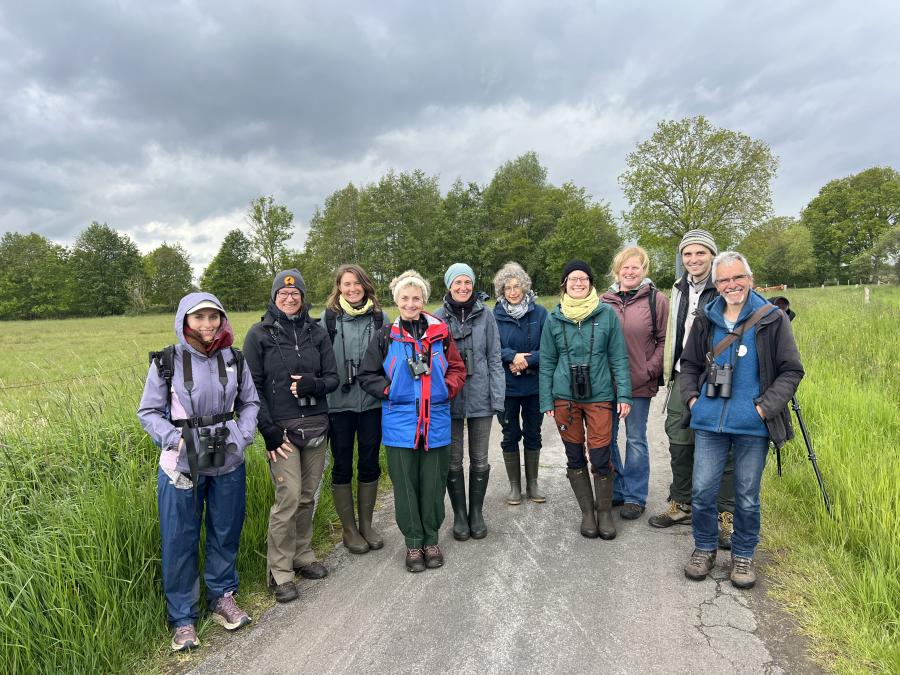
Biologische Station Kreis Steinfurt is another of the network of biological stations, which are a distinctive feature of conservation in NRW, acting as bridges between government agencies, scientists, farmers, landowners and local communities.
Steinfurt is an important area holding 40% of the Curlews in NRW - around 210 pairs. The landscape has more trees than Borken, but it has the same issues of intensive farming regimes and high predation. Foxes are constantly cited as by far the principal predator.
Much of our time here with a group of partners in the Life Project was spent discussing the sheer complexity of modern Curlew conservation, where ecology, farming, infrastructure and human attitudes collide in often unexpected ways.
Breeding Success
That same sense of struggle ran through conversations about breeding success. Fieldworkers described how difficult it has become for Curlews and other farmland birds to raise young successfully, even where nests still hatch well. In one area, around twenty-five Curlew nests produced only three or four fledged chicks despite relatively good hatching success. However, nearby Black-tailed Godwits performed far better, with several pairs successfully rearing young. Perhaps their more colonial nesting habit provides the ‘bird-power’ needed to see off potential predators, but the more dispersed Curlew pairs often fight alone.
Older records showed how dramatically conditions have shifted. Occasional years of excellent productivity did occur, but today, consistently poor breeding success has become the norm. Predation was repeatedly identified as one of the major causes.
As a result, predator management and nest protection dominated many discussions. Fieldworkers compared different fencing systems around nests, debating the effectiveness of electric wire versus mesh fencing and the efficacy of non-electric temporary ones. They discussed which technique best allows the chicks to leave protected areas safely after hatching. And when they do leave the relative safety of hte fenced areas, how long will they survive in a landscape with so many predators? The conversations revealed how nuanced and experimental modern wader conservation has become; sharing ideas, exchanging problems and solutions and adapting to each season is essential.
Future of Farming
Underlying all of this was concern about the future relationship between conservation and farming. Farmers renting state-owned land, including nature reserves, face increasing financial and regulatory pressures that make these areas difficult to farm profitably. Subsidy payments have fallen, fertiliser restrictions limit grass productivity, and delayed mowing to protect nesting birds reduces the quality of grass for silage.
Because many first nests are lost to predation, replacement clutches often mean chicks remain in the grass until late June or July, long after the grass is ideal as feed for livestock. By then, the nutritional value has declined significantly.
Several people worried openly about who will manage these landscapes in the future if traditional dairy farmers continue to withdraw. Some hoped that smaller-scale or “hobby” farmers, often using traditional cattle breeds, may help fill the gap. Biological stations may have access to specialist machinery for difficult wetland habitats, but they lack the staff, farming knowledge and capacity to manage large areas themselves.
Again and again, the conversations returned to the same conclusion - Curlew conservation is inseparable from wider society. Protecting these birds is not simply about reserves and regulations, it is about creating wader-friendly landscapes and building knowledgeable, caring communities so that farming and wildlife can coexist under increasingly difficult economic conditions.
Windfarms
Another discussion centred on a proposed wind farm planned close to an important protected area for Curlews and other meadow birds. Looking over maps and GPS tracking data, the team explained how birds regularly move well beyond the formal boundaries of protected sites. They repeatedly use fields where turbines are now proposed, including areas that have been important to breeding birds for decades. One traditional Curlew area, monitored for over 30 years, lies directly within the zone of concern. Conservationists are trying to convince planners that protecting designated reserves alone is insufficient if the surrounding landscape steadily becomes industrialised.
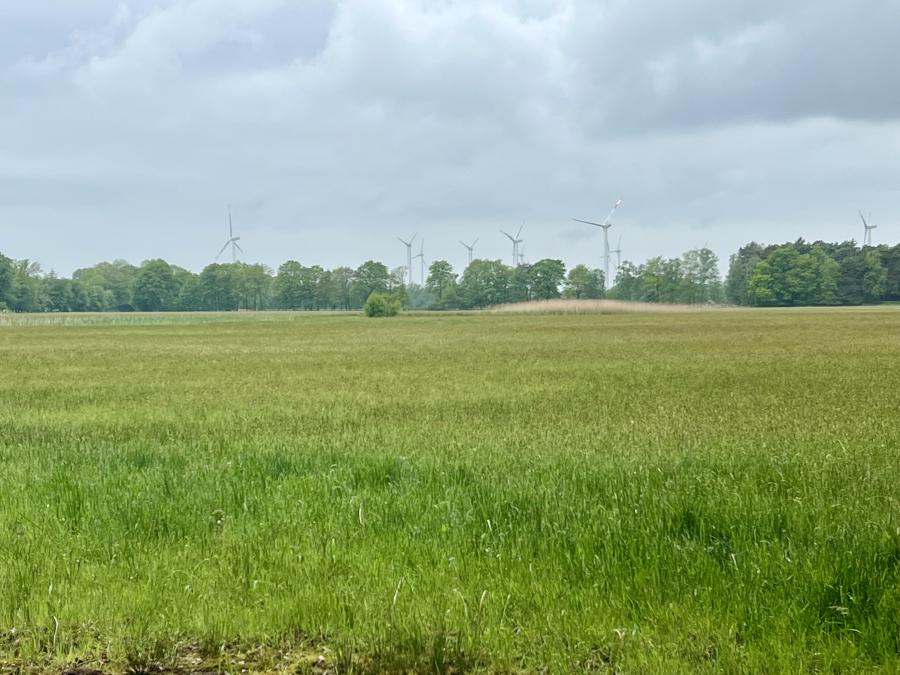
However, without legal protection, little can be done. Under existing rules, turbines only need to be placed more than 400 metres from a Curlew nest, and the wider disturbance to Curlews is not treated with the same legal concern as direct strike impacts on species such as Red Kites.
Historically, compensation for disturbance involved creating replacement habitat, sometimes as much as 20 hectares for each affected Curlew territory. Today, compensation is increasingly financial, paid into broader national biodiversity schemes, with little certainty that local birds or habitats directly benefit.
This illustrates one of the central frustrations of modern conservation - even where evidence clearly shows how birds use a landscape, not just a reserve, proving ecological importance remains extraordinarily difficult. Meanwhile, the pressure of development continues to grow around already fragile populations.
Meeting Christian Kipp
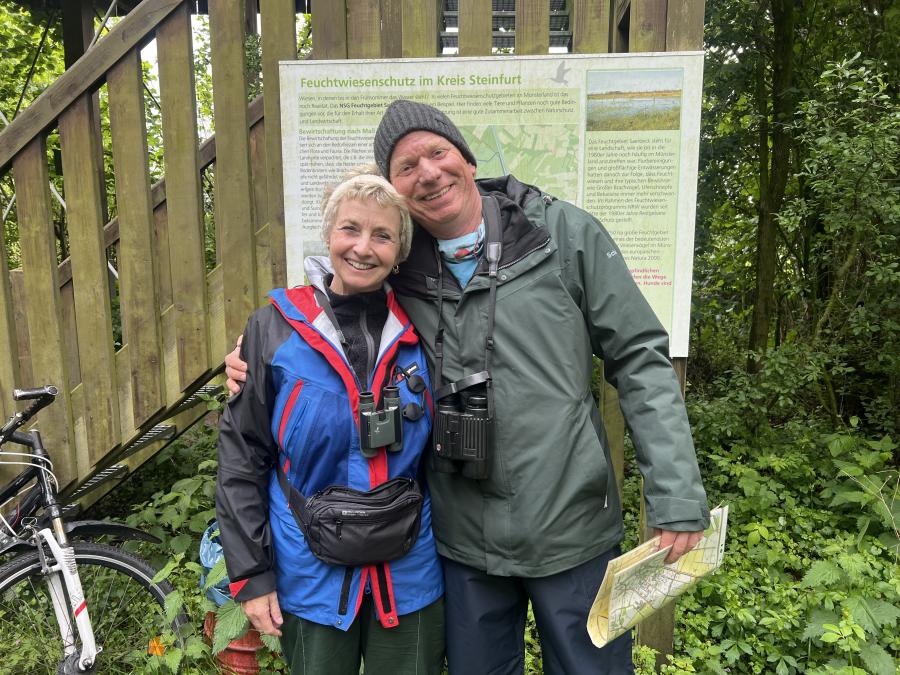
At the Saerbeck wetland reserve it was an honour to meet Curlew legend Christian Kipp. Christian and his father, Manfred, have accumulated an extraordinary body of knowledge about these birds over many decades.
Manfred began ringing Curlews here in the 1960s, eventually marking more than 3,000 birds during his lifetime while carefully studying the unique patterns on eggs to identify individual females across successive years. Christian has continued that work for the last fifteen years, carrying forward a remarkable long-term study.
It became clear why water lies at the heart of everything here. A large artificial scrape, flooded through an ingenious system recreating an old stream course, now provides shallow wet habitat across several hectares. Each year the area is drained, cut and then re-flooded, creating ideal conditions not only for Curlews but also Black-tailed Godwits, Lapwings, Redshanks, Cranes and passage waders moving through the region.
Yet beneath the richness of the site lies a deep unease about the future. There are currently around twelve pairs of Curlews breeding here, but productivity remains desperately low, far below the level needed to sustain the population naturally. Cameras show that Foxes account for most nest losses, while Raccoons, Raccoon Dogs, Martens, Badgers and a suite of birds of prey increasingly add to the pressure. Relations with the local hunters are not always positive, making predator management difficult.
Beyond the reserve boundaries the wider landscape has changed profoundly since the 1960s, when surrounding grasslands were drained, deep ditches dug and meadows converted into intensive arable farmland. Outside protected areas there are now few nesting Curlews, and those that do have little prospect of successfully fledging chicks.
Considering the complexity of this intensely used landscape the inescapable and sobering conclusion is that reserves alone are not enough if the surrounding landscape continues to deteriorate. Even the best-managed protected areas become ecological islands or ‘sinks’ which attract the attention of predators, and it becomes a never-ending battle to keep fledging rates high enough for stability. Without broader changes in how the wider countryside is managed, the long-term future of these birds remains uncertain.
Connection to Nature
As a group of us sat together in a café, the conversation centred on the bigger picture of nature, society and the future. I asked everyone a question - if they could be granted one wish that would make the greatest difference to their work, what would it be? I expected a range of practical answers such as more money for fencing, more predator control, more staff, especially for farmer liaison. But that was not what happened.
Everyone, in different ways, said much the same thing: if society truly cared for wildlife and habitats, we would not treat nature as we currently do. Reconnecting people with the natural world is essential. If more people understood and respected nature, many of the measures needed to help Curlews and other waders would be far easier to achieve.
Of course, we still need farming, energy, housing and infrastructure, but we would make much greater efforts to work with nature rather than ignore it, or worse, see it as an obstacle to be removed. As things stand, society has become so disconnected from the natural world that conservationists face a constant uphill struggle, trying to explain not only what they are doing, but why it matters at all. It struck a deep chord with me, and at Curlew Action we believe they are right.
Conclusion
The beginning of our German trip was both fascinating and deeply thought-provoking, raising many of the same issues we would repeatedly encounter in the other regions we visited. The sheer scale of the pressures facing wading birds breeding in modern farmland forces difficult questions about how we produce food while still leaving space for wildlife to survive.
It also highlighted yet again that wader conservation is not for the faint-hearted. Curlew fieldworkers everywhere are required to be many things at once: skilled practitioners, negotiators, communicators, storytellers, problem-solvers and often unofficial psychologists. They need deep knowledge of farming systems and wildlife ecology, physical stamina, emotional toughness and an ability to navigate conflict with patience and diplomacy. They also often act alone, grappling with issues that are demanding and emotionally draining, and the outcomes are frequently demoralising – too many nests fail again and again, year on year. Yet, like wading birds themselves, they will readily flock together, providing each other with support and encouragement. Spending time with these battlers on the front line is a privilege and I am full of admiration for what they carry, and for the dedication it takes simply to keep going.
The next stop was to the adjacent area of Lower Saxony to an extraordinary wader reserve based around Dümmer Lake, which is the subject of the next blog.