
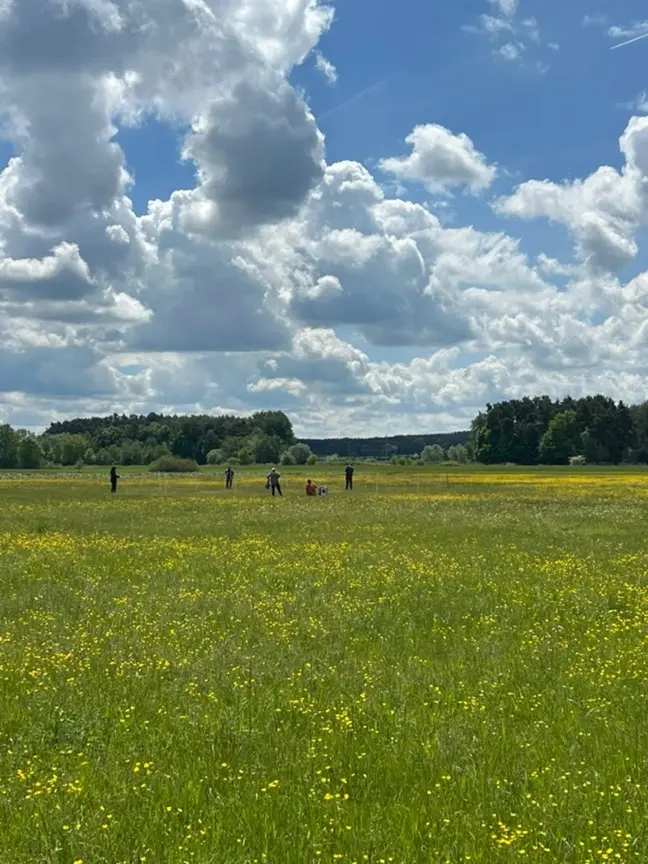
A group of us walked slowly through a field towards a dot marked on a map. We were so close but could see nothing. Was she still there? Then suddenly Jan pointed to a brown shape just a couple of metres away. Hidden, crouched low with her head and neck flattened to the ground, a Curlew did what her ancient instinct told her to do, lie flat and hope danger passed by.
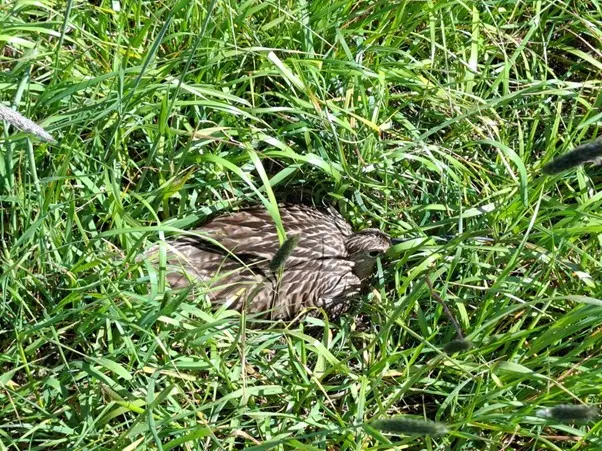
For the Curlew team at the Wiesmet in Bavaria, this was part of everyday life during the breeding season - finding birds and protecting nests and chicks. For me, it was an unexpected moment of reckoning; something inside almost broke. Everything we had seen over the last week, and on all the other site visits across Europe and the UK over the last few years, focused with razor sharpness onto this one Bavarian Curlew. I was powerfully and painfully aware that all she had to protect herself and her eggs from the world we have so profoundly changed around her was her own soft, feathered body and the steadfast grit to face danger with stillness.
I watched her with rising emotions. Millions of years of being honed to the vagaries of this planet had brought this bird to this spot year on year to raise the next generation. Of course, breeding was always tough; There have always been dangers that have taken eggs, chicks or adult birds, but nothing on the scale of today. In 2026, her chances of successfully fledging young without our intervention are virtually zero. Many dangers creep through the grass at night, glide in on the wind with far-seeing eyes, thunder across the ground at unnatural speed, steel blades flashing. It is relentless. And then, indistinguishable to her from any other predator, people descend with equipment and busyness. All the while she remains silent and still.
We went back to the cars to gather fencing and other equipment, but I didn’t join them, I knew she would have to be flushed to access the eggs, and I couldn’t watch. Filled with the enormity of what our economic, agricultural and industrial systems are doing to the earth, and to birds honed to a different reality, I stayed alone in the car. Not for the first time on this decade-long Curlew odyssey, I cried.
The world we now inhabit is too out of kilter and too distorted to return to how it was when they could sustain themselves, because that was long ago, before there were intensive farming systems and so many people with such high demands. This dedicated fieldwork is the only way these birds will have any chance of fledging young, and even then, it is a slim one. Every tear that fell carried the knowledge that this project, along with all the others, is a last-ditch attempt to keep birds in meadows.
When they came back, they told me she had sat tight right to the last minute, until they were almost on top of her, and only then did she flush. It was good to know she returned to the nest once the work was finished, and I hope against hope she succeeded.
Overview of Curlew conservation in Bavaria
The 2021 Bavarian survey (Strategic Plan for Wet-Grassland Breeding Birds in Germany 2021) recorded 531 Curlew breeding pairs, a slight increase of around 7% since 2014/15 (there is a survey every 7 years)[1]. Yet beneath that modest rise lies a troubling picture. Curlews are now increasingly concentrated in a handful of stronghold areas, while many smaller breeding populations have disappeared altogether. Most alarming of all is the collapse in breeding success. Successful hatching was recorded in only 17 of 76 breeding areas, and across the whole of Bavaria just 40 young Curlews fledged successfully in 2021. Productivity averaged only 0.14 fledged chicks per pair in monitored sites, and just 0.07 across the whole Bavarian population, which is far below the approximately 0.5 chicks per pair thought necessary simply to maintain stable numbers. In short, adult Curlews are still present on the landscape, but far too few chicks are surviving to secure the Curlew’s future.
The report highlights a shift in the main pressures facing Curlews. Predation is now considered the greatest threat in Bavaria. A decade ago, farming operations and mowing were the main causes of nest and chick losses, but targeted payments to farmers for delayed mowing, along with funding for fencing and field staff, have enabled fieldworkers to locate and protect many nests successfully. As a result, hatching rates have improved. The major challenge now is chick survival, with foxes and birds of prey taking a heavy toll after hatching.
The Wiesmet Project
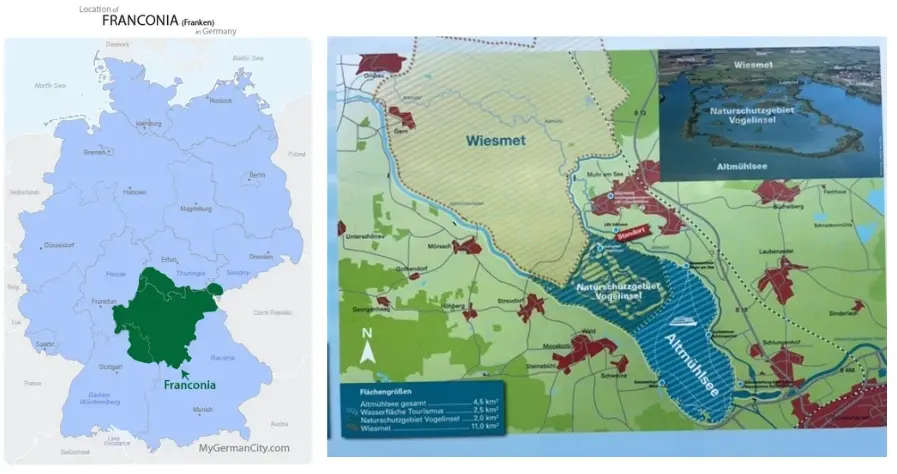
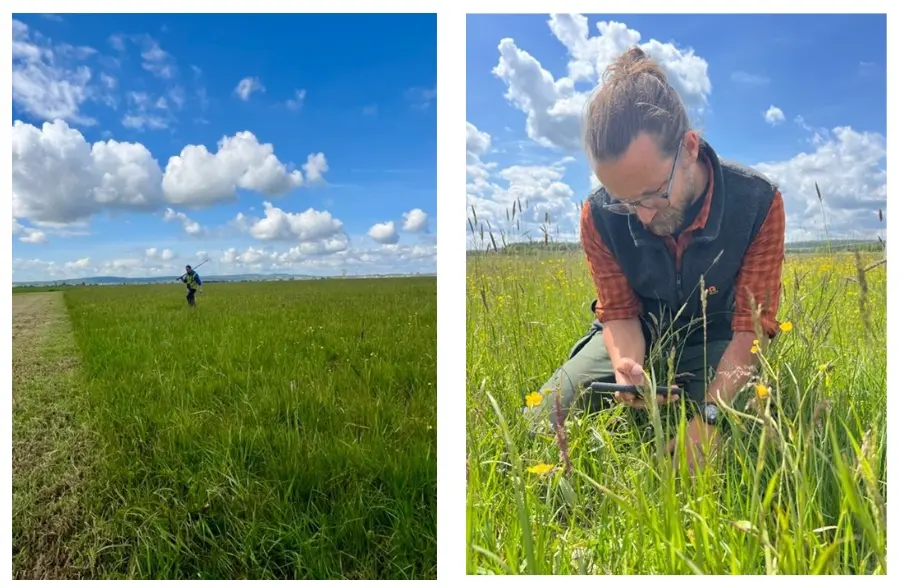
Behind much of the Curlew conservation work in the Altmühl Valley region lies a major ten-year restoration programme backed by 7.5 million euros from the German government and regional partners, the “chance.natur - Lebensraum Mittelfränkisches Altmühltal” project. It aims to restore wet meadow habitats for breeding waders such as Curlews, Lapwings and Black-tailed Godwits. It is also funding practical conservation work on the ground, and is a very important development for the future of the birds nest in the Wiesmet.
The Wiesmet has 25 breeding pairs of Curlews and is in the west of Bavaria in a region known as Middle Franconia; it is one of the hotspots identified in the report cited above, and one of the most important wader landscapes in the region.
Even that statement, describing a mere 25 breeding pairs as a hotspot, belies the tragedy of what has happened to Curlew populations across the UK and Europe.
This is a place of wet grasslands and open meadows, protected under the Natura 2000 network as a Special Protection Area. But it is also a working agricultural landscape where farmers rely on grass cutting for food for livestock.
Curlew conservationists Jan Heikens and Christoph Beckenbauer from LBV (Landesbund für Vogel- und Naturschutz in Bayern e.V) spend many hours every spring trying to hold the line for Curlews, Black-tailed Godwits and other meadow-nesting birds here. “This is where we work every day, this is the centre of it all for us.” In total, Jan and Christoph look after an area in the Altmühl Valley that stretches for 60 kilometres along the river and is home to just under 50 breeding pairs of curlews. The Wiesmet forms the centre and core habitat of this area.
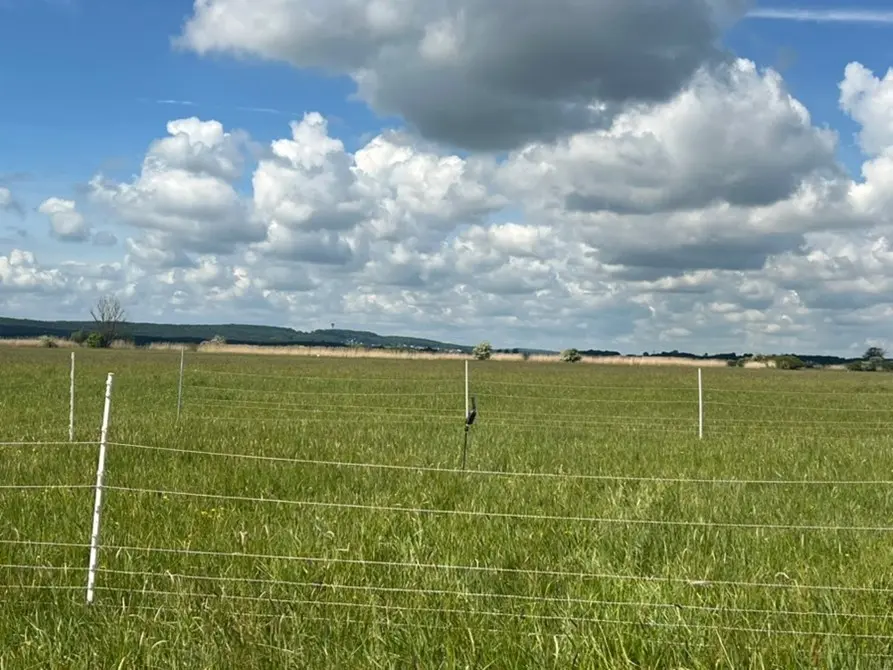
Electric fence surrounding Curlew nestThe population of Curlews in the Wiesmet has halved since the 1980s. On paper, the numbers have stabilised in recent years, but the reality beneath those figures is worrying. They have largely cracked the problem (excuse the pun) of eggs being destroyed by mowing machinery. Most nests are now found and protected and farmers compensated. The issue is getting chicks to fly away. Nearly all are eaten once they leave the protection of the fenced areas. The main predators are Fox, Marsh Harrier and Buzzard, amongst many others. As Jan put it, ‘Hatching success is high now. Fledging success is the failure point.’
However, there are certainly bright spots. One exceptional year in the Wiesmet produced 27 fledged Curlews from 25 nests. The chicks were heavier than average, and the fencing schemes worked. Some flew astonishing distances to their wintering grounds, heading south through France and Spain to Mauritania. One bird reached the Alps and crossed them at nearly five kilometres altitude. But overall, Curlew productivity is far below what is needed to sustain the population.
Silage Cutting
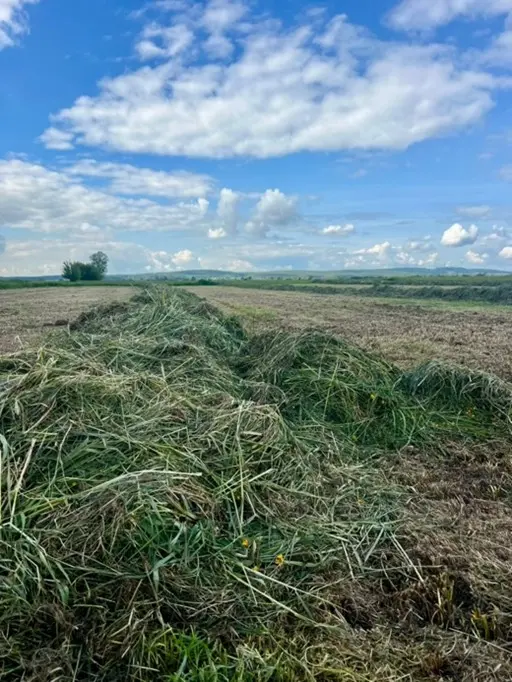
The first silage cut in the Wiesmet usually takes place before Curlew eggs hatch, which helps reduce nest destruction. Conservationists now work closely with farmers to locate and protect nests during this period. However, most chick losses occur later, before the second silage cut in mid-June, largely because of predation. It was noted that in other regions, where mowing schedules differ and there are fewer fieldworkers relative to bird numbers, direct nest destruction by agricultural machinery remains a much greater problem.
We witnessed the drama ourselves when three five-day-old chicks were known to be hiding somewhere in a field scheduled to be mown later that afternoon. Drone searches failed to find them, but the adults were still alarm-calling over the grass indicating the chicks remained there. At such a young age chicks don’t run from danger but sink low in the grass
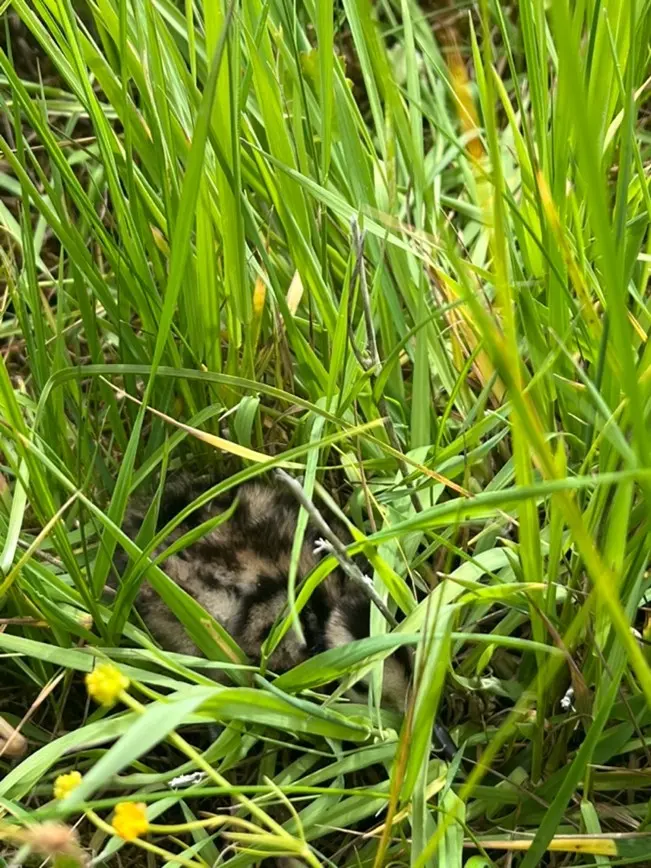
It is impossible not to feel caught up in these moments. Jan called the farmer to offer compensation to delay the cut for two weeks at a rate of €150 per hectare. Most farmers agree, but some do not. Legally, mowing a field when chicks are present is prohibited, yet in practice, if a farmer chose to mow anyway, it is doubtful any action would be taken for fear of damaging relationships with the wider farming community. Despite legislation, success depends on good will. Thankfully, he agreed.
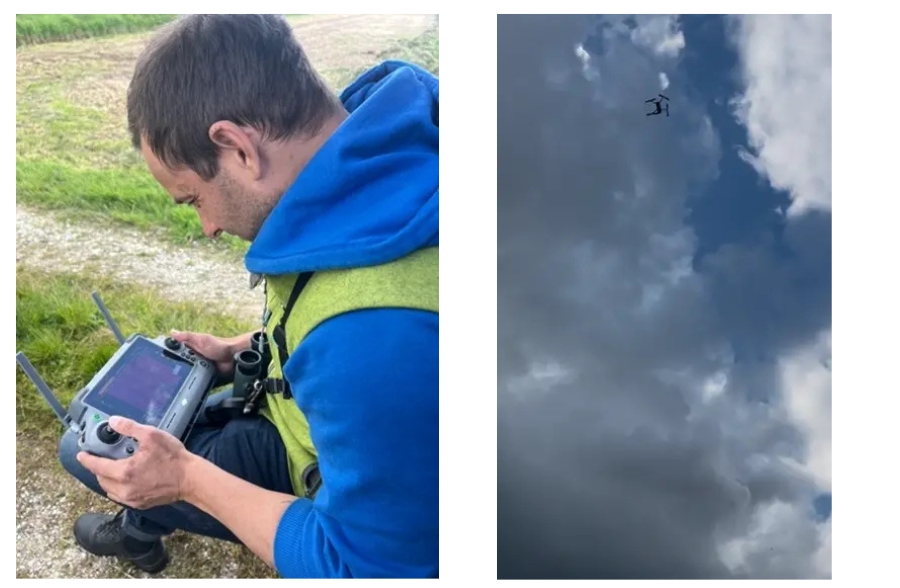
Predator Management
Predator management in the Wiesmet is largely non-lethal and relies on a mixture of small and large temporary electric fencing to protect breeding waders. Some fences surround individual nests, while others enclose entire meadow systems where several pairs breed close together.
Habitat management also plays an important role, with trees and bushes removed to reduce predator cover and perching sites. Interestingly, lethal control of crows is not currently considered a major priority there. Large-scale fencing has proved particularly effective in high-density breeding areas.
Where lethal predator control is used, however, it is far from straightforward. Fragmented land ownership makes coordinated management across neighbouring areas difficult. Hunting leases are expensive, and many hunters focus primarily on Wild Boar and deer because they are legally responsible for compensating crop and forestry damage caused by those species. There is also resistance from private hunters to the involvement of state-employed hunters on leased land, adding another, frustrating layer of complexity.
While some local hunters do help by targeting foxes, crows and other legal predators, others reported seeing few or no foxes in areas where conservationists quickly located active dens.
These discussions highlighted just how difficult it can be to assess predator numbers accurately and to coordinate effective management consistently across the landscape.
Land management
In Bavaria, Curlew conservation depends on close cooperation between NGOs, farmers and local authorities. Rangers such as Jan and Christoph coordinate nest finding, farmer liaison and habitat management through government-funded programmes delivered via organisations like LBV. Landscape teams carry out practical work including scrub removal and water management, while local authorities fund delayed mowing schemes for farmers.
Yet despite the dedication of many people involved, conservation in the Wiesmet is often hindered by these fragmented responsibilities and inconsistent management of publicly owned land. It is argued that some state-managed fields are among the least successful for breeding birds, highlighting how saving Curlews is shaped as much by governance and coordination as by the conservation measures themselves.
Emotional Attrition
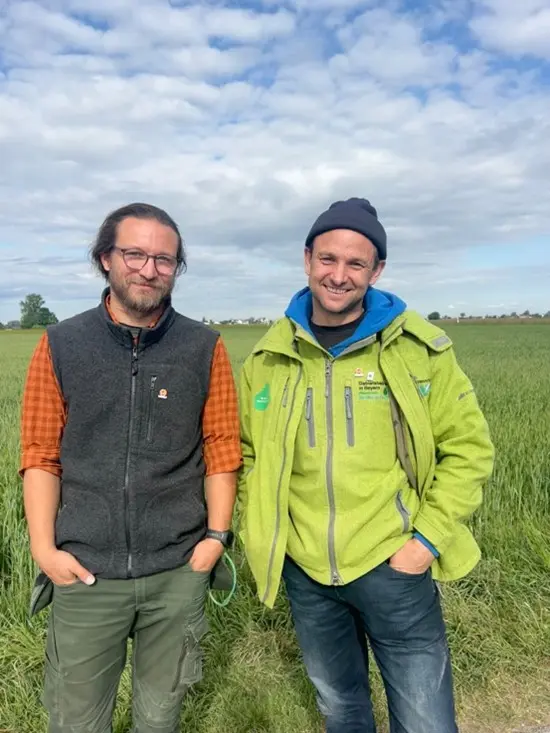
We also addressed a more intimate topic - what this work does to the wellbeing of people on the ground. Fieldworkers spend their days searching for nests, negotiating with farmers, watching chicks and then seeing them disappear, before returning home exhausted after fourteen-hour days. It does exact an emotional price.
“I think part of the great resilience Christoph and I have is that we are not just colleagues, but we’re very close friends.” Said Jan. “We can talk to each other about the sadness. The death of all these chicks. And so, we go through it together - we are soul brothers if you like, that’s what gets us through.”
Those feelings are rarely spoken about openly in conservation, yet they are everywhere among people working at the coal face of nature loss. We heard it movingly expressed at the Curlew Action European Fieldworker Workshop in February 2026 during a session on coping with ecological grief, which was deeply affecting. People working in the field are not detached observers entering data into spreadsheets, they really care, and the relentless losses are hard to cope with.
But that sense of shared purpose and mutual support expressed by Jan and Christoph feels woven into the Wiesmet itself. Every aspect of conservation here depends on cooperation and relationships. What stayed with me most strongly at this site was the kind, thoughtful generosity of spirit dedicated to the birds. I arrive and leave again after just a few hours, but the strength and commitment it takes to stick at it, season after season, are truly to be admired, and it is humbling.
In Part 2 of this section on the Bavarian Floodplains, we visit 3 more different sites along the Danube and Isar.
[1] https://www.bestellen.bayern.de/med/6f6e79c8-b4a5-11f0-81ee-c3fc7d0a3316/4b0e6a70-1059-11d9-4c85-9d915831e9eb/0/lfu_nat_00446.pdf