Curlews Between the Runways
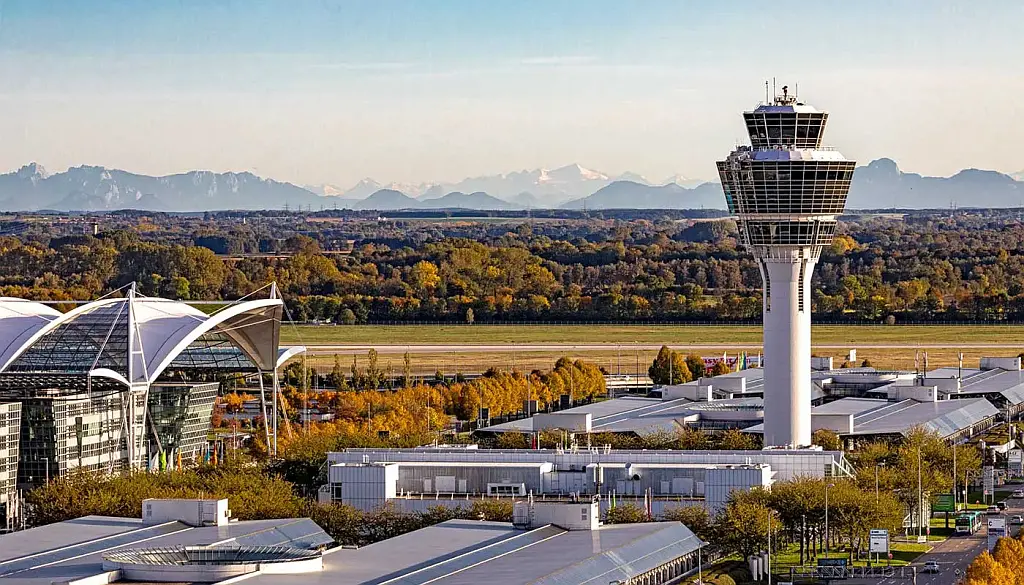
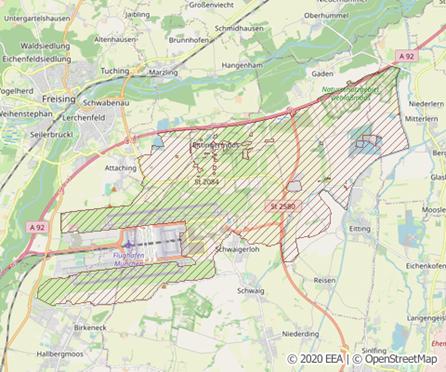
Munich Airport has to be one of the strangest places I have ever visited to look for Curlews. Situated northeast of Munich between the cities of Freising and Erding, the airport occupies what was once a vast lowland peatland landscape, now heavily altered by drainage, intensive agriculture, urbanisation and modern infrastructure.
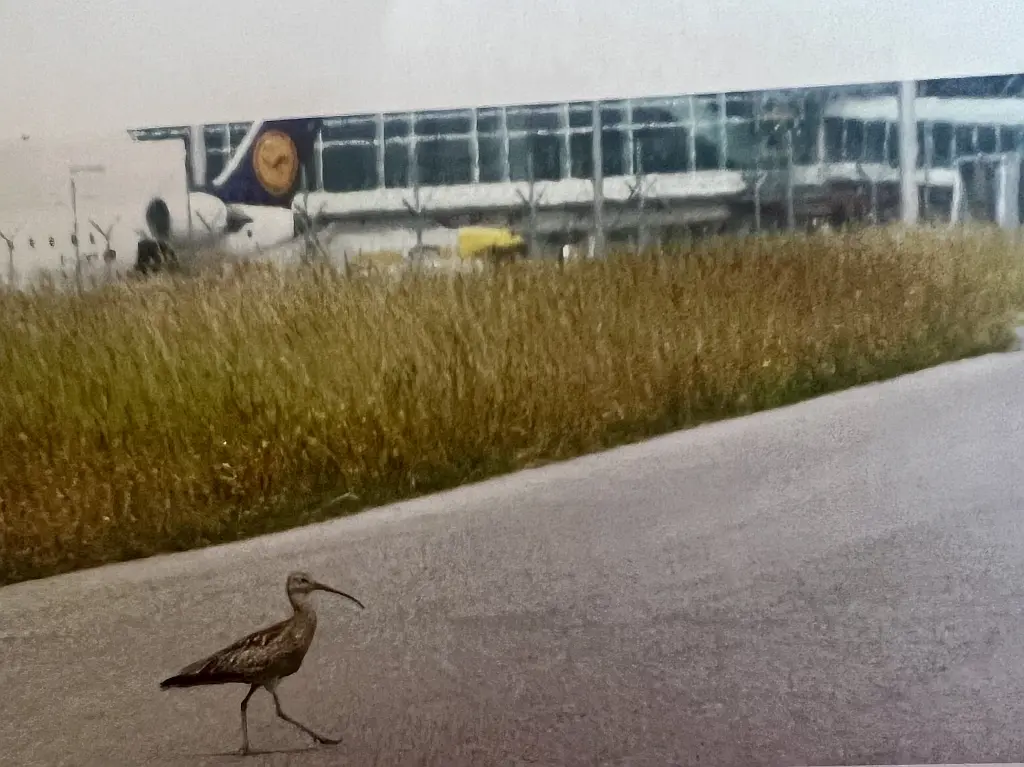
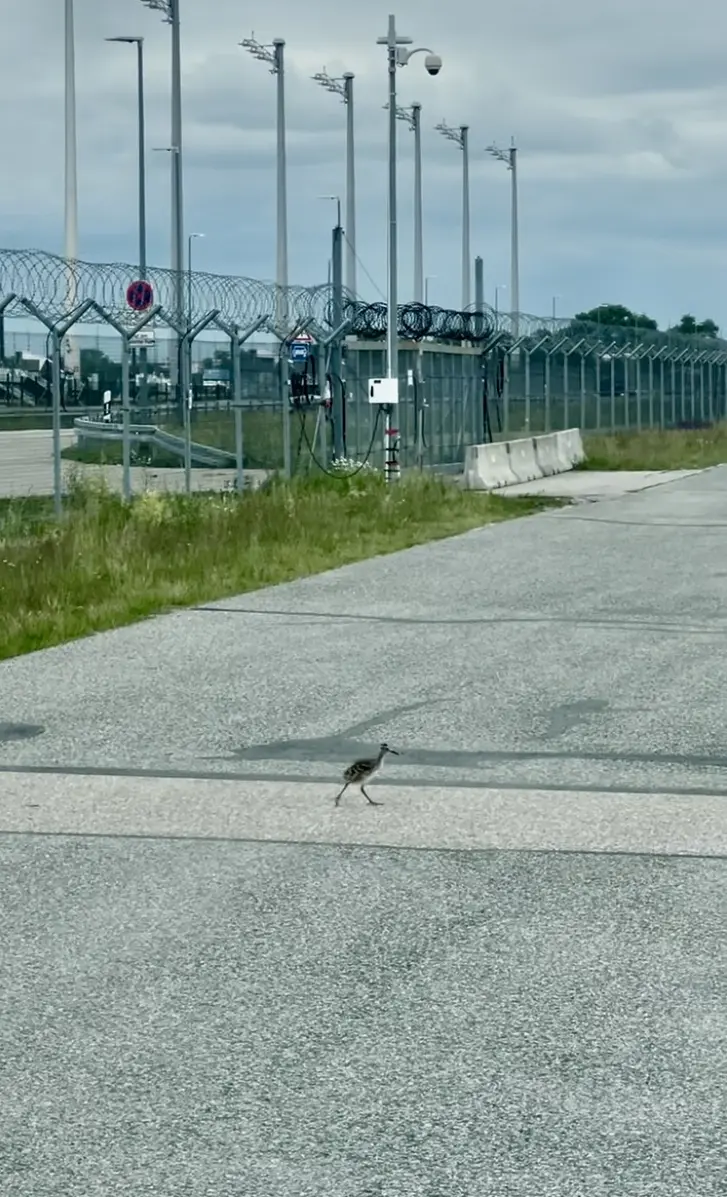
Yet, this major transport hub has become one of Bavaria’s greatest conservation successes for Curlews and Lapwings. The birds now breed among runways, taxiways and perimeter roads, surrounded by the noise and movement of one of Europe’s busiest airports.

The airport owns 1,575 hectares of land plus additional areas set aside for compensation. Much of this lies within the Nördliches Erdinger Moos Special Protected Area, designated under the Natura 2000 network in 2008. The SPA covers 45 km2, with the airport owning nearly half of it. The wider landscape also includes nationally protected sites such as Fiedlasmoos and Aitinger Weiher.
We were given a presentation and shown around by the airport’s ecologists, Julia Müller and Nadja Braun. Flora and fauna surveys began here in 2006 and 2007 ahead of proposed airport expansion plans. Since then, annual monitoring has created one of the most detailed long-term datasets for waders in Bavaria. The area now supports around forty qualifying bird species, but conservation efforts focus especially on Curlews and Lapwings.
The figures are encouraging. The Curlew population has reportedly doubled from around fifty breeding pairs in 2006 to approximately one hundred pairs today, making this the single most important breeding area for them in Bavaria. Lapwings have also thrived and number between 50 and 100 breeding pairs. Meanwhile, Skylark populations have remained stable here despite steep declines across much of the rest of Bavaria. There are also around sixty breeding pairs of Great Crested Grebes.
Not all species are doing well. Black-tailed Godwits remain perilously scarce, with only one or two breeding pairs left at the airport and perhaps just fifteen pairs across Bavaria as a whole.
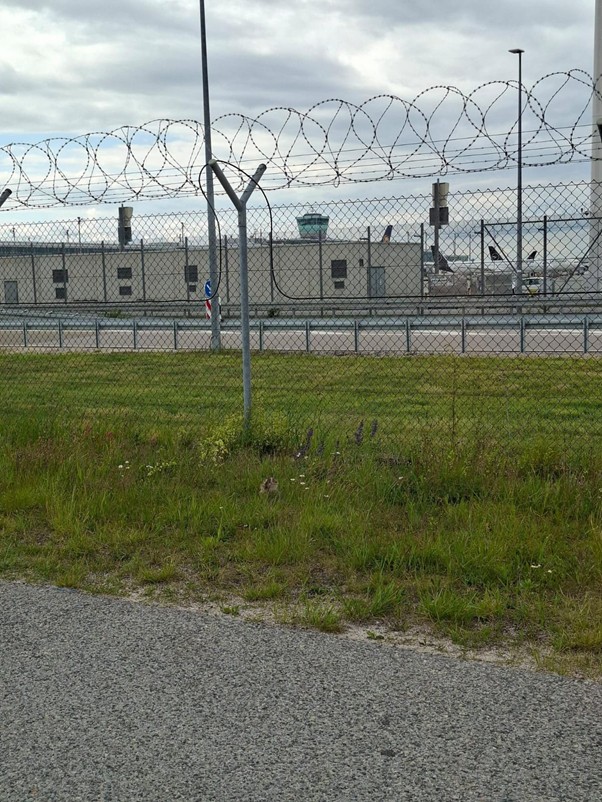
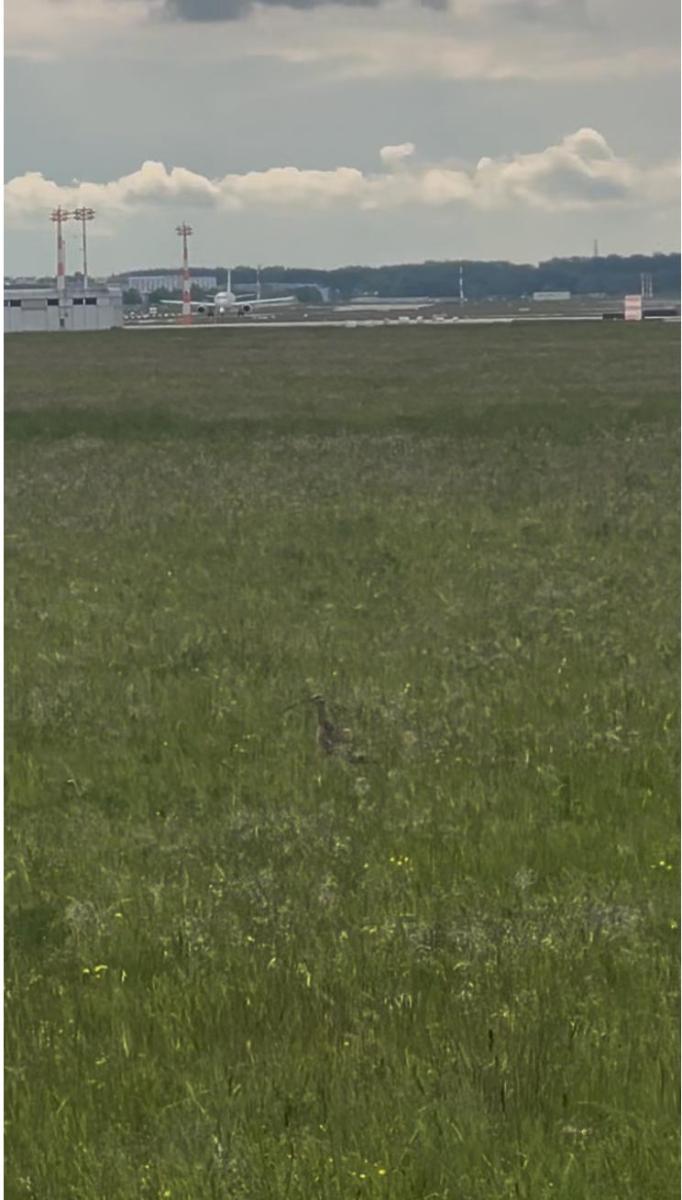
There are several reasons why the birds thrive here. Perimeter fencing excludes foxes, dogs and unauthorised visitors, greatly reducing human disturbance. The airport meadows are managed extensively rather than intensively, with mowing delayed until after the breeding season. The long grass also provides vital cover for chicks hiding from aerial predators. Curlews avoid trees and hedgerows, which offer both cover and vantage points for predators and so the airport’s open aspect now resembles the sort of landscape Curlews prefer.
In addition, the airport takes part in the Blühpakt Bayern initiative to promote insect-rich vegetation and has installed insect hotels to strengthen the food supply. Staff proudly described awards received for their insect-friendly management.
It could be assumed that the noise of so many planes would outweigh these advantages, yet the birds show remarkably little obvious disturbance from aircraft movements and the technical operations around them.
We asked, inevitably, about bird strikes. Julia and Nadja explained that Curlews rarely fly high enough to pose a risk to aircraft and, if the habitat is good, tend to stay on the ground. Compared with larger or flocking species such as geese, starlings and Lapwings, they present relatively little danger to aircraft. Serious bird strikes affecting turbines are apparently very rare, perhaps occurring only once every five to ten years.
The airport nevertheless operates a wildlife management programme. Acoustic deterrents and noise systems are used to discourage hazardous species, while wildlife staff hold licences to shoot birds if passenger safety is threatened. Unlike Hamburg Airport, Munich does not use falcons for bird control.
And so, a paradox emerges. A place built entirely around global mobility, noise and engineering has become one of the safest breeding refuges left for Curlews in southern Germany. The airport succeeds not because airports are inherently good for wildlife, but because so many other suitable landscapes elsewhere have been drained, fragmented or intensified beyond recognition. The Curlews survive here because the wider countryside increasingly no longer works for them.
Driving around the runways watching Curlews bubbling over the grasslands, it was impossible not to feel both admiration and unease. Admiration for the willingness to embrace and encourage the birds on their land, unease because it reveals just how profoundly the rest of the landscape has changed.