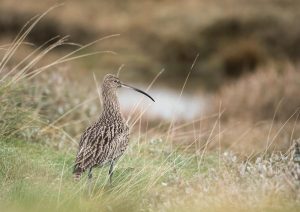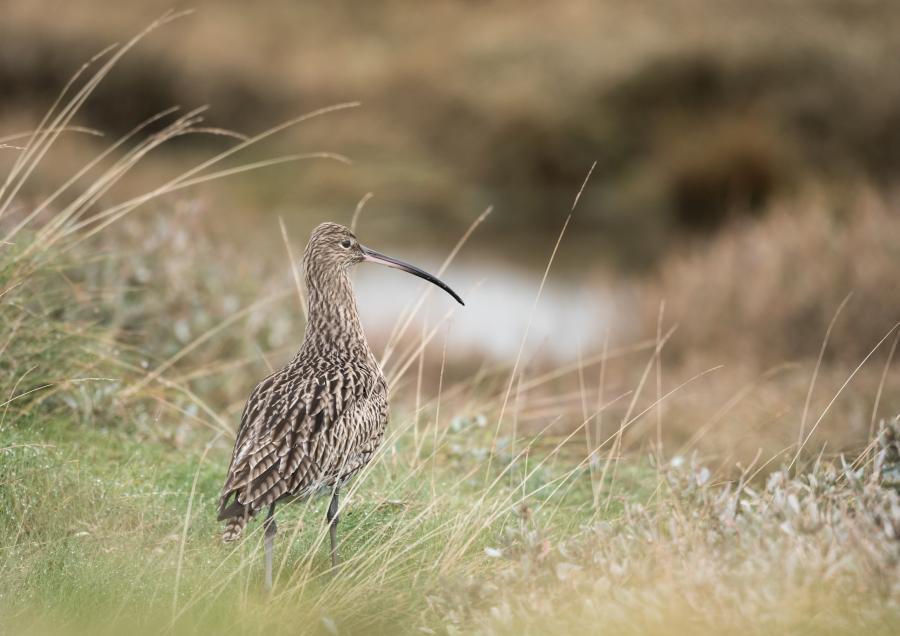
Alex Large, who presented his project in Nidderdale, North Yorkshire, to Curlew Action recently writes:
A few weeks ago one of my group came onto the group WhatsApp chat with reports of a sad scene only a few miles from our project area. A farmer had been mowing silage and there were scenes of distressed adult Curlews, whose nests had clearly been destroyed. “Greater awareness is needed in the farming community” she said, before making some specific suggestions aimed in particular at the younger farming generation. I reflected on how much our own awareness has improved these last five years.
I could easily picture the scene. [The same] farmer had called me three years ago, clearly very upset that one of their own mowers had inadvertently run over a nest on the periphery of our project. It was a lightbulb moment. On the one hand I was sad that a precious nest had been destroyed. On the other I was pleased that the farmer had both called me to tell me about it and was so determined never to let it happen again. I realised that Curlew projects such as ours could only make a real difference if we were able to channel that sort of deep-seated emotional connection and – yes – love for these birds.
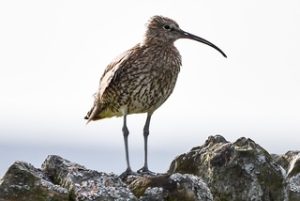
The arrival of the Curlew in early Spring is a key moment in the natural rhythm of the year in our community. Plenty of people want to protect that, not least our farmers as multi-generational custodians of the land. But many of us were not aware of the alarming decline in curlew populations, nor what was causing this, nor what could be done about it. Actually, I think we all felt rather helpless at first. But we got ourselves educated. We learned from other passionate projects near and far. We learned from the BTO, Curlew Action and the RSPB. And increasingly we learned from each other.
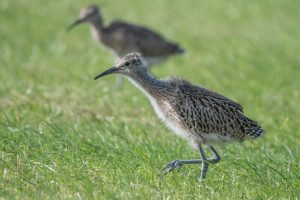
Over the last five years we have developed the toolkit to work with our farming community, be that spotting scopes, drones to find the nests, smartphone apps to record sightings and nests, electric fencing to keep the nests safe, or leaving field corners unmown. It has taken many hundreds of volunteer and farmer hours. We still have much to learn and we make lots of mistakes. It is often humbling. But when it works – as it did last week when we protected a family of chicks running around loose in a silage field manoeuvring them into an unmown section set aside for them – it is uplifting.
“It is all about giving people more knowledge” noted another of our group. He relayed that he’d been to agricultural college but never once heard about ground nesting birds. What he had learnt had been taught him by his grandfather out in the fields when he was a boy.
But all the tools in the world are not sufficient without the basic desire to protect these birds and their place in the cultural heritage of the Dales.
So, we have the desire to protect and increasingly we have the knowledge and people to do it. We should be optimistic about that.