
(Header photograph: Mary Colwell / All other photographs courtesy of Martin Hole)
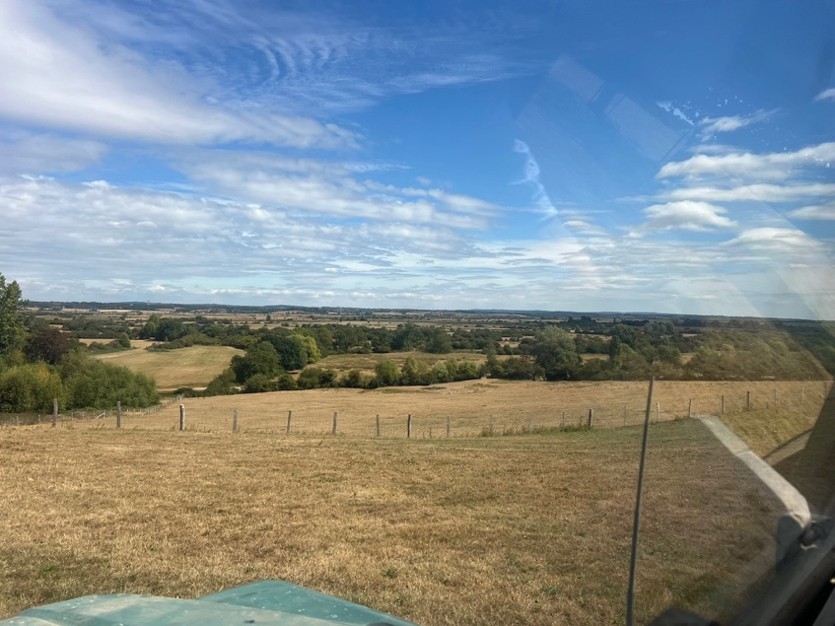
On a hot, dry, brown-brittle day in August, I visited Martin Hole of Montague Farm on the western edge of the Pevensey Levels in East Sussex. Over a coffee before a farm tour, we discussed farming for wildlife, and one phrase stayed with me, “We need every tool in the box.” It is a simple line, but it captures something important about working the land for both food and nature. There are no simple solutions to this dream of wildlife-rich, agricultural land; everything has to be tended and sewn together.
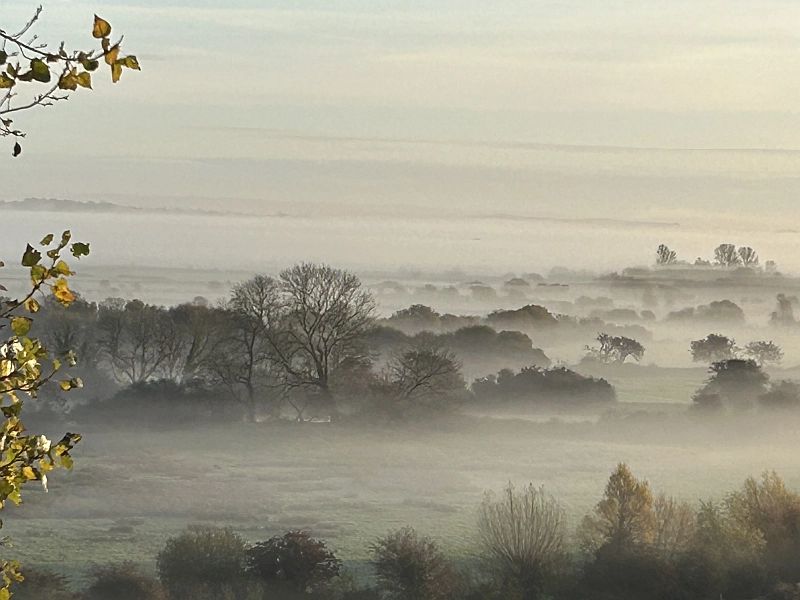
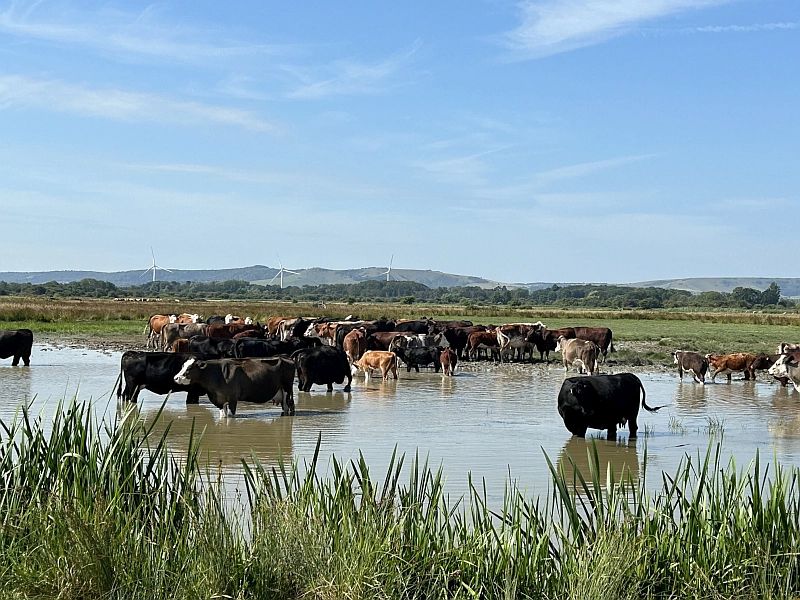
Martin farms with his wife, Gundrada, and daughter, Romney, on more than 700 acres of largely permanent grassland. Organic sheep (350 Romney ewes) and Sussex cattle (60 cows) are at the heart of the business, but so too is maintaining the marsh - the flat, wet, open landscape that shapes the farm’s character and its wildlife. Around three-quarters of the grazed land lies on the wetlands of the Pevensey Levels, and conservation is woven through the business.
An unapologetic Lapwing man
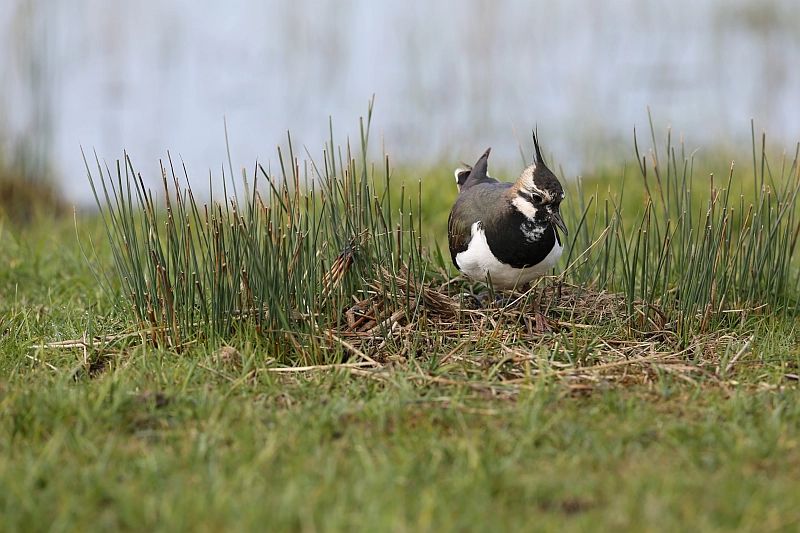
Martin describes himself, cheerfully, as an unapologetic Lapwing man (we love Lapwings too!). Curlews are not part of the farm’s recent story. There are no breeding birds there now, and he says only one displaying bird was recorded here in the 1950s. To find breeding Curlews, you would have to go a long way back; but Lapwings are another matter. They belong to this landscape of wet grassland, grazed fields, reeds, mud, and open skies; as much at home here as the barn owls that float over the marsh in evening light, and the ringing dawn chorus in the warm months.
When Martin first began digging scrapes into land that had been heavily drained and levelled by previous farming, the response was immediate. Lapwings came in, and their numbers rose dramatically to 45 pairs, but over the following years, they fell again to under 10 pairs. Why? There is rarely one answer.
Predation is a major issue, and Martin is clear that fox and crow control have a place in the practical management of breeding waders. For him, predator control is one part of the hard and sometimes uncomfortable reality of trying to help birds that put their nests on the ground. There are also many badgers and increasing numbers of birds of prey, which are changing the predator landscape. But before almost anything else comes water.
A mosaic of wetness
 The Pevensey Haven is one of the main watercourses draining this enchanting wetland landscape, eventually carrying water towards the sea at Pevensey Bay. But to think of the Levels in terms of a single river misses their character. Water is everywhere. The land is threaded with channels and ditches, drains and scrapes, shallow pools and flashes of standing water. Sluices and pumps control its movement, and windmills help move it around.
Together they create a kaleidoscope of wetness. Pools appear and shrink. Mud becomes grass and grass disappears beneath water again. This shifting boundary between land and water is fundamental to the wildlife of the Levels, giving the whole area a semi-permanent, restless feel, that is forever transitioning between states.
Martin is trying to restore something of the physical character that intensive agricultural improvement removed. Parts of the marsh have been made extraordinarily flat, but a perfectly flat field does not allow water to move and drain as it should. He wants to bring back some of the subtle undulations of the old landscape, creating differences in height and therefore a greater variety of conditions.
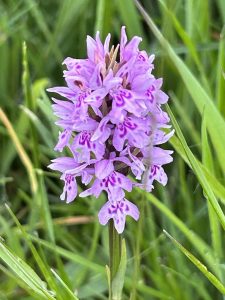
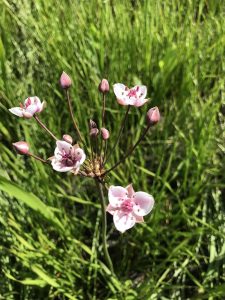
The botanical richness that this water management supports is remarkable. More than 100 wetland plant species have been recorded in Montague Farm’s managed waterways, including flowering rushes, rare stoneworts and pondweeds. The diversity extends into the pastures, where several fields support thousands of Green-winged Orchids and more than 20 species of grass.
It is a reminder that a farm is a shifting kit of parts. Water, soil, grazing animals, vegetation, predators, insects, weather, waterfowl and waders are continually acting upon one another. Change the movement of water and you change the vegetation, the insects and the birds. Nothing here operates in isolation.
There are encouraging signs that life is returning. Yellow Wagtails are on the farm, and Little and Great Egrets are now part of the marsh landscape, alongside Herons and, hopefully in the future, Common Cranes. Buzzards have returned, and so too have Water Voles. But gains sit alongside losses. Martin is particularly concerned about the decline in Meadow Pipits, once a much more familiar presence, and the disappearance of the once commonplace Turtle Dove. Nature recovery is rarely a simple upward line in which everything improves together. Some species arrive, others flourish, and others slip away, sometimes for reasons that are far from obvious.
On the day I visited, a Curlew had been spotted feeding amongst the cattle, but despite searching, it had gone.
Beyond simple choices
We talked about the familiar debate between land sparing and land sharing, and Martin has little patience with the terms. They are too tidy for the messy reality of farming. His view is that we have to do it all - produce food, restore wetlands, support livestock systems that fit the land, create space for wildlife and concentrate conservation effort where it has the best chance of working. That is what “every tool in the box” means. It is not an argument for one model over another, but for understanding a particular piece of land well enough to know which tool is needed, where and when.
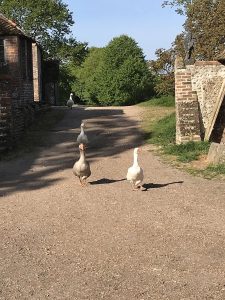 Montague Farm is not a nature reserve with farming attached, nor a conventional farm with a wildlife corner. Conservation and business are woven together. Martin’s long background in conservation helps explain that. After studying Rural Environmental Studies at Wye College, he worked at Elmley on the Isle of Sheppey as its first head of conservation, as the grazing marshes there were being brought into a National Nature Reserve agreement. That experience shows in the way he talks about the Pevensey marshes as a living system requiring water, grazing, connectivity, and constant attention. It isn’t “rewilding” as in letting nature alone, but it is certainly “re-naturing.”
The Sussex cattle are part of that system. They push into the reeds, opening up vegetation where other breeds of cattle fear to tread and where machines cannot go. Martin would love to see beavers here too, although he is realistic about the concerns neighbouring farmers might have, and he is not naïve about the challenges they bring in terms of choking ditches or drains. As with so much else on the marshes, opportunity and complication sit side by side.
It immediately reminded me of something I heard repeatedly while visiting wader projects in Germany earlier this year – ‘wader conservation is about as tough as it gets’. These birds live at the meeting point of almost every pressure we place on the countryside. Their nests are vulnerable to machinery and livestock; their chicks need abundant invertebrates and the right vegetation structure; drainage changes their habitat; weather can undo weeks of work, and predators can wipe out breeding attempts overnight. But those challenges are precisely why they are such a powerful measure. If we can create the type of farmed environment where ground-nesting birds can successfully raise their young, we will almost certainly have got a great many other things right as well. Water, soils, plants, insects and the wider web of life all stand to benefit.
There is something radical in Martin’s suggestion. Instead of measuring principally what we do for nature, we could measure whether nature is actually able to respond.
The litmus test
The most striking idea Martin put to me was that we could judge how well farms are working for nature by looking at the success of ground-nesting birds. Not just Lapwing and Redshank, but the whole suite of birds attempting the precarious business of laying their eggs and raising their young on or close to the ground. Martin sees their breeding success as a litmus test for good land management. It is a deceptively simple idea, and potentially a revolutionary one.
We tend to measure conservation by what we put into it - hectares entered into agricultural schemes, habitat created, or increases in target species - but Martin’s measure asks something different - can ground-nesting birds actually breed successfully here?
It is an extraordinarily demanding test because getting it right means many things have to be working at once. There must be suitable habitat and vegetation, appropriate grazing, functioning soils and hydrology, sufficient invertebrates and seeds, farming operations happening at the right time, and predation at a level that allows eggs and chicks to survive. A field can look wonderful to human eyes and still fail that test.
Farming, economics and trust
None of this works, however, if the farm itself cannot survive. Martin is pragmatic about money. Farming has to remain economically viable or wildlife management will not last. The next generation expects a regular wage. Countryside Stewardship has been fundamental at Montague, allowing the farm to make conservation part of its core business rather than a charitable add-on.
That matters because working the land differently is demanding and can be expensive. Farmers need confidence that public policy will stand behind them when they make those changes. Martin has also been closely involved in collaborative farming, helping to establish the Pevensey Farm Cluster. Again, the emphasis is on making conservation work in the real world, alongside the economics, practicalities and uncertainties of producing food. The cluster gives farmers a place to share experience, problems and solutions across land they all know and understand. And crucially, by working together, they create a wider, nature-rich landscape.
Nature knowledge matters
One of Martin’s strongest concerns is the lack of nature knowledge in society. If people do not know what lives in a marsh, how a grazing system works, or why a wet, untidy field can be more valuable for wildlife than a neat one, they are unlikely to understand the choices farmers and conservationists face. He strongly supports nature education because it gives people the tools to notice, understand and value what is around them.
That need to see from different points of view ran through our conversation. Martin spoke about how easily we can live in bubbles. “Especially the bubble of one’s own skull, but also by surrounding ourselves with people who already agree with us”. But if nature is to recover, it has to reach across society and fit into the many different ways people live and work. Farming for nature requires something more generous and more difficult - a willingness to understand another person’s world, and to make conservation accessible to all.
Many farms have extra activities to help pay their way, and Montague Farm runs a successful wedding venue business. But he is not a fan of pheasant shooting and cannot see killing anything for fun as a good use of time. Yet he can also recognise that grouse moor management can bring benefits for some wildlife. He is reluctant to retreat into either camp. The land and the wildlife living on it are more complicated than our arguments about them.
Old ways across the marsh
There is another layer to this landscape. The Old Way, the pilgrimage route running from Southampton towards the shrine of Thomas Becket at Canterbury, crosses the Pevensey Levels nearby, carrying walkers through this low, watery country on their journey east.
There is something fitting about pilgrimage passing through a landscape like this. Walking demands a different relationship with place; it is a slow noticing of ground, weather, water, and light. For centuries, people have moved through these marshes while the land itself has moved through its own cycles around them.
The connection seems particularly apt at Montague. Martin’s farming depends on that same kind of sustained attention - watching what the water does, noticing which birds return, seeing where cattle choose to graze, recognising when something that was once abundant has become scarce. The landscape cannot simply be instructed what to do; it has to be read, listened to, and worked with. In that relationship, farmers are not land managers that stand apart from nature but become co-creators within it.
A place a Curlew might choose
And what of Curlews? Martin would like them to return one day. He thinks that, given the right conditions, they might settle here again, but bringing Curlews back is not at the top of his list. There are too many other things that need attention first; his energy is on the wildlife that already depends upon the marsh. Perhaps, if enough pieces come together, Curlews might eventually find their own way back. There is something appealing in that idea. Rather than focussing on a single outcome, the aim is to restore enough life, function, and complexity so that it becomes a place a Curlew might choose for itself.
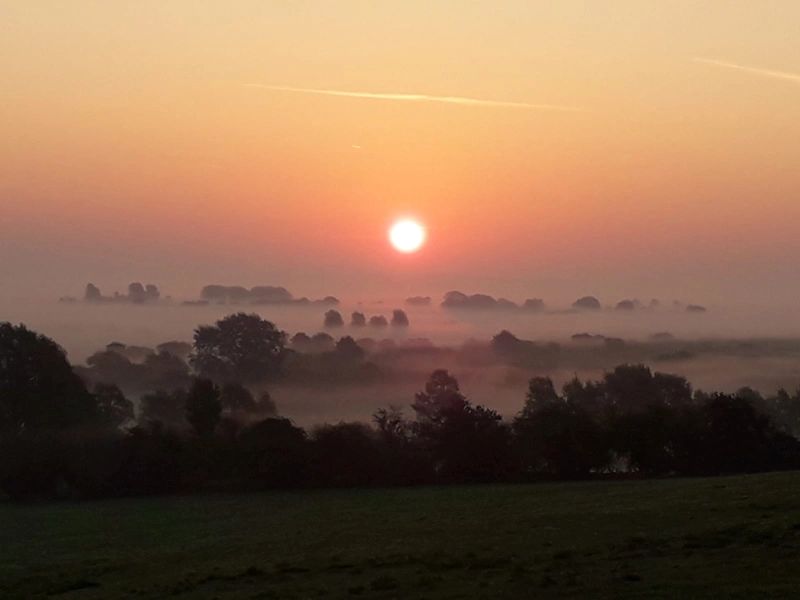 I loved the marshes. There is a restlessness to them, a sense of land continually shifting between wet and dry, brown and green, trackways and flowing water. Everywhere, ditches, channels and pools catch the light, forming a watery mosaic that draws the eye beyond the farm and out towards the sea.
Wind, water and livestock shape the farm, but the ancient marsh seems to beat to its own rhythm. It invites slowness and immersion. Martin’s farming feels less about imposing order on this shifting place than learning how to work within it.
What I took away from Montague Farm was not a recipe, but an attitude that is practical, patient, unsentimental and hopeful. Farming with wildlife on the Pevensey Levels is about understanding how life and land work together, using every tool available, and being prepared to change course when the water, the livestock or the birds tell you something different.
Martin also left me with a more challenging thought. Perhaps one of the best ways of knowing whether we are getting farming for nature right is to look down - to the birds attempting to nest on the ground. They are among the hardest wildlife to accommodate in a working landscape. If they can lay their eggs, hatch their chicks and send the next generation into the world, then a great many other things must be working too. Their success may be one of the clearest measures we have of a countryside genuinely recovering.
I look forward to returning when the ground is less parched and the shimmer of water is all around. Until then, thank you to Martin, Gundrada, and Romney for such a warm welcome and fascinating conversations.