
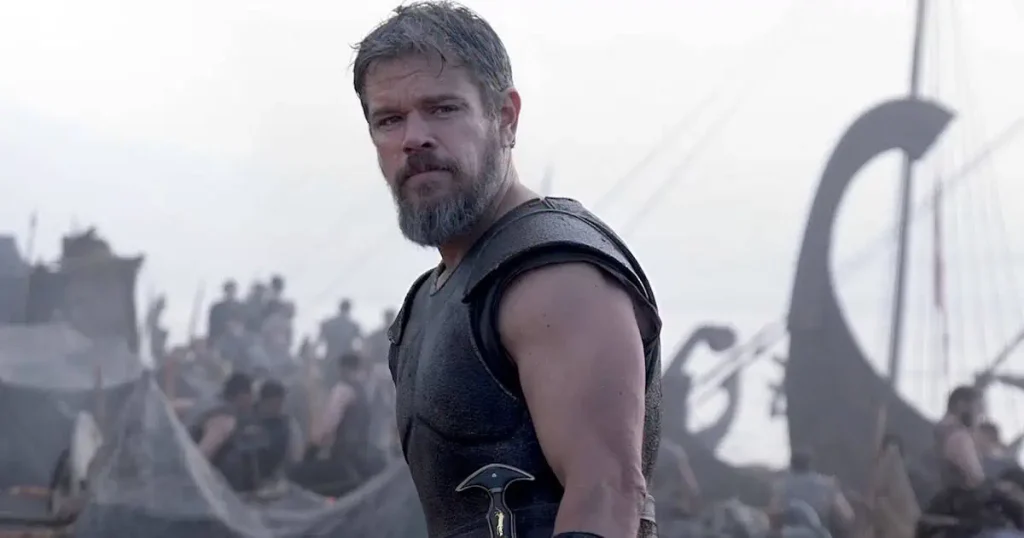
With The Odyssey prompting so much public discussion, perhaps we can learn something from a story that has endured for almost 3,000 years. It survived because generations of people carried it, retold it and found fresh meaning within it. It became part of their cultural inheritance.
What would happen if we thought about our conservation Action Plans in this way, not exactly as mythical battles, but as stories that must be carried?
Across Europe, conservationists have become very skilled at writing Action Plans. They are an institutional response to a crisis and to deeply felt concern. They bring together evidence, define objectives, set timelines and present agreed actions in carefully negotiated language. They are the go-to documents for understanding why a species is in trouble and what must be done to save it.
There are hundreds of them at European, national and regional levels, produced by skilled and caring people. Yet many are failing to deliver recovery. Why?
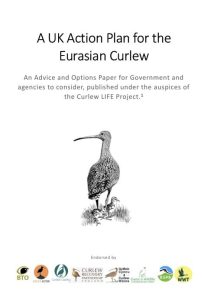
There are practical reasons. Action Plans too often lack secure funding, political commitment and clear accountability. Responsibility is shared between different and often disconnected sectors – government departments, agencies, NGOs, researchers, scientists and land managers. Everyone has a part to play, but no single person or organisation has quite enough power or resources to ensure that the plan succeeds.
Information also moves slowly between these groups, changing form and tone as it passes through layers of institutions. The language of love, passion and urgency so evident among those working on the ground is gradually flattened into the language of objectivity, process and carefully agreed conclusions. Something essential is lost in translation. But I think something else is missing too.
Story keepers
In older societies, bards, saga-singers and storytellers were far more than entertainers. They carried the memory and identity of a people. They held the stories of battles, journeys, disasters, courage and folly. They attached meaning to landscapes and wildlife, turning the physical world into a map of collective memory.
They also helped people make sense of events. They asked what had happened, what it meant and what obligations followed. Through poetry, music and story, knowledge became memorable not only because it was understood, but because it was felt. Some praised rulers, but others challenged them. They reminded those in power of their duties and kept alive the memory of what happens when those duties are forgotten. They connected past and present and, crucially, asked what the circumstances of their time said about society and about the human race. Is this who we are? Is this who we want to be?
Our Action Plans contain information, but they rarely contain meaning of this kind. They tell us what should be done, but not always why the loss matters so much, what it says about us, or what recovery might make possible, not only for wildlife, but for our own humanity. They seldom offer people a story in which they can recognise their own place, and a plan that nobody can retell to a wider audience will struggle to become a movement.
The Missing Connection
Science, policy and society often speak past one another. They use different languages, attach meaning in different ways and are driven by different needs.
Science asks: What is happening, and what does the evidence tell us?
Policy asks: What must governments and institutions do?
Society asks: Why should this matter to me, and what power do I have to change it?
At present, it is difficult for knowledge to move freely between these worlds. The public catches fragments of the crisis, often through a news report or a piece of clickbait about yet another alarming decline, before scrolling on. What is often missing is the connective tissue that makes the meaning stick – the people and relationships capable of bringing evidence, policy, lived experience and feeling into conversation with one another.
The Curlew Connection
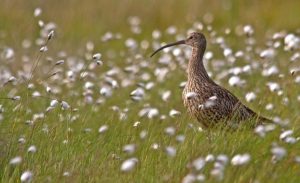
The Curlew shows this vividly. We can describe its population decline in percentages and calculate the productivity needed to maintain a stable population. We can identify the principal pressures, namely predation, forestry, agricultural operations and habitat change. All of this is essential. Of course it is. But the Curlew is not only a unit of conservation concern. It is the sound of spring. It lives in the memories of farming families and local communities across Europe. Its migration ties together countries that can otherwise feel geographically and politically distant. Its decline tells us something about the condition of our landscapes and about the thinning of our own relationship with the living world. The evidence tells us what is happening. The story helps us understand what it means. I walked 500 miles across Ireland and Britain to try to piece that story together.
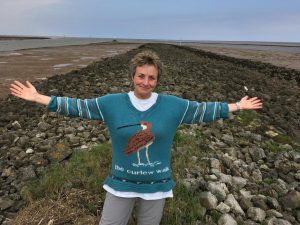
Who provides the connective tissue?
There is no single modern equivalent of the bard. The role is now shared among writers, musicians, artists, filmmakers, teachers, scientists, journalists, campaigners, naturalists, digital storytellers and community and spiritual leaders.
In today’s information-laden world, anyone can choose to speak out – not only about the data, but about what they have witnessed and why it matters.
These people are the “boundary spanners”; trusted individuals who can move between professional and cultural worlds. They understand enough of each language to act as translators, and we need many, many more of them.
They carry evidence outwards, but they also carry experience back in. The exchange must work both ways. People working on the ground hold knowledge that cannot always be captured in a formal dataset. Communities know the history and feeling of their landscapes, yet often struggle to have that knowledge recognised. This can create resentment and deepen the sense that conservation is something imposed from outside.
These different forms of understanding must meet the power of science and policy. Each should retain its own identity, but they must learn to speak to, and listen to, one another. This connective role does not require another organisation. Europe is not short of conservation bodies, working groups or committees. Creating one more that must compete for scarce funding will not solve the problem. What is needed is an enabling thread running through the structures that already exist, connecting teams around a shared and measurable purpose, helping them exchange knowledge, and reminding each part how it belongs to the whole. There must be a way to keep those connections alive and to ensure that Action Plans retain their urgency, meaning and humanity.
Story is not a substitute for action
There is a danger in talking about storytelling. It can create emotion without practical action, which is little more than sentimentality. A moving film, a beautiful song or an eloquent campaign cannot compensate for damaged landscapes, weak policies or the absence of money to put things right. But telling the story of a species can create the understanding and commitment needed for society to support difficult decisions and remain behind them. It can explain why a government should continue to support recovery after political priorities have shifted. It can help farmers and land managers see why their contribution matters to something larger than their own holding. It can allow people in different countries to recognise themselves as participants in the same endeavour. Told well, a story can turn a technical target in an Action Plan into something that society genuinely wants to achieve.
Most importantly, it can restore a sense of agency. People are repeatedly told about the scale of environmental decline without being shown where their own actions belong. A good story does not simply describe catastrophe. It reveals responsibility, possibility and the next step. It gives people grounds for hope and the confidence to act.
From document to shared undertaking
For the Curlew, the shared purpose should be unmistakable: more young birds surviving and returning to breed in healthy landscapes across Europe. Every policy, project and partnership should be able to explain how it helps to make that happen. Science provides the evidence. Policy identifies and supports the necessary actions.
Fieldworkers contribute knowledge rooted in place. Society provides legitimacy and sustained will. But it is the right story that will connect them.
If we want Action Plans to become action, their deeper meaning must be carried into the wider world, explaining what is being lost, what recovery could look like and why every part of society has a role. This is not decoration around the serious work of conservation. It is part of how that work acquires public meaning, gathers support and endures. Someone must sing its significance.