
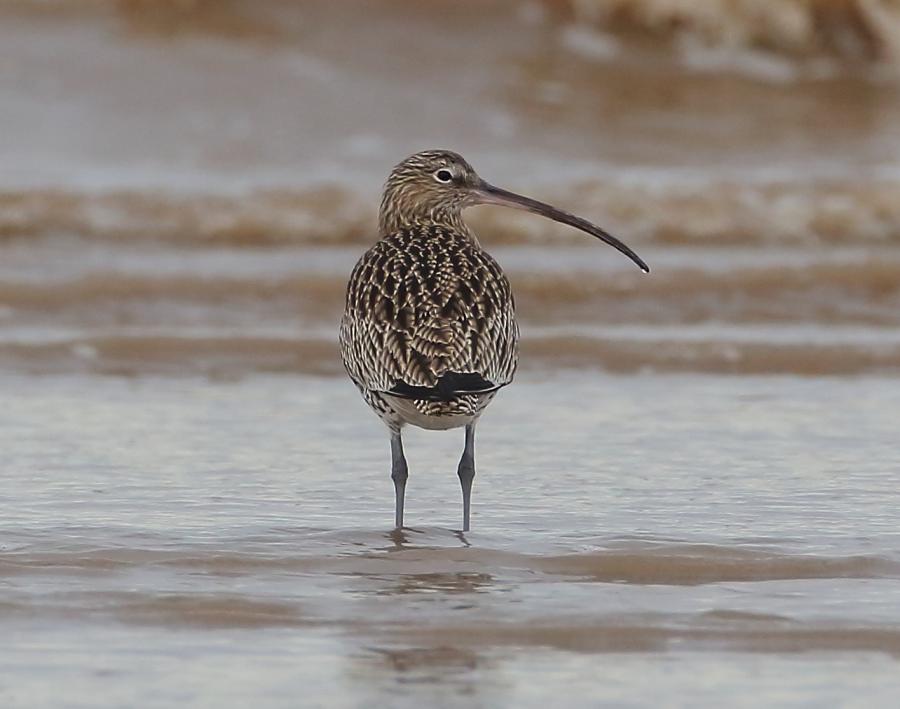
Conservation is becoming increasingly complex. Climate change, biodiversity loss, food production, renewable energy and land use all demand attention, yet the solutions to one problem can sometimes create challenges for another. It is one of the reasons I find Curlews so fascinating. They sit at the intersection of some of the greatest environmental challenges facing humanity and force us beyond binary answers.
For many years, the conservation movement has rightly argued that climate change and biodiversity loss are twin crises. In some cases, action to tackle one helps address the other. Restoring peatlands, protecting wetlands, improving soil health and reducing emissions can benefit both nature and the climate. But it’s not always straightforward.
During a recent visit to southwest Scotland, this issue arose repeatedly. The region supports important populations of breeding Curlews, Lapwings, Redshanks and other waders, but it is also experiencing rapid change. Forestry continues to expand, agricultural systems are intensifying, and wind farm developments are becoming an increasingly prominent feature of the uplands.
Nobody I met questioned the need to tackle climate change. Indeed, at places such as RSPB Airds Moss, staff spoke of increasingly unpredictable weather, spring droughts, torrential rain and changing conditions that directly affect breeding birds. These are exactly the issues affecting Curlew breeding grounds in Gloucestershire, Shropshire, Oxfordshire, the New Forest etc. The impacts of a warming climate are already being felt right across the UK.

Renewable energy therefore forms an essential part of the solution. Without a rapid reduction in greenhouse gas emissions, the future for many species will become increasingly uncertain.
At the same time, some of the infrastructure required to deliver that transition can affect the open landscapes upon which species such as Curlews depend. Wind farms, transmission infrastructure and other developments may alter habitats, fragment landscapes or introduce new pressures into areas that remain important for breeding waders. This creates a dilemma that conservation has not always been willing to acknowledge openly.
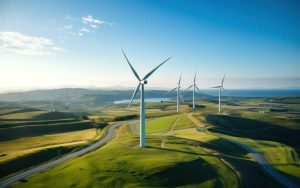
Climate action and nature recovery are often presented as if they are synonymous. Sometimes they are and they work hand in hand, but not always. Very often there are genuine tensions and trade-offs that require careful thought and honest discussion leading to collaborative decisions.
Recognising those tensions does not mean choosing one cause over another. Nor does it mean abandoning our commitment to renewable energy or to nature recovery. Rather, it means accepting that conservation increasingly involves facing competing priorities and difficult decisions.
The encouraging thing is that solutions are beginning to emerge. In southwest Scotland, renewable energy developments are helping to fund some innovative conservation work, including thermal drone surveys, radio-tracking, NoFence collar technology and research into new approaches to habitat management. In some cases, the same sector that creates challenges is also helping to support the search for solutions.
The future of conservation will not be secured by pretending difficult trade-offs do not exist. It will depend upon our willingness to confront them honestly, to work across sectors, and to find practical ways of delivering both climate action and nature recovery.
Curlews remind us that these issues are rarely simple. We can still hear their haunting calls across many of Britain’s uplands and some lowland areas, but their future depends on how successfully we balance competing demands on the land.
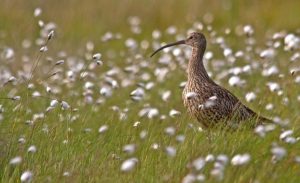
If we can find ways to do that, we can show that tackling climate change and restoring nature need not be mutually exclusive, and that both are essential to our future. The challenge is ensuring that neither is pursued at the expense of the other.