
Based on a article in British Wildlife, July 2026
Curlews sit at the heart of one of the most important conservation debates of our time – how do we restore nature while also protecting the species that depend on the landscapes we have created?
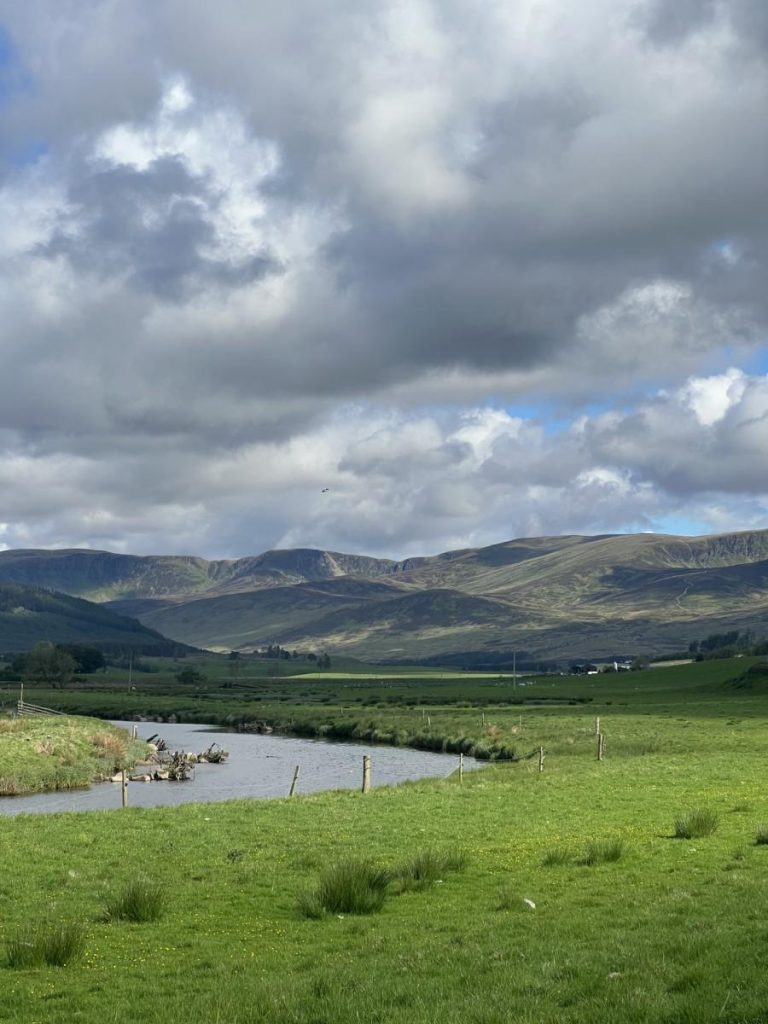
Rewilding has brought huge energy, imagination and ambition to conservation. It asks us to think beyond small fragments of protected land and to restore natural processes at scale. At its best, it challenges us to let nature breathe again. But for species such as the Eurasian Curlew, the question is not always straightforward. Curlews are birds of open, expansive landscapes. They need quiet, predator-safe breeding grounds, wet fields, moorland, rough pasture and space. In some places, nature recovery that increases scrub, woodland or predator pressure may unintentionally make life harder for them.
The Curlew is one of the UK’s fastest-declining breeding birds. Britain has lost around half of its breeding Curlews since the mid-1990s, and the UK still holds roughly a quarter of the global population. That gives us a particular responsibility. The central problem is poor breeding success: too few chicks survive to fledge. Curlews can live for many years, so declines may at first appear gradual, but without enough young birds entering the population, the future becomes increasingly fragile.
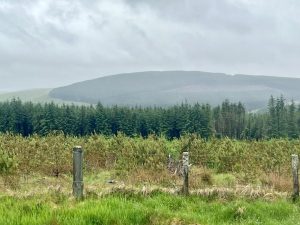
The pressures are many and complex. On lowland farmland, early and frequent silage cutting, drainage, flooding, habitat loss and high numbers of generalist predators can combine to make successful nesting almost impossible. On the uplands, some of the strongest Curlew populations remain on managed grouse moors, a fact that sits uncomfortably within wider debates about land use, heather burning, predator control and shooting. In other places, woodland expansion and forestry near breeding grounds can reduce the suitability of open habitats, partly because Curlews and other ground-nesting birds avoid nesting close to trees, woodland edges and plantations.
None of this means woodland creation, rewilding or habitat restoration are wrong – far from it. Britain urgently needs more nature-rich landscapes, more structural diversity, more restored wetlands, more healthy rivers and more space for wildlife. But Curlew conservation reminds us that nature recovery cannot be one-size-fits-all. What helps one group of species may harm another. The question is not whether trees, scrub and rewilding are good or bad, but where they are placed, at what scale, and with what consequences for species that depend on open ground.
Predation is another difficult but unavoidable issue. In theory, rewilding offers the hope that restored food webs, including apex predators, might bring greater balance. But Britain is a densely populated country, and the return of large predators is likely to be limited and socially contested. In the meantime, Curlews are trying to breed in landscapes where foxes, crows and other predators can be abundant, often supported by human activity, food waste, shelter and fragmented habitats. In many places, Curlew chicks will not survive without active, targeted and carefully managed intervention.
This is why Curlew conservation often lives in the difficult middle ground. It asks us to move beyond simple assumptions and confront the complex realities of place. Some landscapes may be best suited to woodland expansion. Others are too important for breeding waders to lose their openness. Some projects may need to prioritise natural processes, while others will need hands-on management. In some areas, headstarting, nest protection, late cutting, wet feature creation, rush management, predator control and close collaboration with farmers and land managers may all be needed together.
The deeper challenge is cultural as much as ecological. Curlews ask us what kind of countryside we want, and who gets to decide. Are we trying to restore the abundance of the past? Are we creating new wild landscapes for the future? Are we willing to hold onto species that now depend, in part, on human-shaped habitats? Or are we prepared to let them retreat into a few remaining strongholds?
At Curlew Action, we believe the answer lies in honest conversation and common ground. Curlew recovery depends on farmers, conservationists, scientists, landowners, gamekeepers, communities, policymakers and rewilding advocates being willing to listen to one another. There will not be a single answer that works everywhere. But if we can make space for complexity, we can make space for Curlews too.
Curlews are not only indicators of ecological health. They are part of our culture, memory and emotional landscape. Their call has carried through literature, folklore, music and lived experience for generations. To lose them would be to lose not just a bird, but a voice from the open places of Britain and Ireland.
Successful Curlew conservation is therefore a test of whether nature recovery can be generous enough to include the difficult species; those that do not fit neatly into popular narratives, those that need active help, and those that remind us that wildness in Britain has always been shaped by people as well as by natural processes.
If we can find common ground for the Curlew, perhaps we can find it for the wider living world as well.
Source: summary of “Curlews, rewilding, and finding common ground”, British Wildlife, June 2026.