For much of my life, I have been circling the story of the Curlew, trying, and often failing, to find words large enough for it. Science has always mattered to me. Of course it has. We need evidence, data, hard-won observation; we need to know where Curlews still breed, why chicks fail, how water moves through fields, how insects vanish, how policies land on real farms and real people. Without science, conservation can become little more than longing dressed up as certainty.
But data is not enough. It never was.
The Curlew has never been only a bird of surveys, graphs and population trends. It is also a bird of ache and memory, of wet fields and wind-bent grass, of voices carried over moorland and estuary and the last light of day. Its call seems to come from somewhere older than argument, older than policy, older than the idea that the world is something we can tidy into columns. Before strategies, slide decks and social media posts, people made sense of the living world through story: around fires, in fields, in songs, in folklore, in churchyards, in kitchens, on the long walk home when the dusk made everything tender. Stories helped us remember when to sow, when to move stock, when to leave ground alone, when to fear, when to hope, when to take, and when not to.
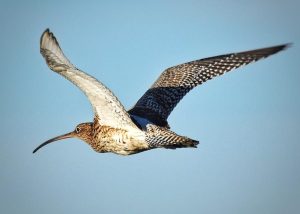
The Curlew belongs in that ancient company. I sometimes think it has always been asking us to listen, though I am less sure we have ever really known how.
Listening is hard now. We live amid noise, performance and speed. Social media loves an easy certainty, a purely bad enemy, a blameless victim. Farming is made either virtue or vice. Rewilding becomes either salvation or threat. Predator control is cruelty or common sense. Food production is noble or destructive. Conservation is pure or meddling. These little boxes are easy to share and almost impossible to live inside. The truth, if that is the word, is more tangled, more compromised, more sorrowful and more human.
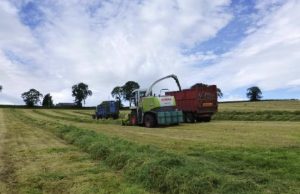
Farming is not a slogan. It is weather, soil, machinery, debt, policy, inheritance, exhaustion, skill, fear, pride and love. It is the weight of a name on a gate, the smell of rain on worked ground, the dread of a bank letter, the patience of lambing, the shame of being judged by people who have never had to get a crop in before the sky breaks. To wrest food from the earth is one of humanity’s oldest stories. It is not simply domination, and it is not a golden pastoral romance either. It is a daily negotiation with life, death, hunger, market forces, memory and mud.
How, then, do we tell that story without betraying anyone? How do we speak of depleted soils, dirty rivers, vanishing insects and silent springs without turning the people closest to the land into symbols of blame? How do we talk about cheap food, supermarket power, public expectation and ecological grief without flattening everyone into heroes and villains? I do not know. Perhaps none of us knows. Perhaps that is the point from which a better conversation begins.
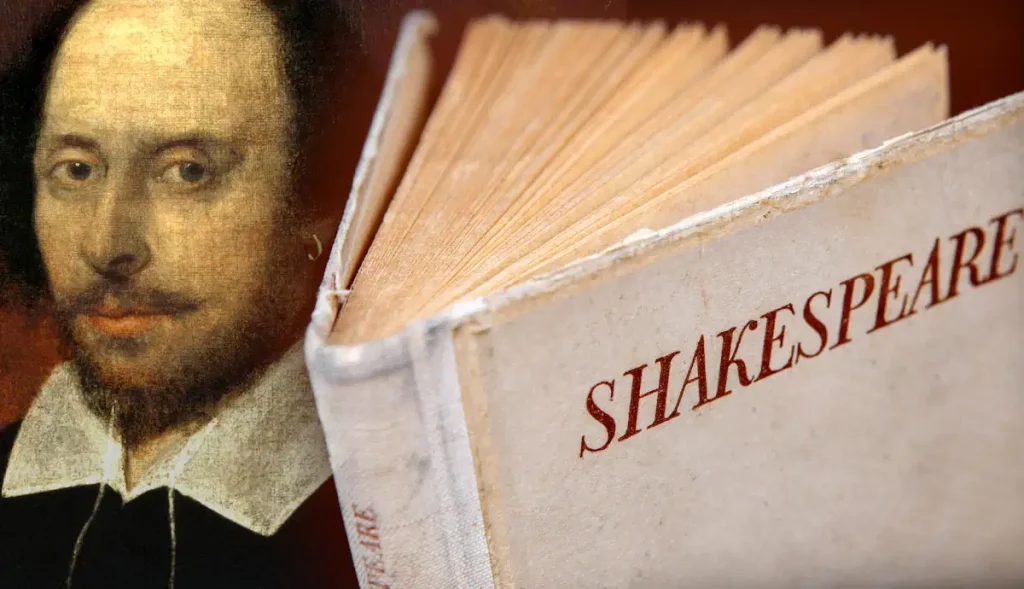
Perhaps Shakespeare can help, not because he gives answers, but because he refuses the comfort of them.
Shakespeare would not begin with a definition of regenerative agriculture. He would begin with a person. A farmer too tired to explain himself again. A daughter wondering whether love of a place is enough reason to stay. A father carrying the heavy bundle of what he inherited. A neighbour watching from the other side of a hedge, half suspicious and half afraid. A decision-maker with targets and too little time. A scientist whose data is clear and incomplete. A conservationist who loves a bird so fiercely that she must learn to love the farm it depends on as well.
He would give them conflict: tradition and change, survival and renewal, pride and humility, food and wildness, neighbourly judgement and private doubt. He would let them speak badly as well as well. He would allow them to contradict themselves, because that is what we do when we are frightened. And he would never hurry them towards a neat conclusion.
That is why Shakespeare still matters. He knew that human beings are rarely one thing. We are loving and foolish, brave and vain, generous and defensive. We make mistakes for reasons that once made sense. After war, hunger and scarcity, one story had immense moral force: produce more, control more, simplify more, make the land efficient. It fed people. It also narrowed the imagination. It left too little space for the living fabric of a farm: worms, fungi, beetles, flowers, mosses, hedges, damp hollows, old trees, messy corners, muddy margins, the half-forgotten places where life gathers when no one is looking.
Now we need another story, though I distrust any story that arrives too polished, too righteous, too certain of itself.
Farmers did not create the cheap food system alone. They did not create supermarket power alone. They did not create our public appetite for low prices, full shelves, tidiness, abundance and convenience alone. So any story of recovery that casts them as villains is already a poor story. It may satisfy anger, but it will not heal land. Recovery has to be a story of shared responsibility, and shared responsibility is much harder than blame.
This is where the Curlew keeps returning to me.
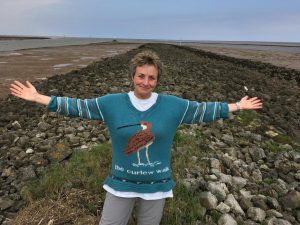
The Curlew asks us to hold complexity without crushing it. It needs open, expansive country, but not emptiness. It needs wet ground, insects, quiet, roughness, grazing, space and time. It asks awkward questions about trees, predators, drainage, mowing, disturbance, development and our desire to make every place useful in the same way. It refuses the ideological box. In that sense, the Curlew is a Shakespearean bird. It steps onto the stage and exposes the tensions we would rather not name.
And yet it is not only a test. It is also beauty, which may be the most serious thing of all.
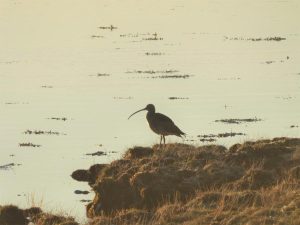
Curlews entered poetry because their call works on the human heart before the mind has time to defend itself. They entered folklore because people heard in them longing, warning, wildness, return. Their music is not decoration, it is part of the emotional memory of these islands. The first bubbling call in spring is not simply a biological event, though it is that too. It is a loosening in the chest. A sign that the world still has depth, mystery and continuity. A reminder that the earth is not backdrop but beloved.
If we lose that, we lose more than a species. We lose one of the ways the earth has been calling us home.
This is why language matters. I have nothing against technical terms when they are needed, but sometimes they stand between us and love. Instead of “ecosystem services”, we might speak of all the work nature does for nothing until we damage it so badly it can no longer carry us. Instead of “biodiversity”, we might speak of the many-threaded life that makes a farm resilient. Instead of “soil health”, we might ask whether the ground beneath our feet is merely holding a crop upright, or whether it is alive, breathing, dark and full of beings. Instead of “habitat mosaic”, we might describe a farm with enough roughness, wetness, shelter and surprise for life to find a foothold.
These are not softer words. They may be harder, because they ask us to feel what we know.
Good stories do not avoid evidence. They carry it in a form the body can remember. They allow grief and hope to sit together without forcing either to apologise. They make room for contradiction. They do not ask only, “What is the solution?” but “What kind of people are we becoming?” Are we consumers who want cheapness without consequence? Citizens willing to pay for care we cannot always see? Conservationists prepared to listen as intensely as we speak? Decision-makers brave enough to reward patience? Farmers able, somehow, to imagine that productivity and life need not be enemies? I do not offer these as answers. I offer them as doors.
Regenerative farming already has the elements of a great story: land under strain, people facing uncertainty, old certainties loosening, new practices being tested, failures, courage, embarrassment, stubbornness, tenderness, renewal glimpsed and then lost and then glimpsed again.
Perhaps that is the story we most need now, though I do not want it to be too tidy.
Not a story of purity or blame. Not one shouted across social media in capital letters. But an older, deeper kind of story, one with character, conflict, doubt, silence, turning points and earned hope. A story capacious enough to hold farmers, food and beauty; grief and responsibility; science and song; the cry of a Curlew over wet ground; the tired person at the kitchen table; the worm in the soil; the child who may or may not hear that call in years to come.
Shakespeare wrote that “the play’s the thing.” Perhaps story is the place where facts become meaning, where people recognise themselves without being cornered, and where a different future can begin, not as an answer, but as a tremor of possibility beneath our feet.