
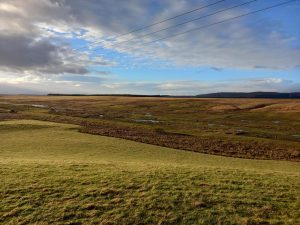
Before us lay a vast sweep of peatland beneath a heavy Ayrshire sky. It isn’t wilderness in the true sense but an interweaving mosaic of blanket bog, moorland, wet grassland and grazed fields, shaped by the weather, water and human use. At first glance it seemed unassuming, but its purpose quickly became clear, to support wildlife, and especially the breeding waders for which it has become so important.
The reserve lies in East Ayrshire, between Cumnock and Muirkirk, where the Southern Uplands begin to rise between Scotland’s Central Belt and the Solway Firth.
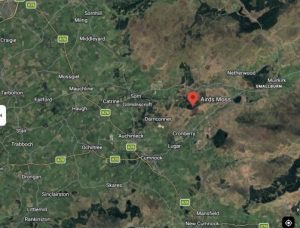
Location of the reserve in east Ayrshire
“Welcome to Airds Moss,” said the reserve’s manager, Tim Lill, as a group of us gathered in a barn in Boghead Farm overlooking the reserve. “Waders are my life.” What a heartening start to the visit as the rain pelted down outside and clouds obscured the view.
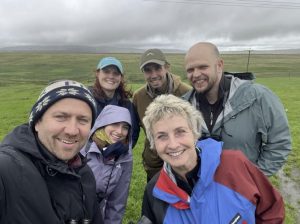
Group photo with Airds Moss reserve in the background. Front – Dan Brown (Senior Conservation Advisor with RSPB Scotland), Mary Colwell. Second row – Flo Blackbourn, Tim Lill (RSPB Manager, Airds Moss), Back row – Charlotte Conner (RSPB fieldworker, Clyde Valley), Stephen Inglis (RSPB Airds Moss project officer).
That love of waders, shared by Tim and his colleague Stephen Inglis, runs through everything they do. The RSPB has been involved in the area for many years, and the reserve now includes East, West and the more recently acquired Central sections. Much of it is internationally important blanket bog, for which it is designated for special protection, but what makes it so powerful for Curlews and other breeding waders is the whole package of wildness, farming and industrial heritage.
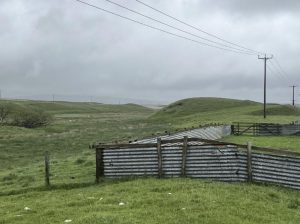
Airds Moss is shaped by farming and past industry as much as by ancient peatland.
When the RSPB began looking closely at the site, the story was familiar. Like so many places in Scotland, wader numbers had fallen. The eastern section once held around 23 pairs of Curlew, but by 2021 that had dropped to about ten. The birds were still there, but the land was degraded and the wader populations failing.
“It wasn’t overmanaged,” said Tim, “it was undermanaged.” There was not enough grazing, not enough active management, and too much rank, dense vegetation. As Stephen interjected, “No Curlew chick’s going to run around that. It was just impossible.”
That simple observation goes to the heart of wader conservation. Curlews need open, varied, structurally diverse land. “Waders thrive in the middle ground between intensity and abandonment,” said Tim, “between really intensively managed farmland and no management at all.”
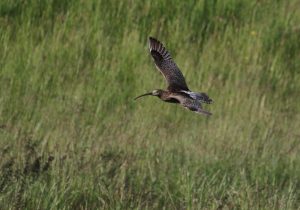
This has required doing many things at once. Fox and crow control continues, but it is only one part of the picture. The habitat itself has been transformed through peatland restoration, wetland creation, rotational cutting and, perhaps most visibly, cattle grazing. Blue-grey cattle, a Galloway– White Bred Shorthorn cross, now graze the hill using no-fence collars, allowing them to move across large areas with minimal physical fencing.
No-fence collars are GPS-enabled collars fitted to cattle that create virtual boundaries rather than physical fences. The team can set grazing areas digitally, and when an animal approaches the boundary, it first receives an audio warning, followed by a mild stimulus if it continues. This allows livestock to be moved and managed remotely, helping conservationists at the reserve to control where cattle graze without the need for extensive fencing.
The cattle have changed the vegetation. Patches are cut first, not as an end in themselves, but to help the animals get into thick areas and begin the work of opening them up. “Cutting without following up doesn’t really seem to get the results,” we were told. “Cutting and following up with grazing does.” Around those cut areas the grazing spreads, creating a softer, more varied, more natural structure.
“At the end of the day,” and then came the memorable line which I will take with me, “waders are all about structure.”
The response from the birds has been encouraging. From around ten pairs of Curlew on This reserve East in 2021, the site is now looking at around 21 or 22 pairs. This year, the team believed that 13 or 14 Curlew territories may have hatched chicks. They are not fencing individual nests or using highly intensive interventions, instead, the aim is to find something that can work at scale across a reserve of just under 1,000 hectares.
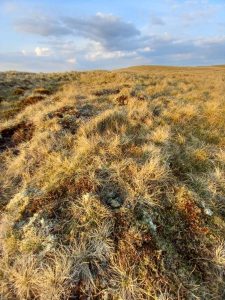
“We’re very much looking at – can we do this in a way that is feasible at scale?” said Tim. “We’re doing predator management, but no different from what you might see outside of the area.”
Nest fencing and predator control are emergency measures here. Tim believes they can buy time and, in some places, are essential, but he is equally clear that they are not a long-term solution. The reserve is trying to demonstrate what sustainable recovery might look like – better habitat, careful use of livestock, retaining water and reducing predator pressure to levels that breeding waders can withstand. When bird numbers are high enough, Lapwing and Curlew can join forces and defend themselves collectively, rather than relying on isolated pairs to fend off threats alone.
Lapwings show what can happen when the conditions are right. In 2021 there were just two pairs, this year there are 31. “You just make a big wet hole,” Stephen laughed, “and they go absolutely mental for it.” Redshanks have increased too, from two or three pairs to eight this year, and Dunlin have returned following peatland restoration on the bog. Snipe numbers have also risen sharply, helped by the wetter, more varied ground.
Curlews, as always seems to be the case, are harder. They need more space, and they use a wide area for nesting, feeding and roosting at night. One of the most important points made during the visit was that Curlews are not using one neat habitat parcel, rather they move between the bog, the hill, the pools, grazed land and even neighbouring silage fields.
“They use every piece of this,” said Dan “They’re not just using one part of the landscape, they’re using all of it.”
That is why Airds Moss feels so important. It is not just a reserve; it is also a demonstration of what working uplands could become. The cattle and sheep still matter. The reserve is producing livestock as well as birds and the team works closely with graziers and neighbouring landowners. The lessons are already spreading, one nearby farmer, seeing how cattle improved the hill, has brought Galloways into his own system. “It’s a nature reserve, but also it is a farm.”
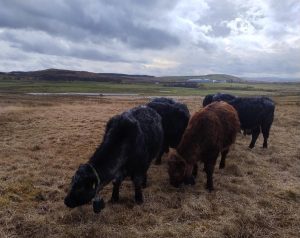
That sentence is crucial. Too often, conservation and farming are treated as separate worlds, but here they are intertwined. Low-input hardy cattle and sheep, winter grazing, keeping livestock away from the most sensitive areas where possible, and thinking carefully about breed choice, are all part of the same conversation. The aim is not to remove farming but to make the system work better for wildlife and for the land.
Water is the other great force here. As we ventured out in a brief interval between downpours, Tim showed us the wetlands that had been created in the lower part of the reserve. Old water inputs have been channelled to create a series of pools, which the waders love, and the water levels are controlled so that machinery can still access it when needed. It is practical, not decorative, and the damp ground provides feeding for adults, invertebrates for chicks and resilience in dry weather. Across the bog, restoration has meant blocking drains, creating wet features, restoring peat hags and slowing water that was once rushed away.
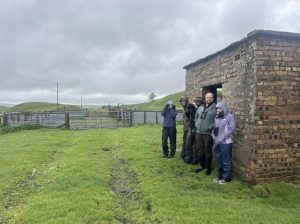
Standing by an old railway building looking at the expanse of peatland and wetland areas across the reserve
But the visit also made clear how vulnerable even the best-managed sites are to the increasingly extreme weather conditions we are experiencing. I asked what one wish could be granted that would most help the reserve. The answer came, first from Stephen and then echoed by Tim: “To control the weather.”
Not because rain is lacking overall, but because it increasingly arrives at the wrong time. Spring droughts makes it difficult for adult birds to find food, while prolonged, torrential rain can wipe out a breeding season by killing chicks. Long, hot, dry spells can also reduce numbers of tipulids (crane fly larvae), one of the most important food sources for young Curlews, just when they need them most.
“The entire landscape in the UK has been manufactured to dry out,” said Dan, “we want to move water away, not hold on to it”, and that is causing so many problems including flooding and erosion. Restoration can make places more resilient, but it cannot remove climate risk altogether.
This conversation highlighted one of the most difficult challenges facing modern conservation: how to reconcile the urgent need for renewable energy with the needs of species that depend on open landscapes. Airds Moss is already feeling the effects of a changing climate, making the transition away from fossil fuels essential. Yet some of the infrastructure needed to achieve that transition can also alter the habitats on which waders depend. It is a thorny dilemma, but one that conservationists, policymakers and developers must confront honestly if we are to secure a future for both wildlife and the climate.
Predation is equally complex. Fox and crow control are part of the management of the site, but the team were clear that this is about reducing pressure, not eliminating predators. “We don’t want there not to be foxes,” said Dan. “We don’t want there not to be crows.” The aim here is balance, enough relief for ground-nesting birds to breed successfully, while recognising that foxes, Hooded Crows, Ravens, Buzzards, Badgers, Red Kites and others are all part of a wider, changing system.
There is also indirect predator management. Fences have been removed because predators often use linear features as travel routes. Rotational cutting, rewetting and grazing keep the site dynamic, ensuring habitats and vegetation structure continue to change from year to year, making the site less predictable. And as bird numbers rise, the birds themselves help. Thirty pairs of Lapwing, joined by Black-headed Gulls, can mob avian predators with far greater force than a handful of scattered birds. Ten pairs of Curlews across a slope can make a raven’s life much harder work than one lonely pair trying to defend a nest alone.
Still, Airds Moss cannot stand apart from the world around it. Forestry, wind farms, farming systems and land management in the wider Muirkirk Uplands all influence what happens on the reserve. “No nature reserve exists in isolation,” said Dan. That may be the central message of the day; its future depends on what happens beyond its boundaries.
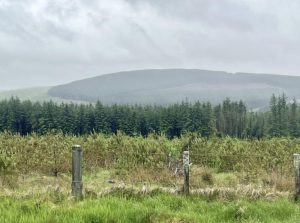
Forestry is common across the region
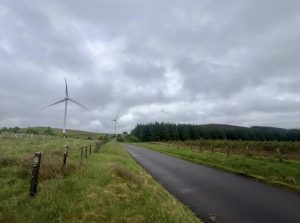
Forestry and windmills are integrated into this area of Scotland
There was optimism based on grounded practice, not wishful thinking. If the current management continues, the team believe that the suite of waders can be expanded. The reserve has responded quickly and there is more potential yet to release from the site. Curlews have increased, Lapwings have surged, Redshanks, Snipe and Dunlin are benefiting as well as the bog continues to re-wet, the hill kept open and the mosaic of habitats maintained.
As we talked the sound of waders was a constant soundscape, even on such a rainy, chilly day.
Airds Moss shows what can happen when conservation is focussed patient and honest about complexity. It shows that Curlews can thrive on land that is lived in, grazed, restored and cared for year after year. They need farmers, conservationists, graziers, and neighbours working across boundaries. They need predators managed, water held, structure restored and climate resilience built wherever possible. And most of all, they need us to act while they are still there.
As Tim said, “It’s difficult to bring birds back once they’re lost, but when you have them, you’ve got something to work with.”
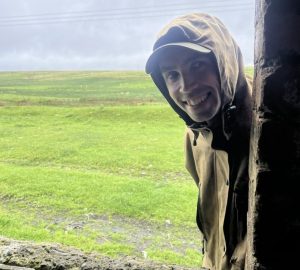
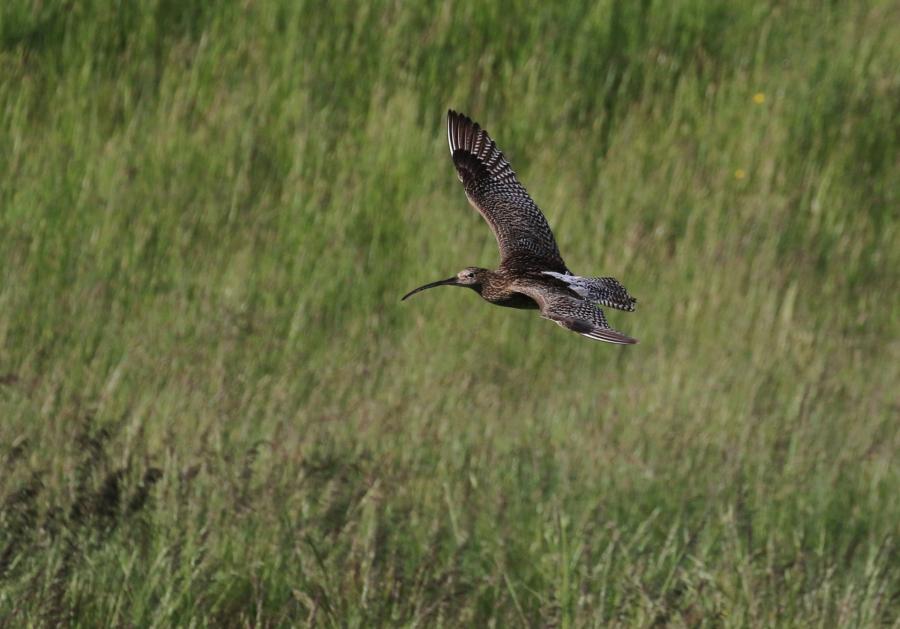
It was lovely to catch up with Stephen Inglis again. He very kindly shares some wonderful photographs with Curlew Action to help our work. Thank you, Stephen!
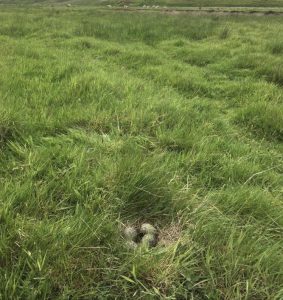
A Curlew nest in South Lanarkshire, photo by Stephen Inglis