
It was a pleasure to catch up with David Jarrett from the British Trust for Ornithology in Scotland and explore how his thinking has evolved since we last met more than two years ago. David combines scientific rigour with a genuine passion for Scotland's uplands and wader populations. Thoughtful, analytical and always open to debate, he is helping to build a clearer picture of where Curlews are thriving, where they are struggling and what might be needed to secure their future. Most importantly, he is willing to grapple with some of the more difficult questions facing conservation as Scotland's landscapes continue to change.
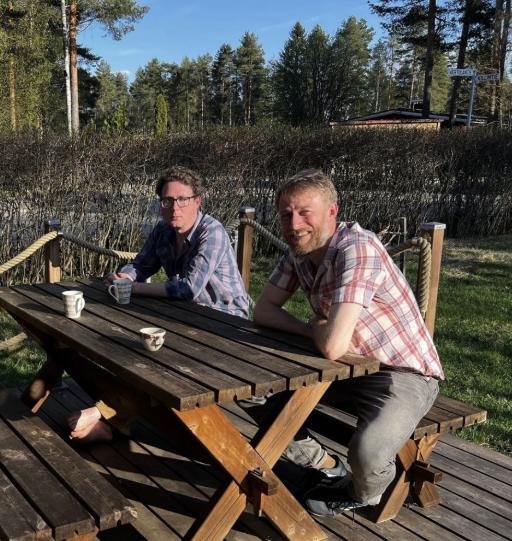
David Jarrett, foreground, and Patrick Laurie, author and farmer, on a Curlew Action trip in Finland in 2023
Curlews in a Changing Scotland
Scotland still supports around half of the UK's breeding Curlews, an estimated 28,000 breeding pairs, although David thinks that figure might now be lower due to widespread landscape changes over the last few decades. Traditional moorland management is declining in some places while afforestation, carbon schemes and rewilding projects, particularly on former grouse moors, are expanding.
Large-scale tree planting has been especially pronounced in south-west Scotland and the Borders. As David observed, "There hasn't been large-scale afforestation in northern England, whereas in Scotland large areas have been converted to afforestation and rewilding projects. The decline may not be hitting the population yet, but there's a big debt of land where birds will be lost over the next ten years."
At the same time, there are reasons for optimism. Areas such as Caithness continue to support strong populations, thanks to extensive low-intensity farmland, relatively low predator densities and large areas of suitable habitat. Large-scale peatland restoration, for example, appears to have been good news for Greenshanks, with breeding territory density increasing steadily between 2004 and 2023 in a suite of SPAs in Northern Scotland. By 2023, the number of occupied territories was 51% higher than it had been two decades earlier. These results demonstrate that, when habitats are restored at scale and given time to recover, positive outcomes for breeding waders can follow.1
The future is unlikely to be uniform for Curlews. Some regions may remain strongholds, while others continue to decline.
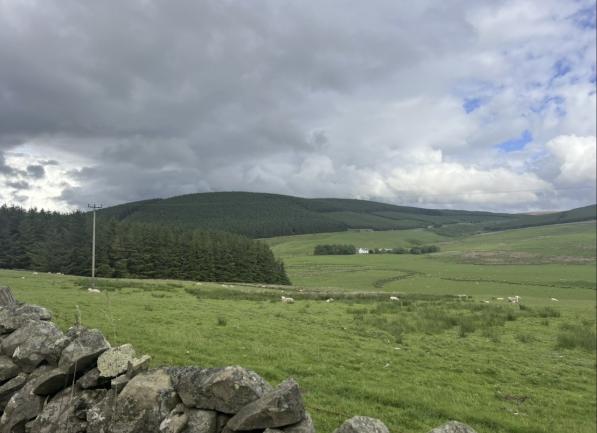
Large scale tree planting in south-east Scotland
Wader Recovery Areas
One of the most encouraging developments we discussed was the emergence of proposed Wader Recovery Areas in Scotland. The concept will be familiar to those involved in Curlew conservation in England - identifying priority landscapes where breeding waders are given particular attention.
These proposed areas have been identified through modelling that highlights concentrations of Curlews, Lapwings, Redshanks, Snipe and Oystercatchers. Their boundaries will be refined through discussions that Working for Waders and its partners are holding with landowners and local communities, helping to shape future conservation action in each area. The ambition is clear: to ensure that the needs of breeding waders are fully considered in land management and planning decisions, placing their conservation at the heart of these landscapes.
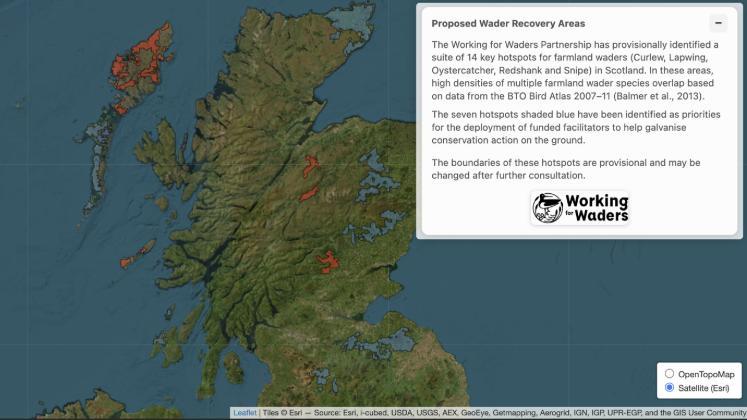
https://wader-hotspots.netlify.app/
In time, the areas could attract dedicated funding and support local engagement officers working directly with communities. They represent an important shift in thinking. Rather than focusing solely on individual nests or isolated projects, conservation is increasingly asking what conditions are needed across whole landscapes for waders to thrive.
Curlews and Predation
As with almost every discussion about Curlew conservation, the subject of predation eventually arose. David is clear that predator management has a vital role to play in helping Curlews recover, but he is equally clear that it must be undertaken properly, consistently and at an appropriate scale. One of his concerns is that predator control is sometimes judged ineffective when, in reality, it is not always implemented with sufficient intensity to deliver results. If management is carried out only sporadically or at too low a level, it is not surprising that little difference is seen in terms of fledged chicks, giving those who are opposed to predator control an opportunity to say it doesn’t work at all.
David also believes that the conservation sector doesn’t always communicate clearly on this subject. Yet, he asserts, predator control is no different from countless other conservation interventions, all of which involve making choices about which species or habitats we are trying to benefit. Whether restoring reedbeds for Bitterns, controlling invasive species, managing grazing levels or creating woodland, conservation inevitably involves trade-offs with some species gaining, others losing out. The challenge is not avoiding those decisions but being transparent about them.
David believes discussions around predation become difficult partly because conservation does not always explain these trade-offs clearly. “If we were better at communicating what conservation is - and what it isn’t- conversations about predator management might be less polarised and easier to approach in an honest, evidence-based way.” The question is not whether difficult choices exist, but how we broach and explain them openly.
Rewilding and Open Landscapes
As with previous meetings on this trip, we also discussed rewilding. The relationship between Curlew conservation and the growing momentum behind rewilding is often portrayed as a conflict, but the reality is much more nuanced. David questioned why so few rewilding projects focus on restoring open habitats rather than woodland.
"I've always wondered why we don't have at least one or two of these rewilding initiatives which focus on restoring open ground and valuing species of open ground rather than just planting trees."
It is an important challenge. Curlews and other waders evolved in open landscapes, and many of Britain's most threatened species depend on habitats that remain open rather than becoming wooded. But at present, woodland creation remains the favoured route.
In such complex decisions about the future of landscapes, no single sector has all the answers. Farmers, foresters, rewilders, conservationists and land managers all bring different perspectives and experiences. Finding common ground may be one of the most important tasks facing conservation in the years ahead.
More Than Numbers
Towards the end of our conversation, we moved away from policy and habitat management and into something more philosophical. What should we do when a population becomes tiny, isolated and increasingly difficult to save, as it is the case for much of lowland England? Is there a point at which conservation effort becomes symbolic rather than strategic?
From a purely conservation perspective, this is difficult to tackle. David questions the logic of investing scarce resources in places where Curlews may never again become self-sustaining - why not focus on landscapes where the species has a stronger long-term future?
Yet conservation is rarely just about ecology. It also involves difficult choices about where limited resources can deliver the greatest impact, not only for species and habitats, but for the communities that live alongside them. I spoke about the many small and often isolated Curlew projects scattered across southern England, where the long-term future of the birds remains uncertain, yet the dedication, enthusiasm and commitment of local people is remarkable. In my opinion, this is priceless. These projects bring communities together, inspire volunteers and foster a deep connection with nature, even where the prospects for sustaining Curlew populations may be far from assured.
David's concern was not that small projects lack value, nor that dedicated local groups should simply stop trying, on the contrary, volunteer-led projects often bring enormous benefits - they build communities, inspire people, strengthen relationships with landowners and keep nature firmly rooted in people's lives. Where local people choose to support these efforts, there is often every reason to continue.
The harder question is one of strategic investment. Conservation funding is always finite, and there is a responsibility to ensure that scarce resources are used where they can deliver the greatest benefit for Curlews as a species. If large sums of money continue to be directed towards research and recovery in landscapes where long-term prospects are poor, are we creating the impression that these are the places where Curlew conservation will ultimately succeed? And if so, what opportunities might we be missing elsewhere?
David's worry was not about telling individual projects to give up, rather, it was about being honest regarding their likely outcomes and recognising the distinction between projects that provide local benefits and inspiration, and those capable of securing population recovery at a national scale. Both have value, but they are not necessarily the same thing.
There is a tension here that conservation does not always acknowledge. We rightly celebrate the dedication, optimism and hard work of local projects, but an unintended consequence can be that they come to define the public perception of Curlew conservation. The risk is that people begin to think these small, isolated populations are the future of the species, when in reality, they may represent its last footholds in landscapes where long-term recovery remains highly uncertain.
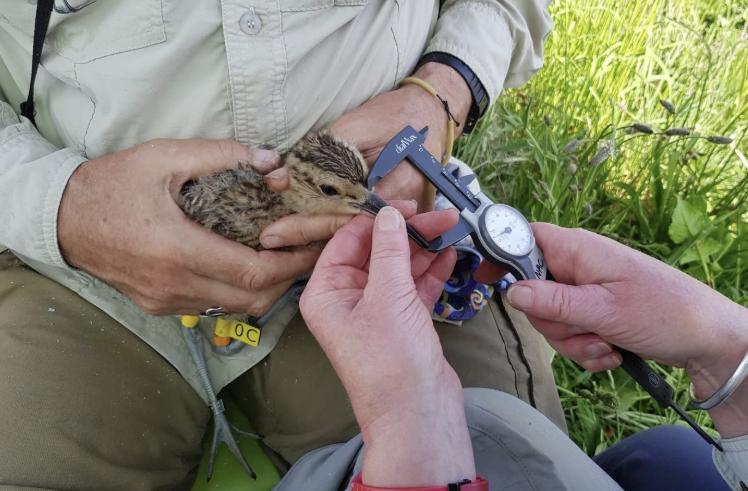
Curlew fieldwork. Photo BTO
This challenging exchange highlighted something that is often overlooked. Conservation is not simply about population models and habitat maps. It is also about people. At one point I described these projects as, "Little stars in the sky." They are the bright spots in what can seem at times a rather black outlook. Stars have always inspired us, guided us and encouraged us to keep striving, even when the destination is uncertain. Just working to save something for its own sake is what being a human being is about?
Ultimately, successful conservation requires both head and heart. We need science, data, landscape-scale planning and strategic investment. But we also need the passion that inspires people to keep fighting for something, even when the odds are long. There is a deep-seated reason why humanity returns time and again to enduring stories such as David and Goliath. Everything in us wants the underdog to win.
Whether every small Curlew population can survive in the long term, none of us can know, there are so many huge environmental issues to deal with, nothing less than climate change, the way we grow food, develop our economy and increase our living standards across all society. But what we do know is that the act of caring, trying and bringing people together around a common purpose remains one of conservation's greatest strengths that has benefits beyond what we can plan or even imagine. And in the end, that is where the most profound change will happen.